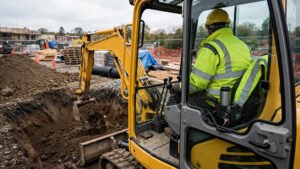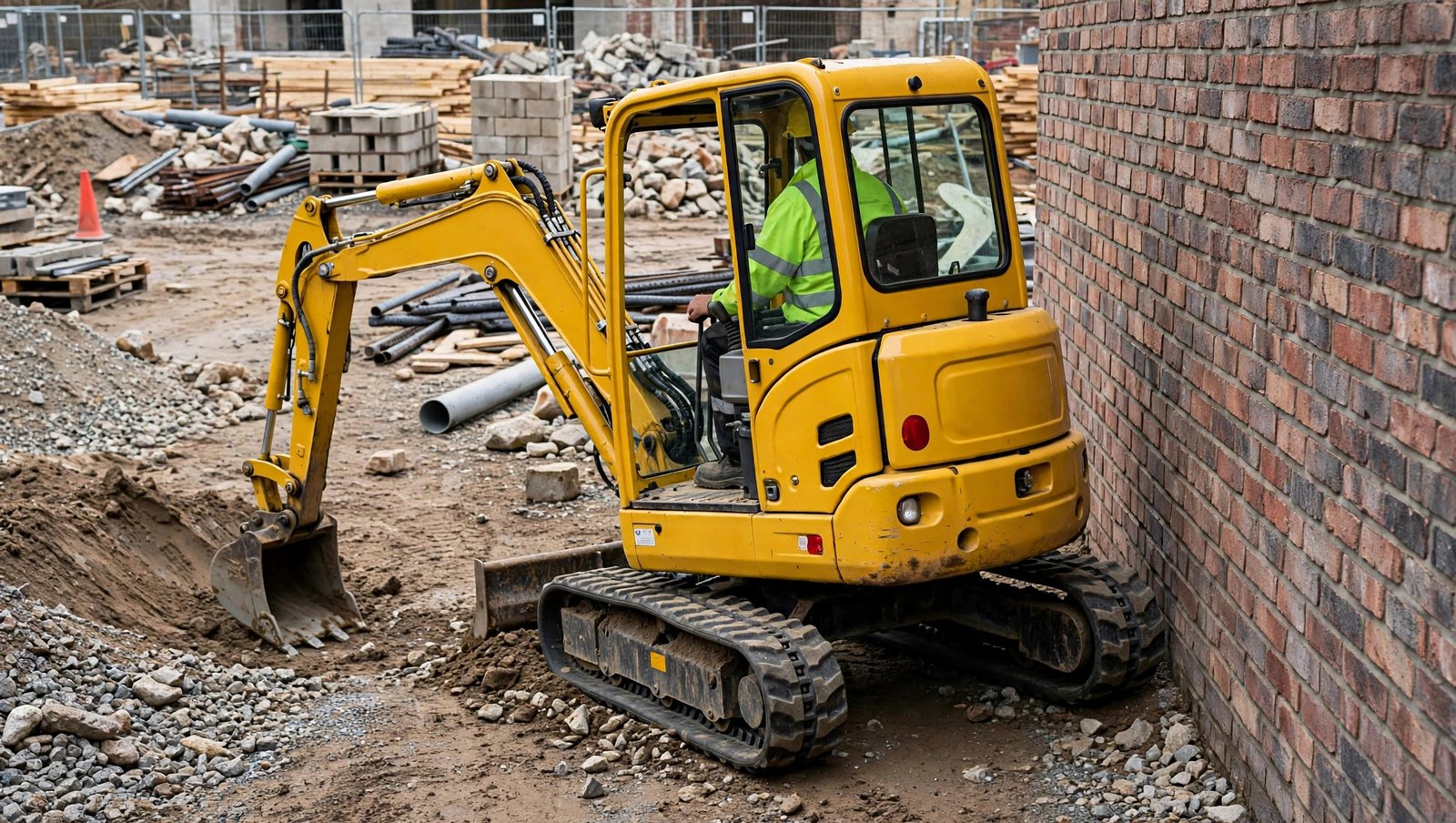
If you have ever watched a mini excavator turn in a garden, you may have noticed something worrying: as the upper body swings round, the back of the machine sticks out over the tracks. On an open site, that does not matter. Between two houses, beside a wall, or on a narrow street, it can mean a dented fence, a cracked wall, or a job that cannot be done at all. That is the problem zero tail swing is designed to solve. It is one of the most useful features on a mini excavator, and one of the easiest to overlook when comparing models.
What Does Zero Tail Swing Mean?
A mini excavator has two main parts: the lower undercarriage with the tracks, and the upper body with the cab, engine, and counterweight. When the operator swings the boom to one side, the whole upper body turns on the undercarriage. On a conventional machine, the rear of the upper body — the counterweight at the back — sticks out beyond the width of the tracks when it turns. That overhang is called tail swing. The operator has to remember it is there, and leave enough room behind the machine for it to swing safely. On a zero tail swing machine, the rear of the upper body stays within the width of the tracks when it turns. The tail does not swing out past the tracks, so the machine can turn a full circle in a space no wider than its own tracks. On a tight site, that changes what the machine can do: it can work close to a wall, dig beside a fence, and turn in a narrow street without the operator worrying about what is behind it.
How Does It Work?
Zero tail swing is not a button the operator presses. It is built into the shape of the machine: the counterweight is shaped and positioned to fit within the track width, and the engine and cab are arranged more compactly, so the whole upper body turns inside its own footprint. The trade-off is that a more compact rear can mean a smaller counterweight, so some zero tail swing machines are a little less stable when lifting a heavy load at full reach. Check the lifting chart for the exact model before you buy.
Why It Matters Between Buildings, in Gardens, and on Streets
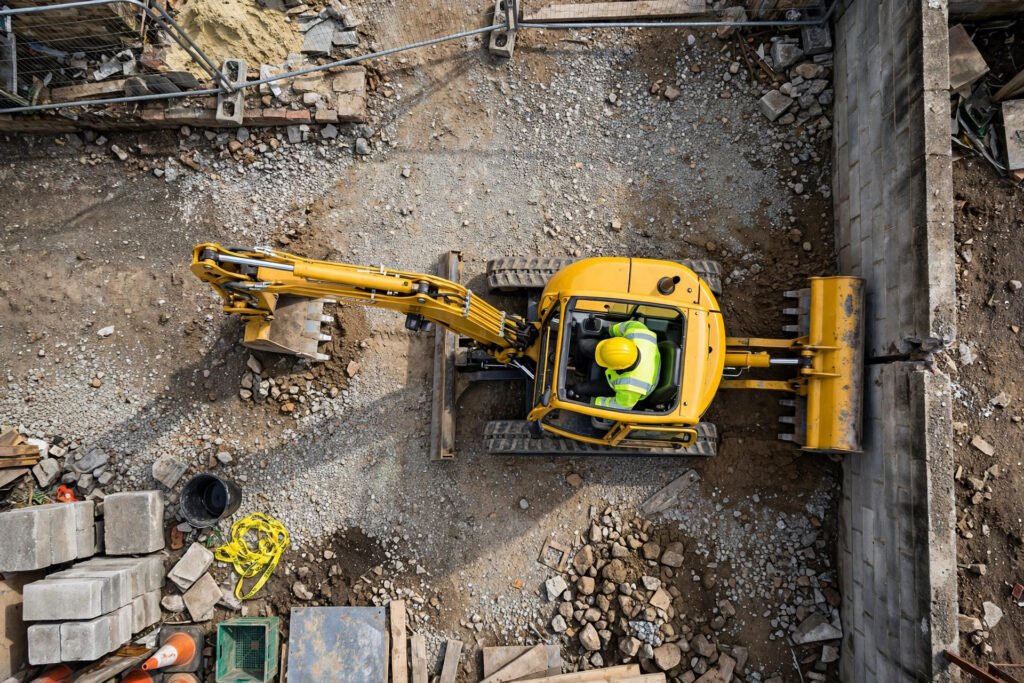
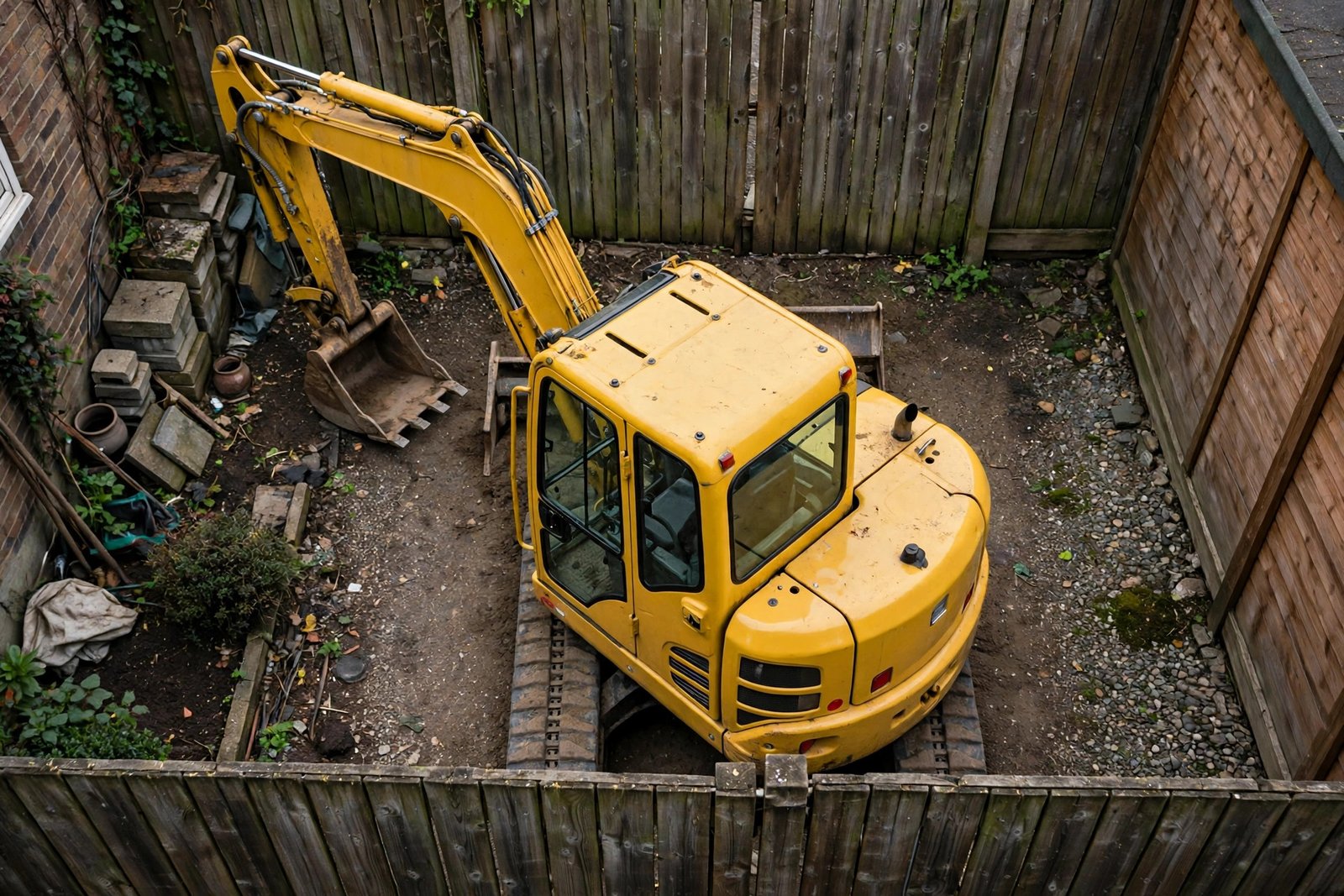
Between buildings, a conventional machine needs room behind it to swing. If the gap between two houses is only just wider than the machine, there may be no room for the tail at all. A zero tail swing machine can turn in that same gap, because nothing sticks out behind it. The operator can dig a trench, load a truck, and turn back again without stopping to check the wall behind. In a garden, a fence, a shed, a tree, or a neighbour’s wall can all be damaged by a swinging counterweight. With zero tail swing, the operator can work close to the boundary and still turn freely, and the job goes faster, because the machine does not have to keep being repositioned to find room to swing. On a narrow street, zero tail swing matters for a different reason: traffic. A machine working on a road repair or a utility trench may have cars, pedestrians, or a second lane close behind it. A tail that swings out into the road is a hazard. A machine whose tail stays inside its tracks is easier to work with safely there, and easier to set up with barriers and signs.
When Does It Matter Less?
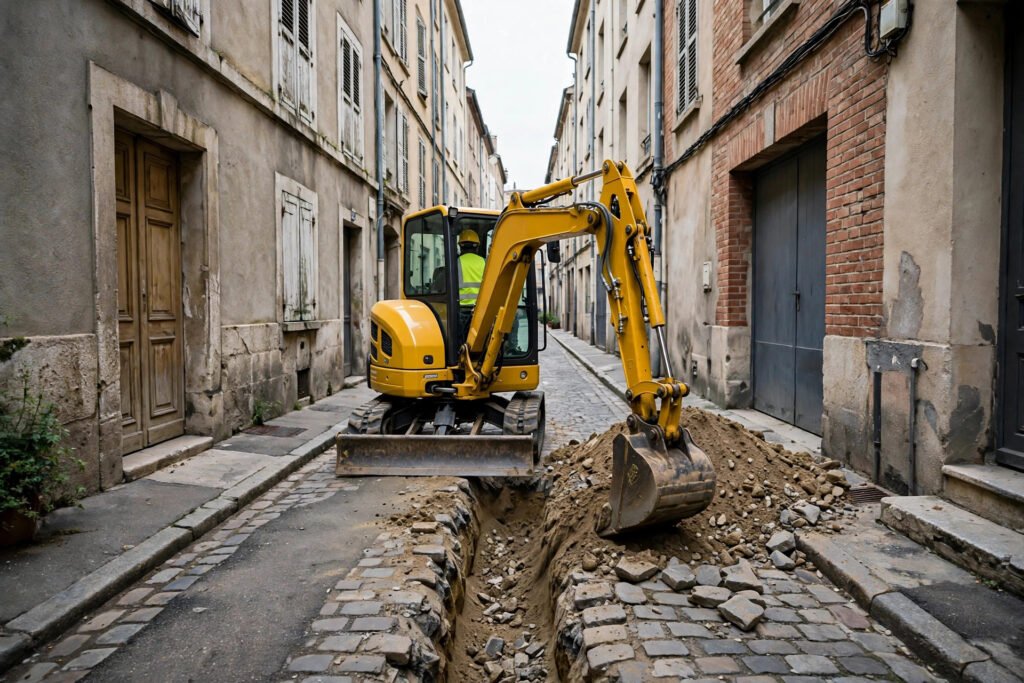
Zero tail swing is not essential for every job. If most of your work is on open ground — a farm, a large building site, a field — there is usually plenty of room behind the machine, and a conventional tail swing is no problem. The operator can swing freely, and the extra counterweight may even help with lifting. It also matters less if the machine rarely needs to turn a full circle. The question to ask is simple: how often do you work in a space where the machine cannot turn freely? If the answer is most days, zero tail swing is worth having. If the answer is rarely, it is a useful extra, not a necessity.
What to Check Before You Buy
Do not just take the words “zero tail swing” at face value. Check three things. First, check the tail overhang in the specification sheet. A true zero tail swing machine should have no overhang beyond the tracks, or only a very small one. Some machines are described as having a “small” or “reduced” tail swing, which is not the same thing. Ask your supplier to confirm the exact figure for the model you plan to order. Second, check the counterweight and the lifting chart. A compact rear can affect lifting capacity, especially at full reach and to the side. If you regularly lift pipes, concrete blocks, or heavy attachments, ask for the lifting chart for that exact model and configuration. Third, check the rest of the machine. Zero tail swing helps in tight spaces, but it does not replace the other things that matter there: a boom that can swing to the side, so you can dig close to a wall; rubber tracks, so you do not damage lawns and driveways; and a compact width, so the machine can get through the gate in the first place.
How to Decide in 30 Seconds
Ask yourself three questions. First, where do I work most — in tight spaces between buildings and fences, or on open ground? Second, how often do I need to turn the machine in a space barely wider than the tracks? Third, do I lift heavy loads at full reach, where I should check the lifting chart for a compact machine? If most of your work is tight, choose zero tail swing. It does not make the machine dig deeper or lift more, but it lets the operator work in places a conventional machine cannot, and work there faster and with less worry. If most of your work is open, choose the machine that fits your digging, lifting, and transport needs, and treat zero tail swing as a useful extra.
Get in Touch
Sparkle One supplies mini excavators for tight-space work, landscaping, farm work, and small construction, with a minimum order of 1 unit. To ask about zero tail swing models, sizes, and configurations for your work, contact us — we reply within 24 hours. WhatsApp: +86 151 2992 2907