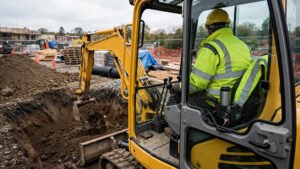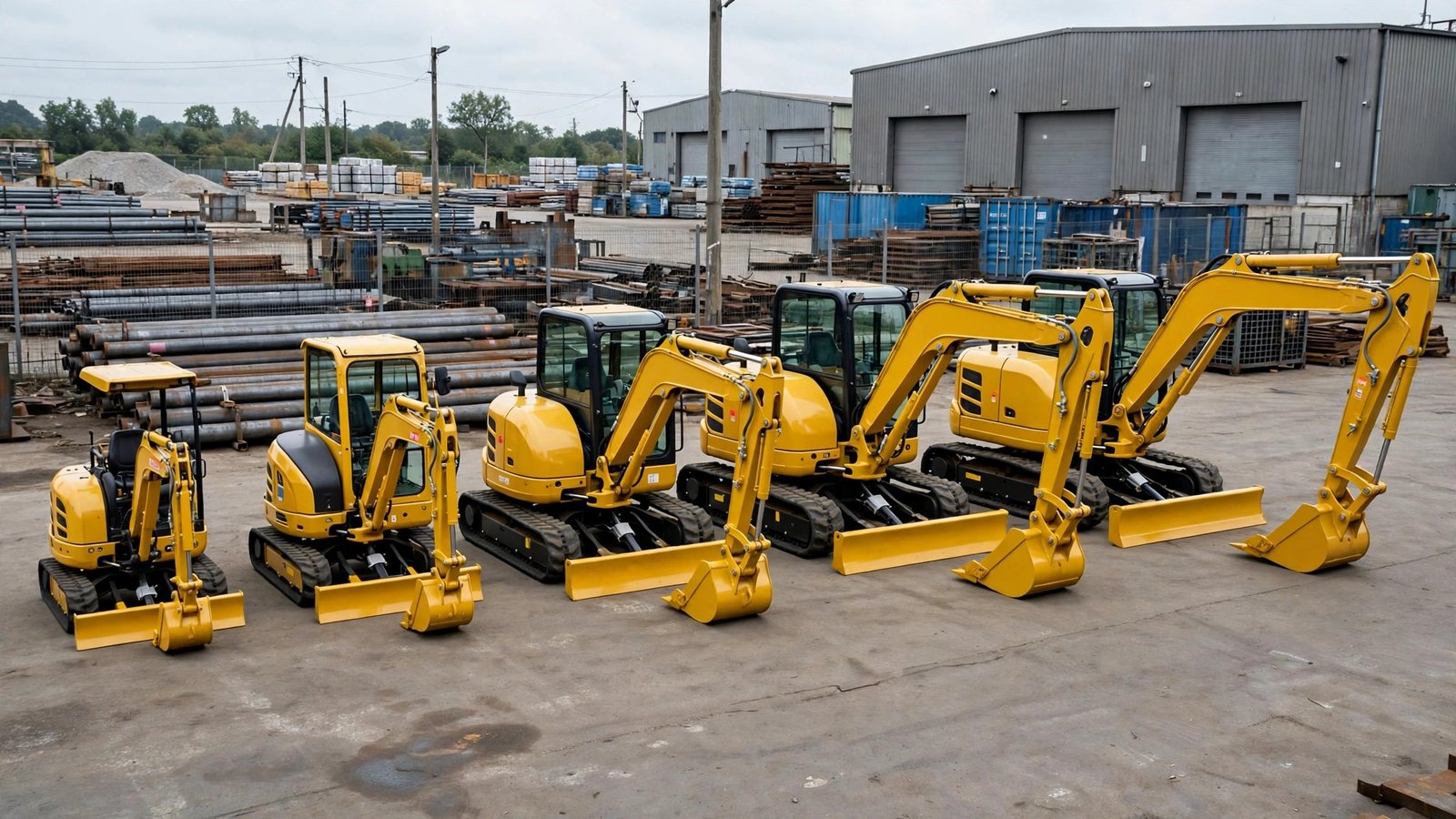
The HT Series spans the whole spectrum: tiny 0.8 ton machines for tight access, all the way to the 36 ton HT360 for heavy earthmoving. Read the sizes, weights, and licences below and match them to the work you do every day, then decide which size fits your work.
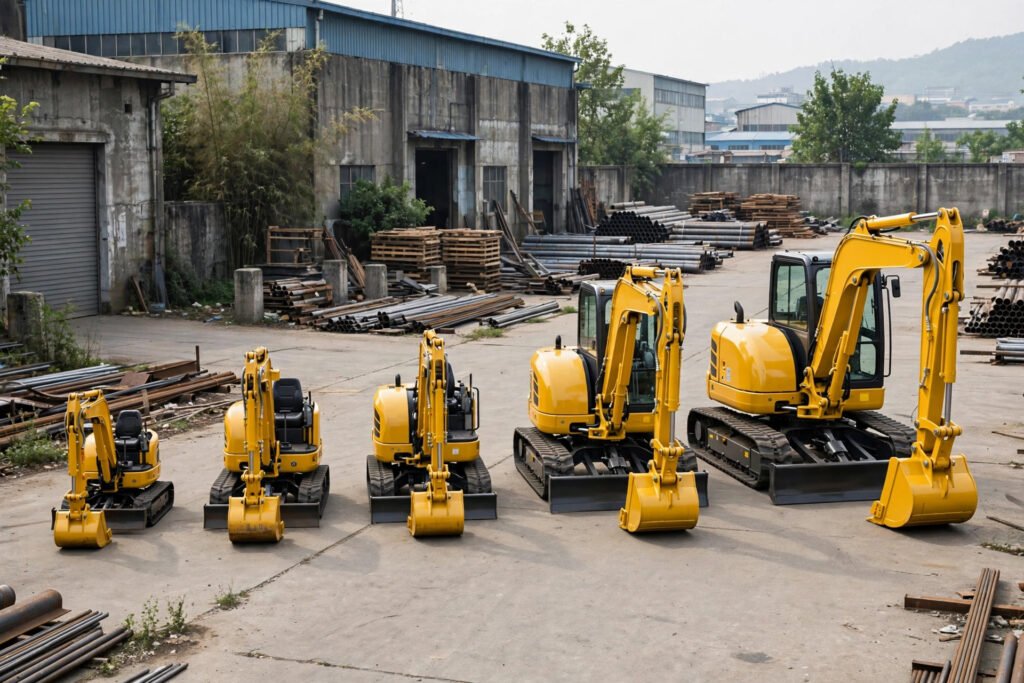
How to read the lineup
The model number is a useful first guide: in general, a larger number means a larger, heavier machine. But tonnage tells you the weight class, not the whole story. Two machines in the same weight class can differ in digging depth, reach, engine, cab, and tracks. Before you order any model, confirm the digging depth, reach, dumping height, and lifting capacity on the specification sheet for the exact configuration you plan to buy.
Small machines: HT08, HT10 series, HT12, HT13
The small end of the range is built for access. The HT08 (800 kg) is the smallest machine in the lineup, and the HT10 series — including the HT-10B, HT-10H, HT-10C, HT-10D, HT-10E and HT-10G variants — the HT12 and HT12G, and the HT13 cover the 1 ton class and just above it.
These machines suit work where a bigger machine cannot go: gardens, narrow passages between buildings, indoor demolition, and jobs reached through a standard gate. They are light enough to tow on a small trailer in many cases, depending on local rules, and they do the least damage to lawns and finished surfaces. What they give up is digging depth and lifting power.
The popular middle: HT15, HT16Z, HT18, HT20, HT22, HT25
This is where most buyers land. The HT15 and HT15pro, HT16Z, HT18 series, HT20 series, HT22, and HT25 and HT25-2 cover roughly the 1.5 to 2.5 ton class — the sizes that suit farms, landscaping, small construction, and rental fleets.
A 1.5 ton machine such as the HT15 handles the jobs a 1 ton machine struggles with: deeper trenches, heavier lifting, longer days of digging. A 2 ton machine such as the HT20 adds digging depth and reach for footings, drainage, and small construction work, while still being easy to move. The HT25 steps up again for buyers whose work has outgrown the 2 ton class — deeper footings, heavier loads, and harder ground. For buyers who want electric power, the HT15-Li is Sparkle One’s electric model in this class — quiet, with no exhaust, for indoor work and places where noise and fumes matter.
Mid-size and large: HT26-2, HT30, HT35, HT40, HT45, HT60, HT75, HT80, HT90
Above 2.5 tons, the machines stop being “mini” in the garden sense and become serious earthmoving equipment. The HT26-2, HT30, HT35, HT40, HT45, HT60, HT75, HT80 and HT90 cover this middle-to-large ground — machines for contractors, farms doing large-scale earthmoving, and rental businesses whose customers ask for more capability.
The step up brings digging depth, lifting power, and stability, and it also brings new questions: transport needs a larger trailer or a truck, access needs wider gates and more room to turn, and running costs rise with the machine. A bigger machine that spends half its life waiting because it cannot reach the job is worse than a smaller one that works every day. Buy this size when your work has genuinely outgrown the 2.5 ton class — when the trenches are deeper, the loads heavier, and the jobs longer — not because a bigger number sounds better.
The largest machines: HT210 and HT360
At the top of the range sit the HT210 and the HT360, a 36 ton machine. These are for heavy earthmoving, quarrying, and large construction work — jobs where a mini excavator would be the wrong tool entirely. They share the HT name and the same supplier behind them, which matters for a dealer or a contractor who wants one supplier across a fleet: the same certificates, the same parts channel, and the same contact for the whole range.
Choosing across the range: four questions
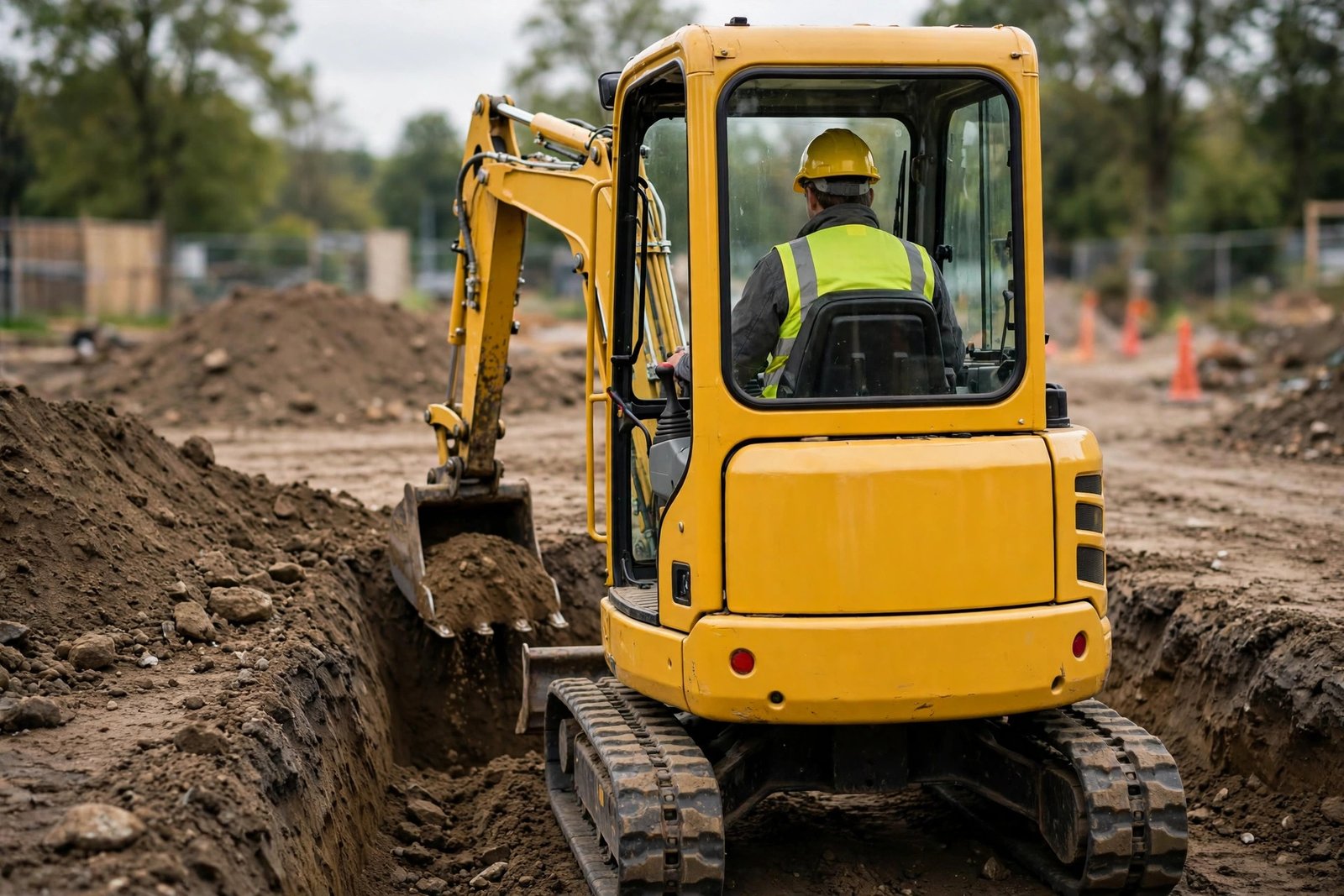
- What is your most common job? Not the biggest job you did once, but the job you do every week. The machine should fit that job first.
- What is your tightest access? Measure the narrowest gate, the lowest doorway, and the softest ground. A machine that cannot reach the work is no use, however strong it is.
- How will you move it? A machine you can tow yourself is a different business from one that needs a truck and a low loader. Check local transport rules before you choose.
- What comes with it? Certificates for your destination country (CE and Euro 5 for Europe, EPA for the United States), a parts list, a manual in your language, and spare parts you can actually order. A machine without certificates cannot be registered or sold in many markets, whatever its size.
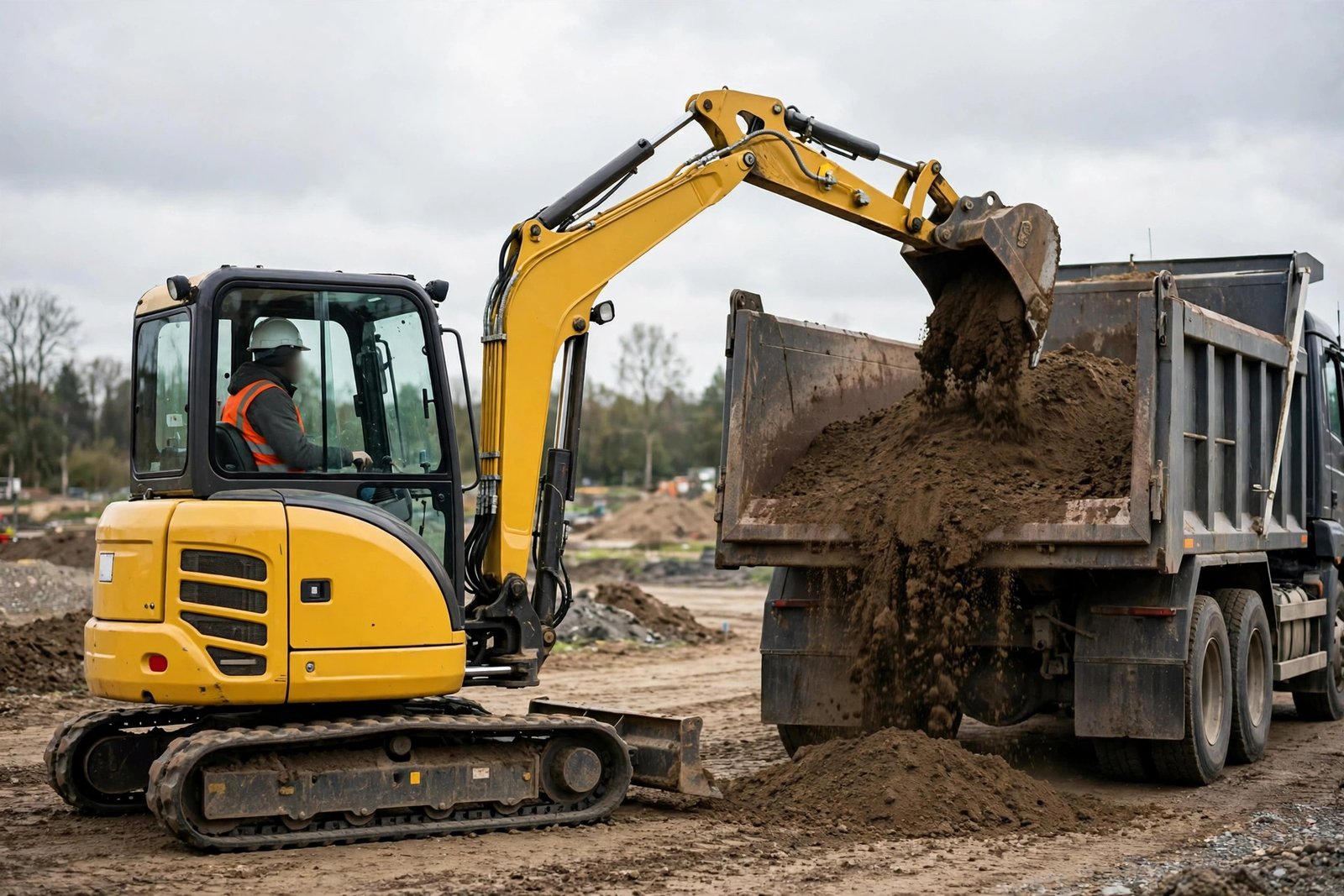
One supplier, one range
The advantage of a full lineup is not that you buy every size. It is that you can start with one machine — the minimum order is 1 unit — and grow within the same range when the work grows. A dealer can stock the sizes their customers ask for, in their own colours and branding, and a contractor can add a second, larger machine later without finding a new supplier, learning a new parts system, or re-checking certificates from scratch.
If you are still deciding, read the guides in this series first: the size guide for the 1 to 2 ton class, the HT15 vs HT18 comparison, the HT20 deep dive, and the engine guide. Then tell Sparkle One about your work — the jobs you do, the access you have, and the country you buy in — and we will confirm the models, the certificates, and the spare parts for your order in writing before you pay. Minimum order is 1 unit, and our team replies within 24 hours. Contact us on WhatsApp at +86 151 2992 2907 to discuss your requirements.