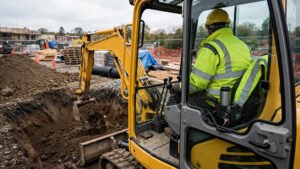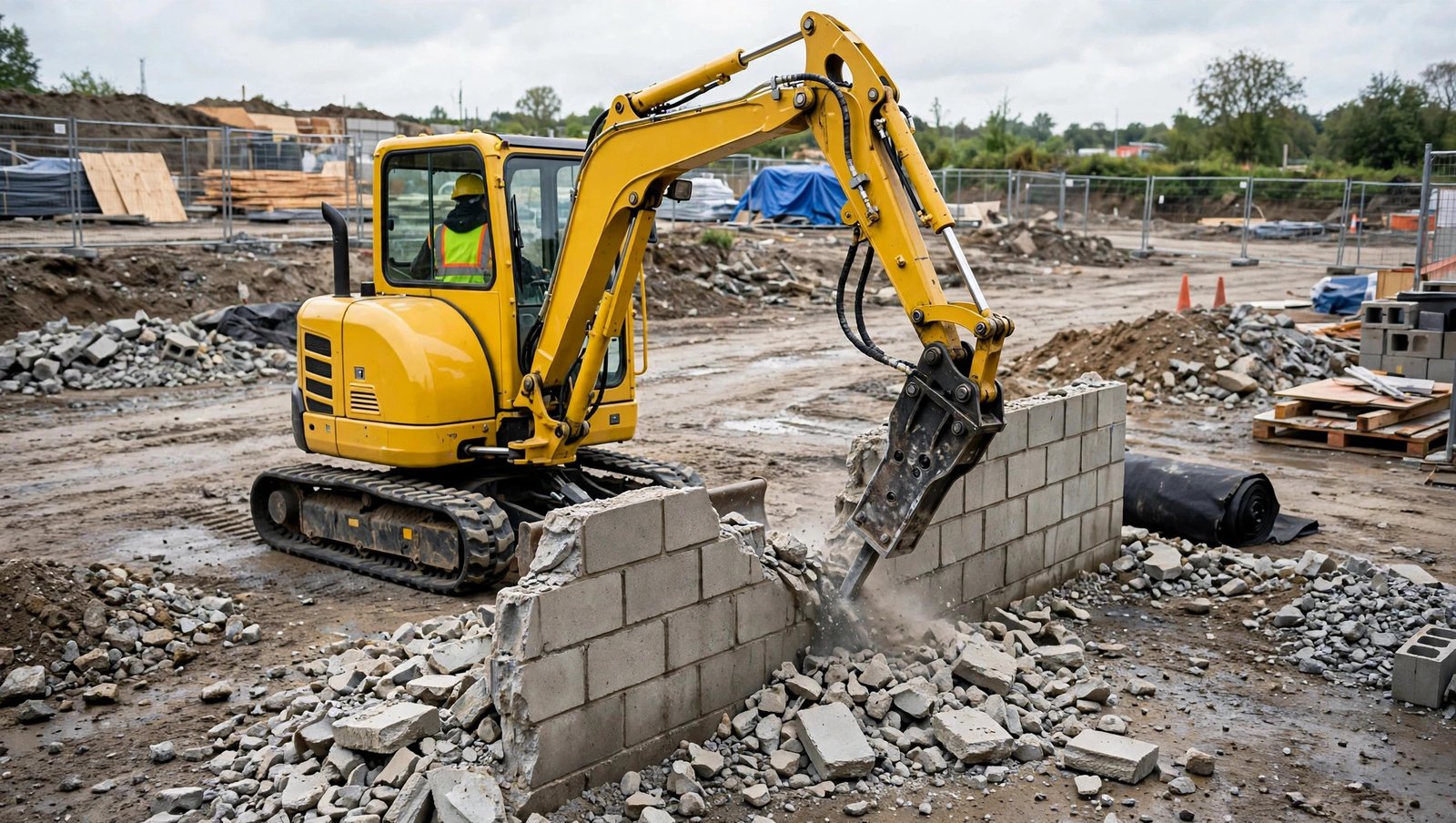
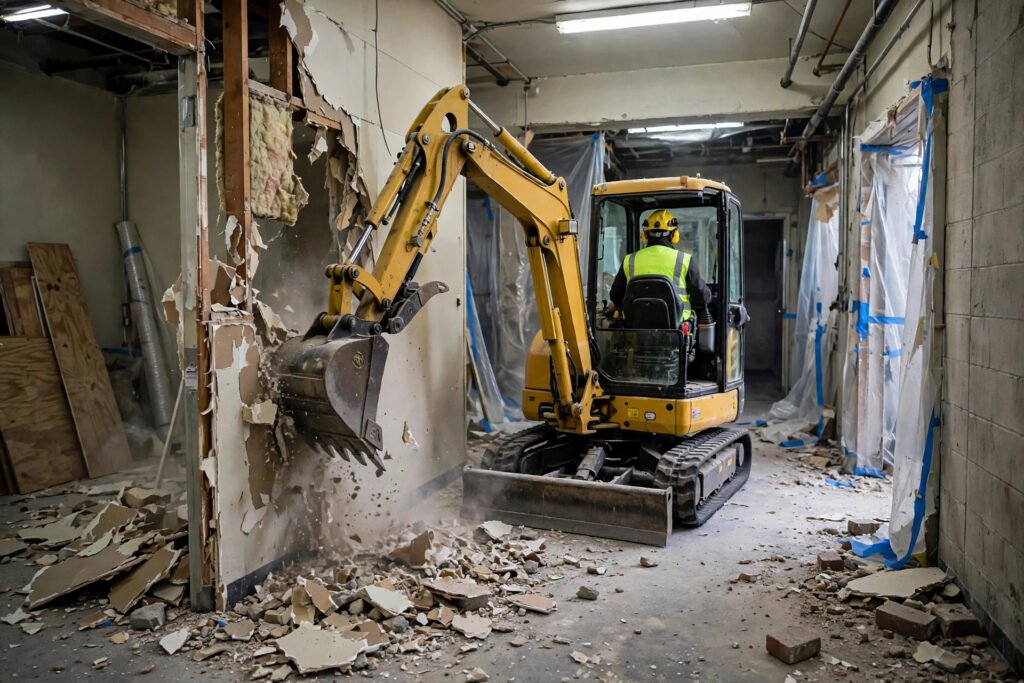
When most people picture demolition, they picture a huge machine knocking down a tower block. Much of the real demolition work is far smaller: a bathroom wall, a garden wall, a concrete slab, a small shed, or the inside of a shop that needs to be stripped back before a rebuild. That is where a mini excavator earns its place. It is small enough to enter a building, strong enough to break concrete with a breaker, and precise enough to work next to a wall that must stay standing.
Indoor demolition: working where big machines cannot go
The biggest advantage of a mini excavator in demolition is access. A 1 to 2 ton machine can pass through a wide doorway or a garden gate, work inside a warehouse, and turn in a room that a larger machine could never enter. That matters for renovation work. Stripping out an old shop or house often means removing internal walls and floors while the outer structure stays in place. A mini excavator can do that heavy work in hours, where hand labour would take days. Before indoor work starts, check the height of doorways and ceilings, the strength of the floor, and the width of the access route. A closed cab helps indoors too, keeping dust away from the operator, while an electric model suits enclosed spaces where exhaust and noise are a problem.
Small concrete and brick removal
Most small demolition jobs are concrete and brick: a low wall, a patio slab, a set of steps, a small foundation, or a chimney breast. A mini excavator handles these with a breaker or a bucket, depending on the material. A breaker is the right tool for concrete and hard brick. It cracks the material from the edge, in short bursts, so the pieces come away cleanly. A bucket is better for softer material, for pulling apart a brick wall once the mortar is broken, and for loading the rubble that follows.
Breaker work: power with control
A hydraulic breaker turns a mini excavator into a demolition tool, but it needs control. The breaker should strike straight down, at a right angle to the surface, and the tool should stay pressed against the material while it works. Use short bursts, usually no more than 15 to 30 seconds in one spot. If the material has not cracked, move the tool a few centimetres and try again from the edge. Long, continuous hammering in one spot builds up heat and wears the tool without breaking more material. Two habits damage breakers faster than any other: blank firing, which means running the breaker when the tool is not pressed against the material, and side loading, which means pushing the tool sideways to pry a slab apart. To move a broken piece, stop the breaker, lift the tool clear, and use the bucket.
Sorting debris as you go
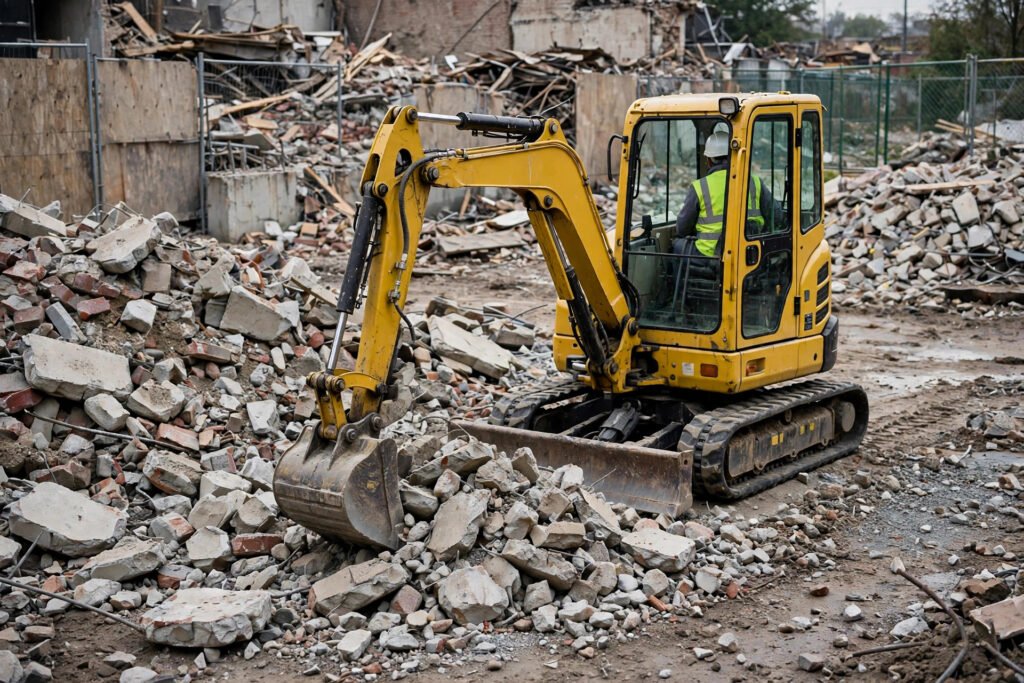
Demolition creates more material than most beginners expect, and sorting it as you go saves time later. Concrete and brick can go in one pile, metal in another, and wood and general waste in a third. A mini excavator with a grapple or a thumb clamp is useful here. It can pick up broken pieces, separate metal reinforcement from concrete, and load a truck or a skip without dropping material across the site. Keep the piles clear of the working area and away from the machine’s swing.
Dust, noise, and safety
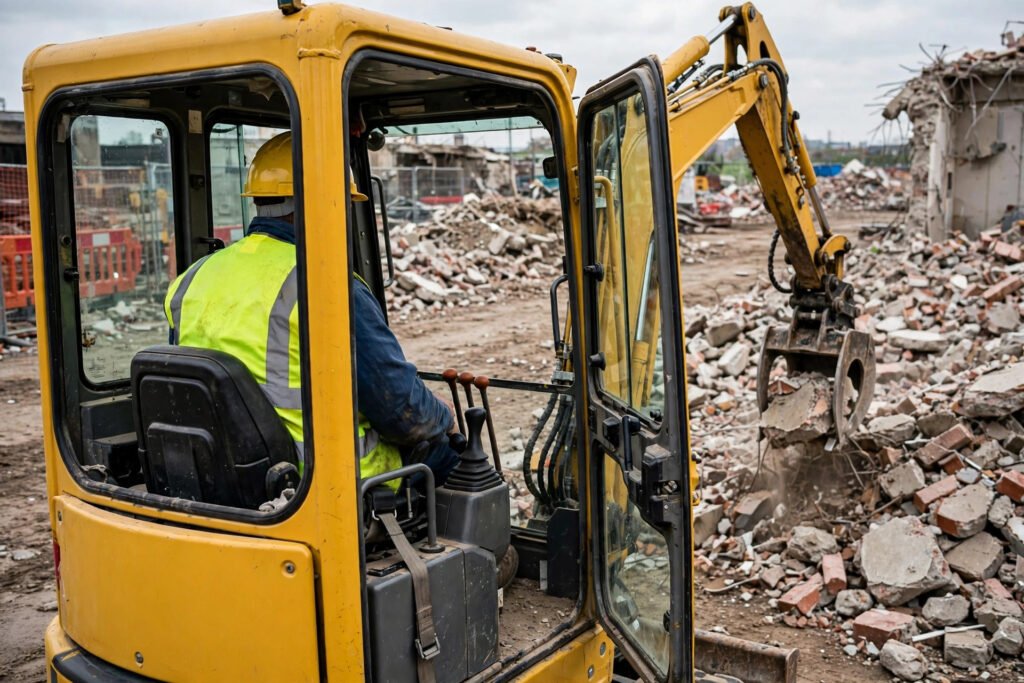
Demolition is dusty, noisy work, and safety comes first. The operator should wear a hard hat, safety glasses or a face shield, hearing protection, gloves, steel-toe boots, and a dust mask where dust is heavy. Keep other people well away from the work area, and keep the ground clear so the operator can see. Mark underground services before breaking a floor or a foundation — pipes and cables can be hidden just below the surface. Dust control matters too, especially indoors and in residential areas. Wetting the material lightly and keeping the site clean all help. Check the machine before work starts: hoses, pins, the breaker mounting, and the tool itself. A worn tool is less effective and more likely to break, so replace it before it becomes too short.
Choosing the right size: 1.5 to 2.5 tons
For most small demolition work, a 1.5 to 2.5 ton mini excavator is the practical choice. A 1 ton machine is light and easy to move, and it suits very small indoor jobs, but it will work slowly on thick concrete. A 1.5 ton machine, such as the HT15, adds digging and breaking power while still fitting through most gates and doorways. A 2 ton machine, such as the HT20, adds more power again, and suits small construction sites, foundation removal, and longer days of breaking work. A 2.5 ton machine suits contractors who do demolition regularly, on larger sites, with thicker slabs and heavier rubble. Before you buy, measure the narrowest access point on your most common job, and think about how you will move the machine and the rubble.
Attachments for demolition work
Three attachments cover most small demolition jobs. A hydraulic breaker breaks concrete, rock, and hard brick. A grapple or thumb clamp sorts and carries rubble, logs, and debris. A standard bucket digs, loads, and clears the site once the breaking is done. A quick coupler lets one operator change between them in minutes, without tools. Before you order, check that the machine has auxiliary hydraulic lines for the breaker and grapple, that the hydraulic flow matches the breaker, and that the attachments fit the same coupler.
Small machine, big job
A mini excavator does not replace a large demolition machine on a big site. It wins on the jobs large machines cannot reach: inside a building, in a garden, on a small site, and next to a wall that must stay standing. Tell Sparkle One about your demolition work — the material, the access, and the size of the job — and we will help you choose a machine and attachments that fit. Minimum order is 1 unit, and our team replies within 24 hours. Contact us on WhatsApp at +86 151 2992 2907 to discuss your requirements.