A mini excavator on its own is a digging machine. With the right attachments, it becomes a machine for almost any small job: trenches, grading, fence posts, breaking concrete, clearing rubble, and loading trucks. The attachments you order first decide what work you can take on, and which jobs you have to turn down.
This guide explains the attachments that matter most, what each one does, and what to order first for farm work, construction, and landscaping.
Start with the standard bucket
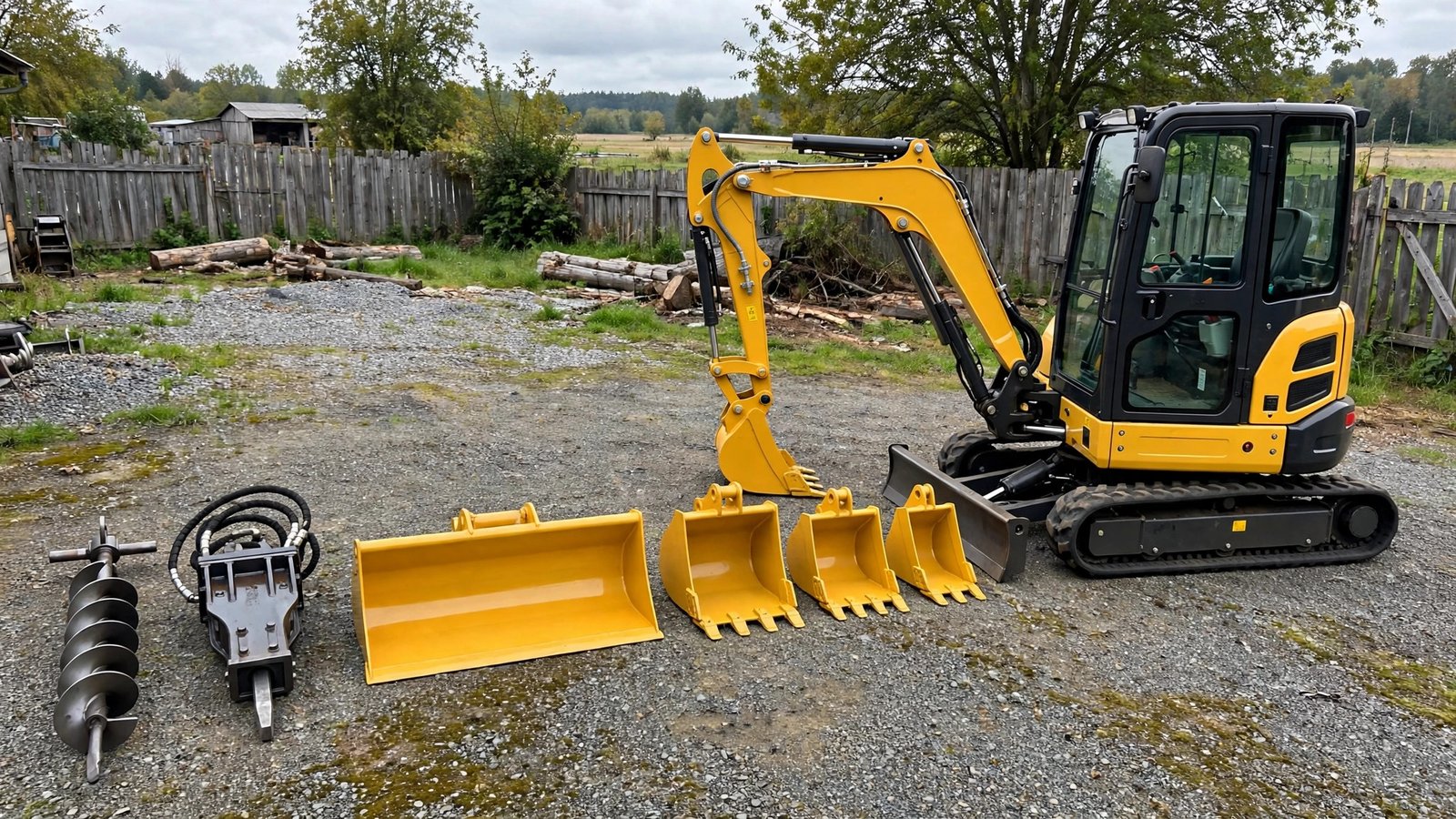
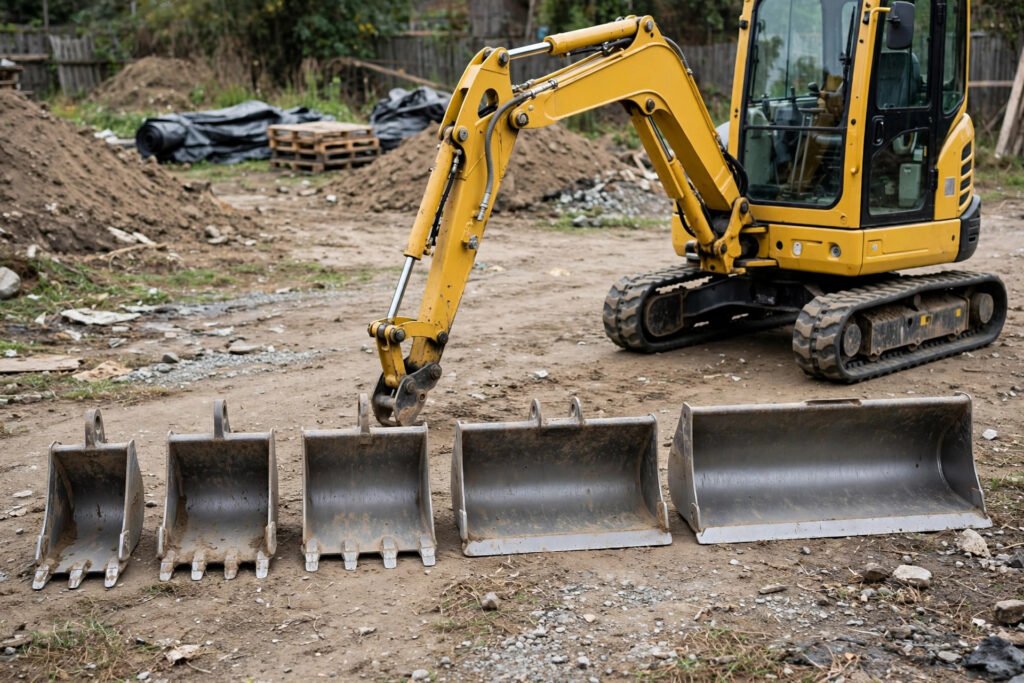
Every mini excavator should start with a standard digging bucket. It is the attachment that does most of the work: digging trenches, loading soil, moving rubble, and backfilling. It comes in different widths, and the right width depends on the job. A wide bucket moves more soil per pass; a narrow bucket cuts a clean trench.
Choose the standard bucket first, then add the widths you use most. A bucket with worn or missing teeth digs unevenly, so check the teeth regularly. If you can only order one bucket with the machine, make it the width that matches your most common trench.
A narrow bucket for trenches
A narrow, or trenching, bucket is the second bucket most owners order. It cuts a slim, clean trench for pipes, cables, and drainage, and it moves less soil than a wide bucket, so there is less to backfill afterwards. If your work involves a lot of pipe or cable trenches, a narrow bucket pays for itself quickly in time saved.
A grading bucket for a smooth finish
A grading bucket is wide, flat, and shallow, and it is made for finishing rather than digging. It levels ground, spreads soil, cleans out ditches, and leaves a smooth surface for a driveway or a lawn. It is not a digging bucket — it will not cut hard ground well — but for the last pass over a surface, nothing else does the job as neatly.
An auger for fence posts and planting
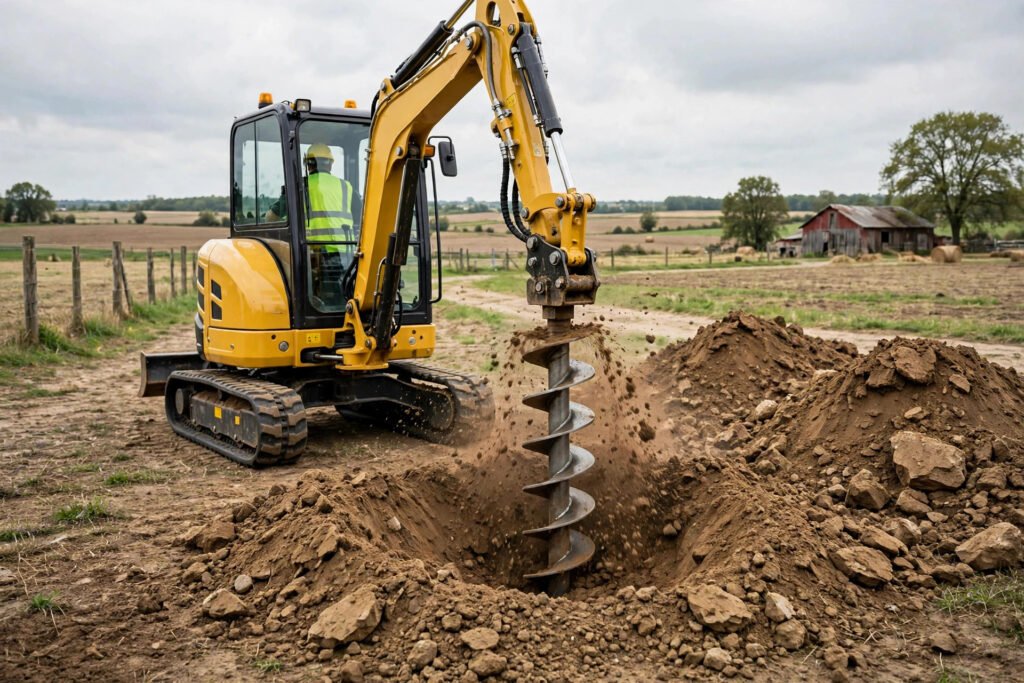
An auger drills round holes, fast and straight. It is the attachment for fence posts, tree planting, signposts, and any job that needs a deep, narrow hole. A bucket can dig a hole, but it makes a wide, rough one; an auger makes a clean hole in a fraction of the time.
Augers come with different diameters and lengths, and the right one depends on the posts or trees you plant. Before you order, check that the machine has the auxiliary hydraulic lines the auger needs, and that its hydraulic flow matches the auger. An auger should drill straight down, not at an angle.
A hydraulic breaker for concrete and rock
A hydraulic breaker turns a mini excavator into a demolition tool. It breaks concrete slabs, brick walls, rock, and hard ground that a bucket cannot cut. It is the attachment that makes a small machine useful on renovation and small demolition work.
A breaker needs control. It should strike straight down, at a right angle to the surface, in short bursts of 15 to 30 seconds, working from the edge of a slab rather than the middle. Never run it when the tool has lost contact with the material — that is blank firing, and the shock goes back into the breaker. Never push it sideways while it is in the material.
Before you order a breaker, check three things: that the machine has auxiliary hydraulic lines, that its hydraulic flow matches the breaker, and that the breaker fits the same quick coupler as your buckets.
A grapple or thumb for sorting and carrying
A grapple, or a thumb clamp fitted to the bucket, lets the machine grip and carry things it cannot scoop: logs, branches, rubble, pipes, and demolition debris. It is the attachment for clearing a site, sorting demolition waste, and loading awkward material into a truck or a skip.
A grapple is especially useful after demolition or storm damage, when the work is picking up and sorting rather than digging. It also helps on a farm, for moving logs and clearing brush. Like a breaker, it needs auxiliary hydraulic lines, so check those are fitted before you order.

A quick coupler: change attachments in minutes
A quick coupler is not an attachment itself, but it decides how useful all the others are. Without one, changing a bucket means pins, hammers, and half an hour of work. With one, a single operator can change between a bucket, an auger, and a breaker in minutes, without tools.
If you plan to use more than one attachment, order a quick coupler with the machine. Make sure every attachment you order fits the same coupler, and check the coupler locks properly before you lift a load.
What to order first: farm, construction, or landscaping
The right first set depends on your most common work.
For farm work, start with a standard bucket, a narrow trenching bucket, and an auger. Those three cover drainage, ditches, fence posts, planting, and general groundwork.
For small construction, start with a standard bucket, a narrow bucket, and a hydraulic breaker. Those three cover footings, service trenches, groundwork, and breaking small concrete.
For landscaping, start with a standard bucket, a grading bucket, and an auger. Those three cover digging, levelling, planting, and fence work.
In every case, order the quick coupler with the machine, so the attachments you add later are quick to change.
Before you order: flow, lines, and fit
Three checks apply to every powered attachment — a breaker, an auger, or a grapple. First, does the machine have auxiliary hydraulic lines for it? Second, does the machine’s hydraulic flow match the attachment’s requirements? Too little flow and the attachment runs slowly; too much and it can be damaged. Third, does the attachment fit the same quick coupler as your buckets?
Ask your supplier to confirm all three in writing for the exact model and configuration you plan to order.
Order the work, then the attachments
Attachments are not bought for their own sake. They are bought for the work they let you do. Write down your three most common jobs, then order the attachments that do those jobs first. The rest can wait — and when they are needed, a quick coupler means they can be added in minutes.
Tell Sparkle One about your most common jobs — farm, construction, or landscaping — and we will help you choose the right attachments, coupler, and configuration for your machine. Minimum order is 1 unit, and our team replies within 24 hours. Contact us on WhatsApp at +86 151 2992 2907 to discuss your requirements.