Buying a mini excavator from China can save you money and give you a machine built exactly the way you want it. It can also go wrong in ways that are hard to fix afterwards: the wrong model, missing certificates, parts you cannot get, or a warranty that means something different from what you expected.
Most of those problems are avoidable. They come down to asking the right questions before you pay, and getting the answers in writing. Here are ten to ask any supplier before you buy.
1. What exact model and configuration am I buying?
A model name is not enough. Ask for the full configuration in writing: the model, the engine, the boom and arm, the bucket size, the cab or canopy, the track type, and every attachment included. Two machines with the same model name can differ in all of these, and those differences change digging depth, reach, lifting capacity, and price.
Ask the supplier to confirm the digging depth, reach, dumping height, and lifting capacity for that exact configuration — not for a different version of the same model.
2. Which engine does it have, and is it right for my country?
The engine decides more than power. It decides whether the machine can be imported, registered, and used where you work. Ask which engine brand and model is fitted, and what emission standard it meets.
Different countries have different rules — some need Euro 5, some need EPA. Ask the supplier to confirm in writing that the engine supplied meets the standard your country requires, and ask for the engine certificate to prove it.
3. What certificates come with the machine?
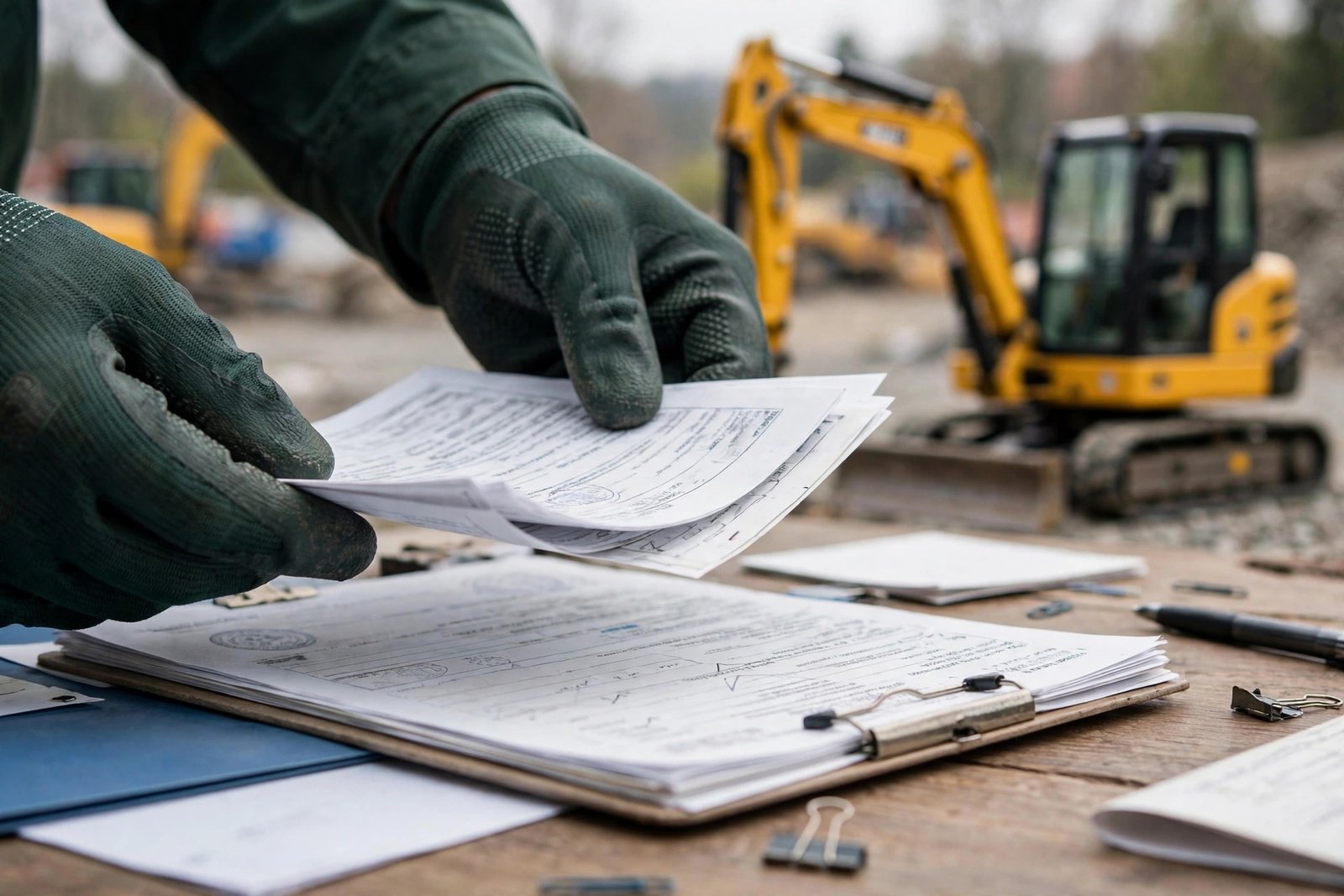
Certificates are what get a machine through customs and onto a job site. Ask which certificates are included: CE, EPA, Euro 5, and any other certificate your country needs. Ask for copies before you pay, and check the certificate names your exact model and is still valid.
4. What spare parts are available, and how fast can I get them?
A mini excavator is a working machine, and working machines need parts: filters, bucket teeth, hoses, tracks, and seals. Ask which spare parts the supplier stocks, how long they take to arrive, and how they are shipped.
Ask for a list of the common parts with the machine, and ask what you should keep on hand yourself — filters, bucket teeth, and a spare hose are a good start.
5. What does the warranty cover, and what does it not cover?
Warranty terms vary widely, and the details matter more than the headline. Ask what is covered and what is not, how long the cover lasts, and what happens if something fails.
Get the warranty terms in the contract, in writing, before you pay. Ask who pays for shipping a replacement part, whether labour is included, and what you must do to keep the warranty valid — for example, using the right oil and following the service schedule.
6. How is the machine packed and shipped?
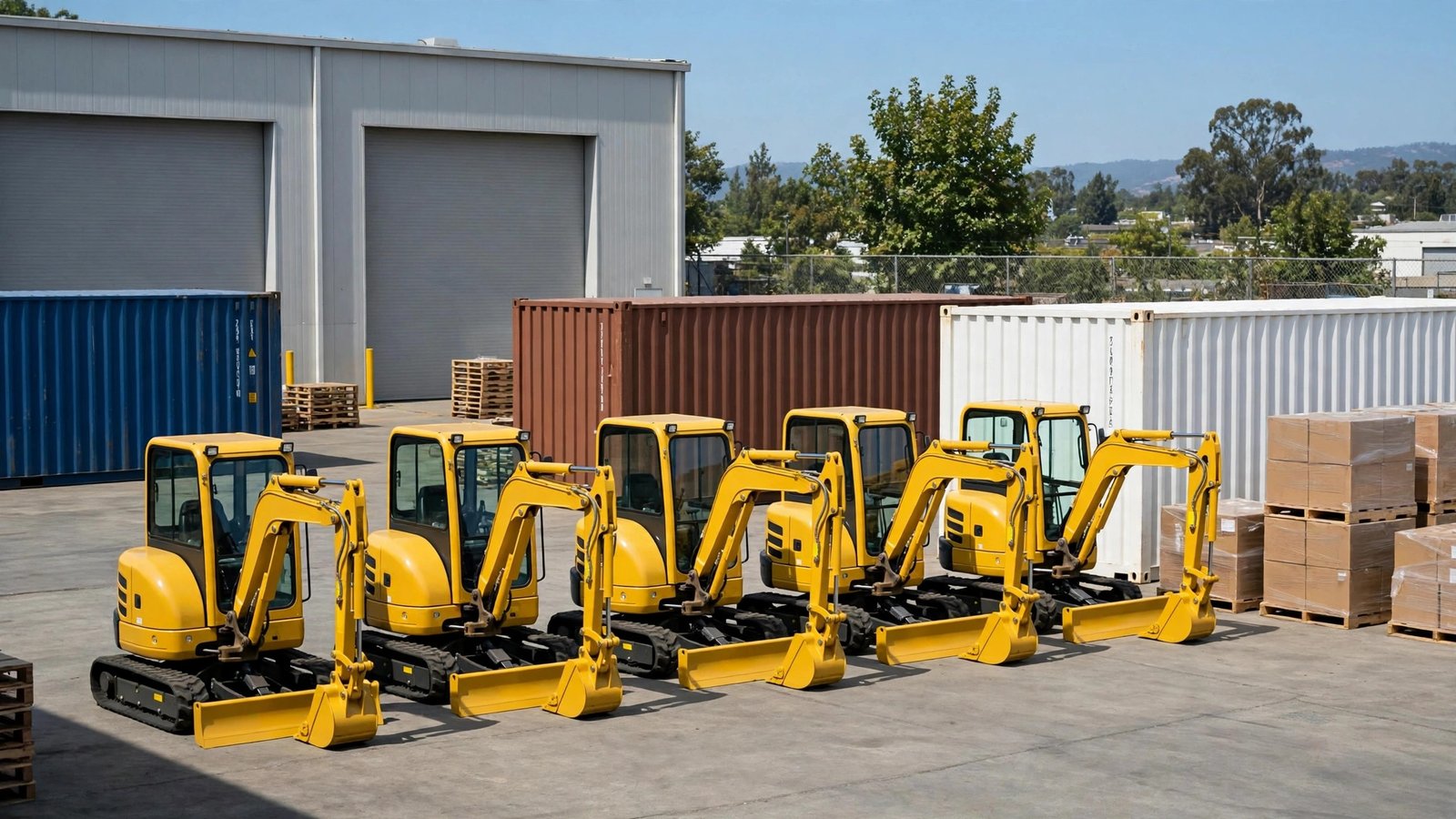
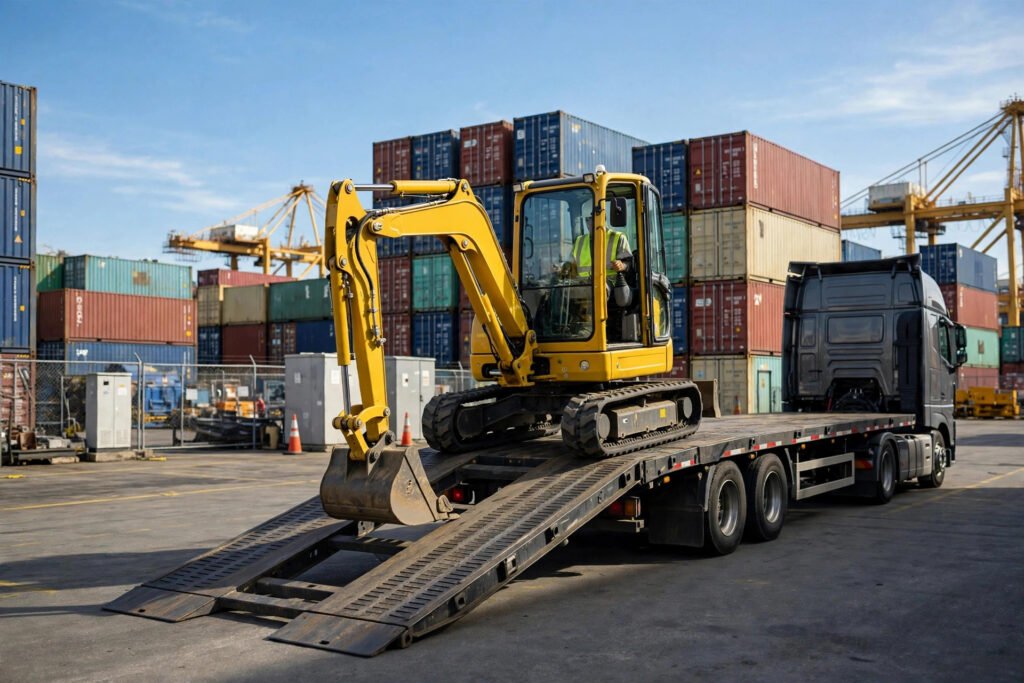
Shipping is where a good machine can arrive damaged. Ask how the machine is packed: is it in a container, on a flat rack, or shipped as a whole unit? Ask whether the boom and attachments are secured, and whether the machine is protected against rain and salt air.
Ask which port it will leave from, and confirm the trade terms in writing — for example, whether the price includes shipping to your port or only to the port in China — so there is no surprise when the invoice for freight arrives.
7. What are the payment terms?
Payment terms should be clear before you order. Ask how much is paid up front, how much is paid before shipping, and how the payment is made. Ask what happens if the machine is delayed, or if it arrives different from the configuration you ordered.
8. What is the lead time, and what could delay it?
Lead time is the time from your order to the machine leaving the factory. Ask the supplier to confirm it in writing, and ask what could make it longer — for example, a special colour, a different engine, or a busy production period.
Do not plan your work around a lead time that was only mentioned in a chat message. Get it in the contract, and ask to be told promptly if it changes.
9. What after-sales support can I expect?
After-sales support is what happens after the machine arrives. Ask who you contact if something goes wrong, how quickly they reply, and whether they can send a technician or only parts.
Ask whether there is a manual in your language, a parts list, and a service guide for your exact model. Good after-sales support is the difference between a small problem fixed in a day and a machine standing idle for weeks.
10. Is the supplier a factory or a trading company?
This is not a trick question — both can be good suppliers — but the answer changes what to expect. A factory makes the machines and can usually change the configuration, the colour, and the attachments. A trading company buys from factories and may offer a wider range of models, but may not control production in the same way.
Ask who makes the machine, where it is made, and whether you can see photos or video of the factory and the machine being built. Ask who is responsible if something goes wrong: the factory, the trading company, or both.

Ask the questions, get the answers in writing
Ten questions, ten answers, all in writing before you pay. That is the whole method. A supplier who answers clearly and provides documents is a supplier who expects a long relationship. A supplier who avoids the questions, or answers only in vague promises, is telling you something too.
Write down the answers, keep the contract and the certificates together, and check the machine against the configuration list when it arrives.
Tell Sparkle One about your work — the size you need, the ground you work on, and the country you import into — and we will answer these ten questions for your order, with the exact configuration, certificates, and spare parts in writing. Minimum order is 1 unit, and our team replies within 24 hours. Contact us on WhatsApp at +86 151 2992 2907 to discuss your requirements.