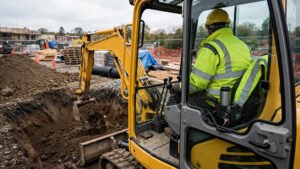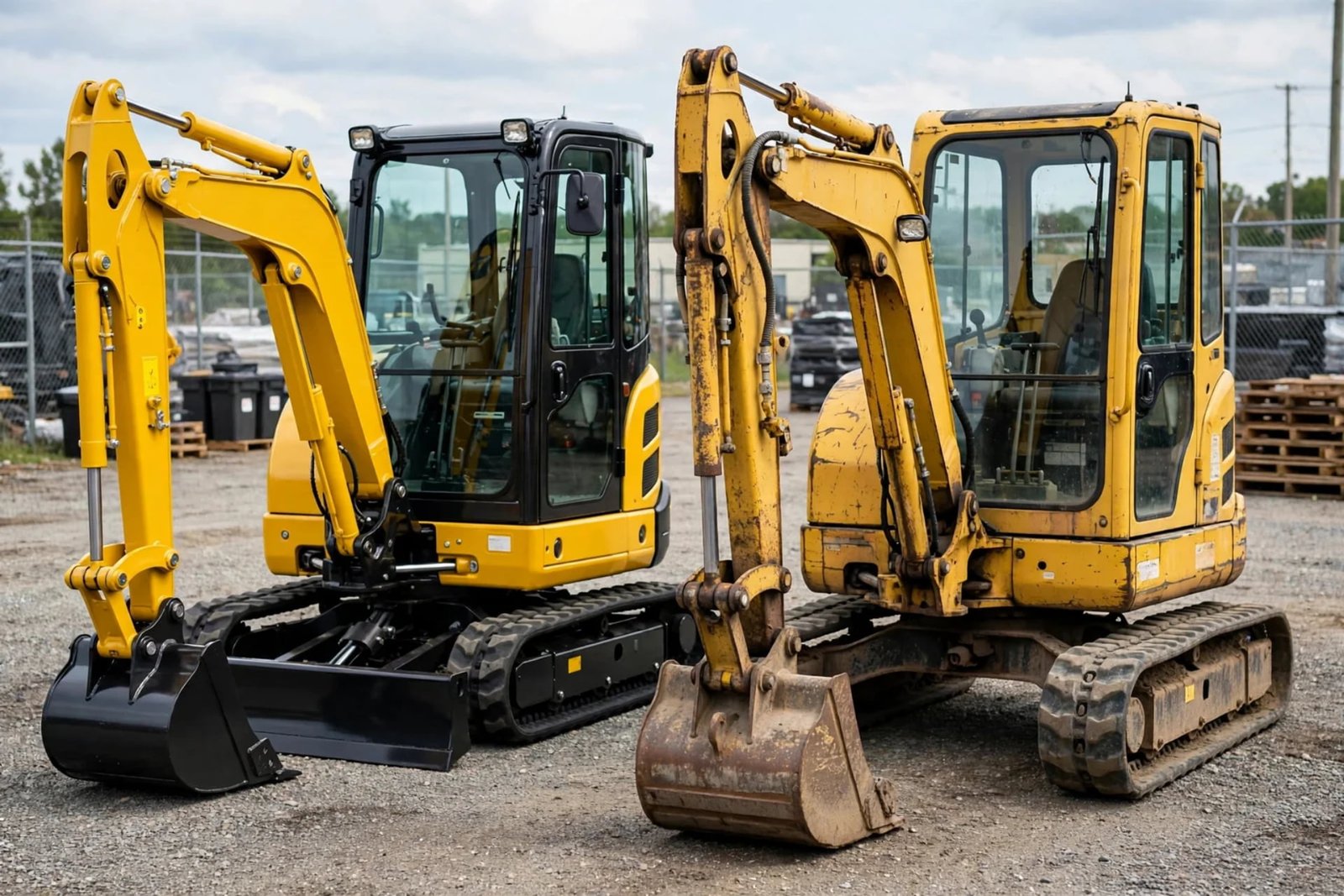
Every buyer of a first mini excavator faces the same choice: buy new, or buy used? A new machine costs more up front but starts its life with you. A used machine costs less to buy but comes with someone else’s history — the hours, the ground it worked on, and how well it was looked after. Neither choice is right for everyone. The right answer depends on how much you will use the machine, what work you do, and how much risk you are willing to take.
The case for buying new
A new mini excavator has three clear advantages. First, you know its whole history, because it starts with you. There are no worn pins, no tired tracks, and no hidden repairs from a previous owner. Second, everything is fresh — the engine, the hydraulics, the tracks, and the bucket teeth — so the machine should work reliably from day one. Third, you can choose the exact configuration you need: the size, the cab, the engine, the tracks, and the attachments, all fitted from the start, instead of accepting whatever the used market happens to offer.
For a buyer who plans to use the machine every day, or who depends on it for paid work, that reliability matters most. A machine that stops on a job site costs more than a day’s hire — it can cost a customer.
The case for buying used
A used mini excavator has one big advantage: it costs less to buy. That lower entry price matters for a buyer who only needs a machine for occasional work — a few weekends a year on a farm, a single building project, or a small landscaping business that is just starting out. Used machines are also available quickly: a new machine may need to be ordered and shipped, while a used one nearby can often be collected within days.
The risks of buying used
The risk of a used machine is that you are buying its past as well as its present. A machine that worked daily on rock or in demolition rubble will have worn far more than one of the same age that worked gently on soft ground. Hours on the meter tell part of the story, but not all of it — a low-hour machine that was never greased can be in worse shape than a higher-hour machine that was serviced on time.
The expensive risks are the ones you cannot see from the outside: a worn hydraulic pump, a tired engine, internal wear in the pins and bushings, and a track that is about to fail. Any of these can turn a bargain into a repair bill larger than the saving on the purchase price. That is why a used machine must be checked carefully, in person, before you buy it — never from photos alone.
What to check on a used machine
Start with the hours and the service record. Ask for the hours on the meter and any record of oil changes, filter changes, and repairs. A machine with a written service history is worth more than one without. If there is no record at all, treat that as a warning sign.
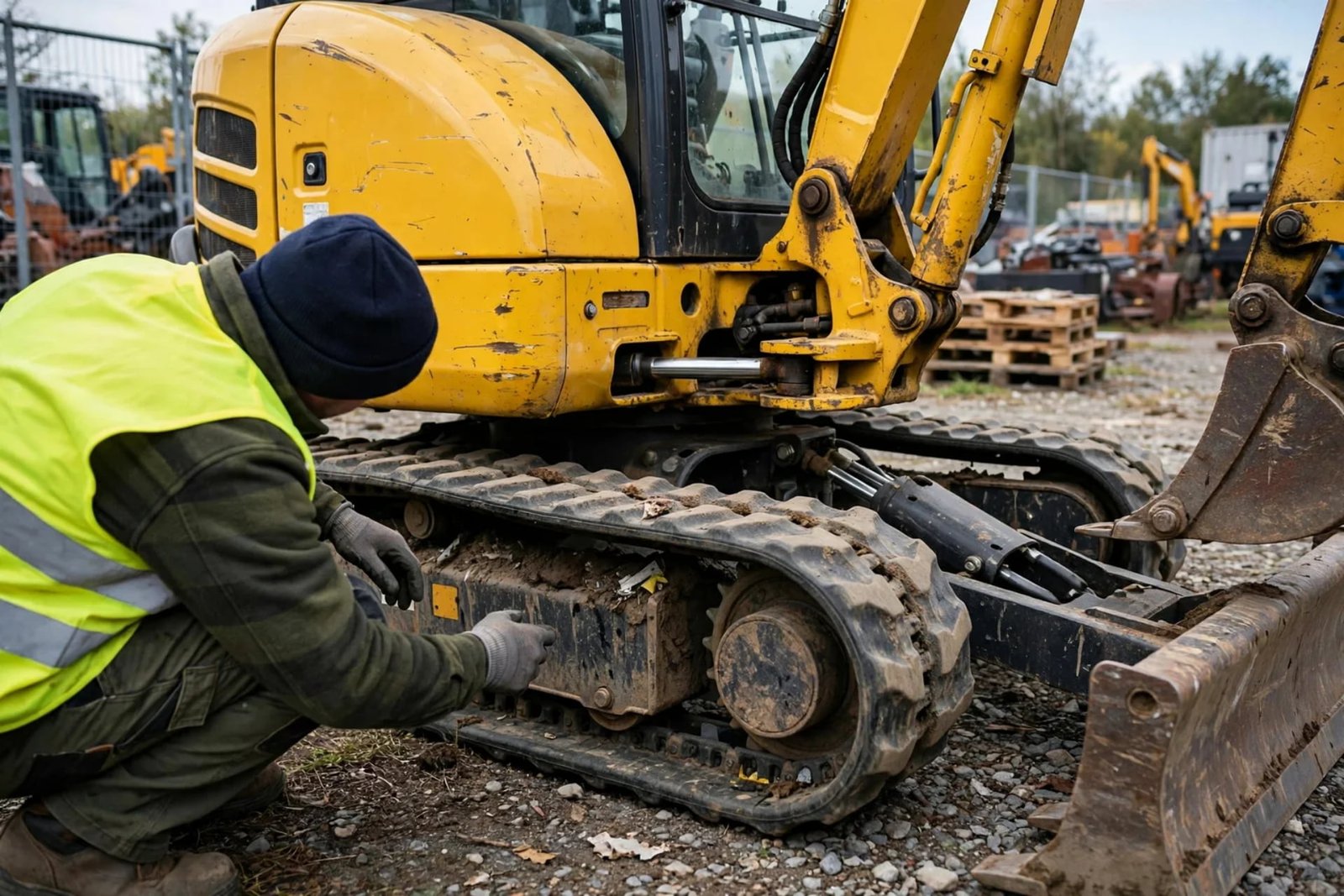
Then check the tracks and undercarriage. Look for cracks across the tread, cuts that reach the steel cords, chunks missing from the edges, and worn or missing drive lugs. Check the track tension, look for stones trapped between the track and the rollers, and look at the rollers and idlers for wear and oil leaks around the drive motors.
Next, check the hydraulics. Start the engine and let it warm up, then move each function slowly through its range — boom, arm, bucket, and swing. They should move smoothly and evenly, without jerking or hesitation. A function that is slow, weak, or jerky may point to low oil, a blocked filter, or a worn pump. Look along every hose for cracks, bulges, and wet fittings, and look under the machine for fresh oil.
Check the engine. Listen for unusual noises, look for smoke when it starts and when it works, and check the oil on the dipstick — it should be dark but clear, not milky and not full of metal particles. Milky oil can mean water is getting in. Check the coolant level and look for leaks around hoses and the radiator.
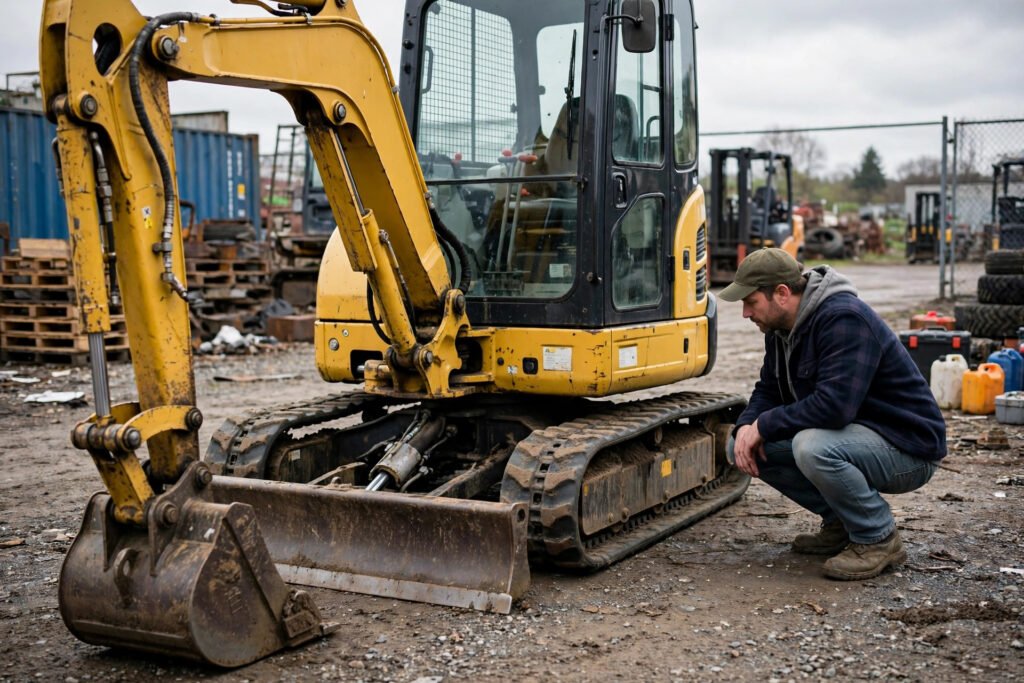
Finally, check the pins, bucket, and structure. Look at the boom, arm, and bucket pins for play — if a pin moves sideways in its housing, the bushing is worn. Check the bucket teeth, look for cracks in the boom and arm, and check that the cab, seat belt, and controls all work. Take the machine for a short working test if you can: dig a trench, lift a load, and swing the body. A machine that works well for half an hour in front of you is a better bet than one you have only seen standing still.
Who should buy new, and who should buy used?
Buy new if the machine will earn your living — daily contracting, rental, or regular farm and construction work — or if a breakdown on the job would cost you a customer. Buy used if the work is occasional and light, if your budget is tight, and if you can check the machine properly, or bring someone who can. A used machine suits a buyer who knows machines and can accept some repair risk. It does not suit a buyer who needs the machine to work every day with no backup.
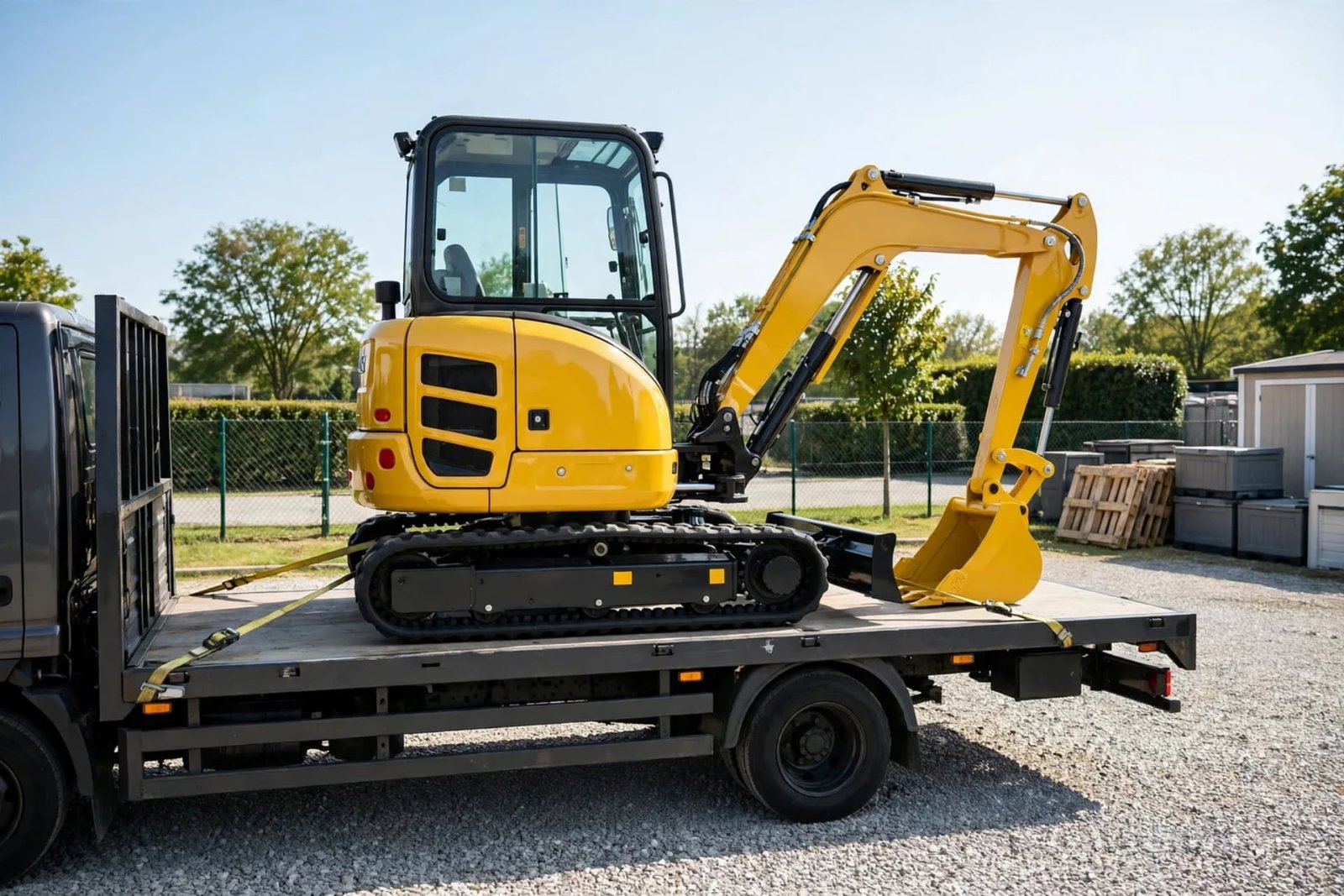
A machine that fits your work
New or used is not a question of which is better in general. It is a question of which fits your work, your budget, and your tolerance for risk. A new machine gives you a clean start and a machine chosen for your job. A used machine gives you a lower entry price and a machine you must check with your own eyes before you buy.
Tell Sparkle One about your work — how often you will use the machine, what ground you work on, and what size you need — and we will help you choose the right model and configuration for it. Minimum order is 1 unit, and our team replies within 24 hours. Contact us on WhatsApp at +86 151 2992 2907 to discuss your requirements.