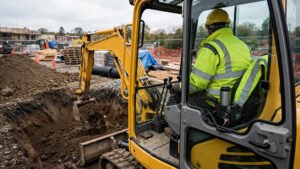
Every mini excavator owner asks the same question sooner or later: what will it cost when something goes wrong? There is no single figure. A repair bill depends on what broke, how the machine was used, how old it is, and whether the problem was caught early or left to grow.
This guide explains the factors that shape a repair bill, the common repairs owners face, and how good maintenance keeps those bills smaller. It does not quote prices — those vary by country, model, parts supplier and workshop — but once you understand what drives the cost, you can plan for it and compare quotes fairly.
The biggest factor: what broke, and how far it went
The single biggest driver of any repair bill is the part that failed and how much damage it caused before it was fixed. A worn bucket tooth, a cracked hose or a tired filter is a small job. The same machine left running with a leaking hose can end up with a damaged pump, and a pump is a far larger job than a hose. Early warning signs matter: a machine that feels slow, makes a new noise, leaks a little oil or struggles to start is telling its owner something, and fixing the cause at that stage is usually a small repair.
Parts: original, aftermarket, and availability
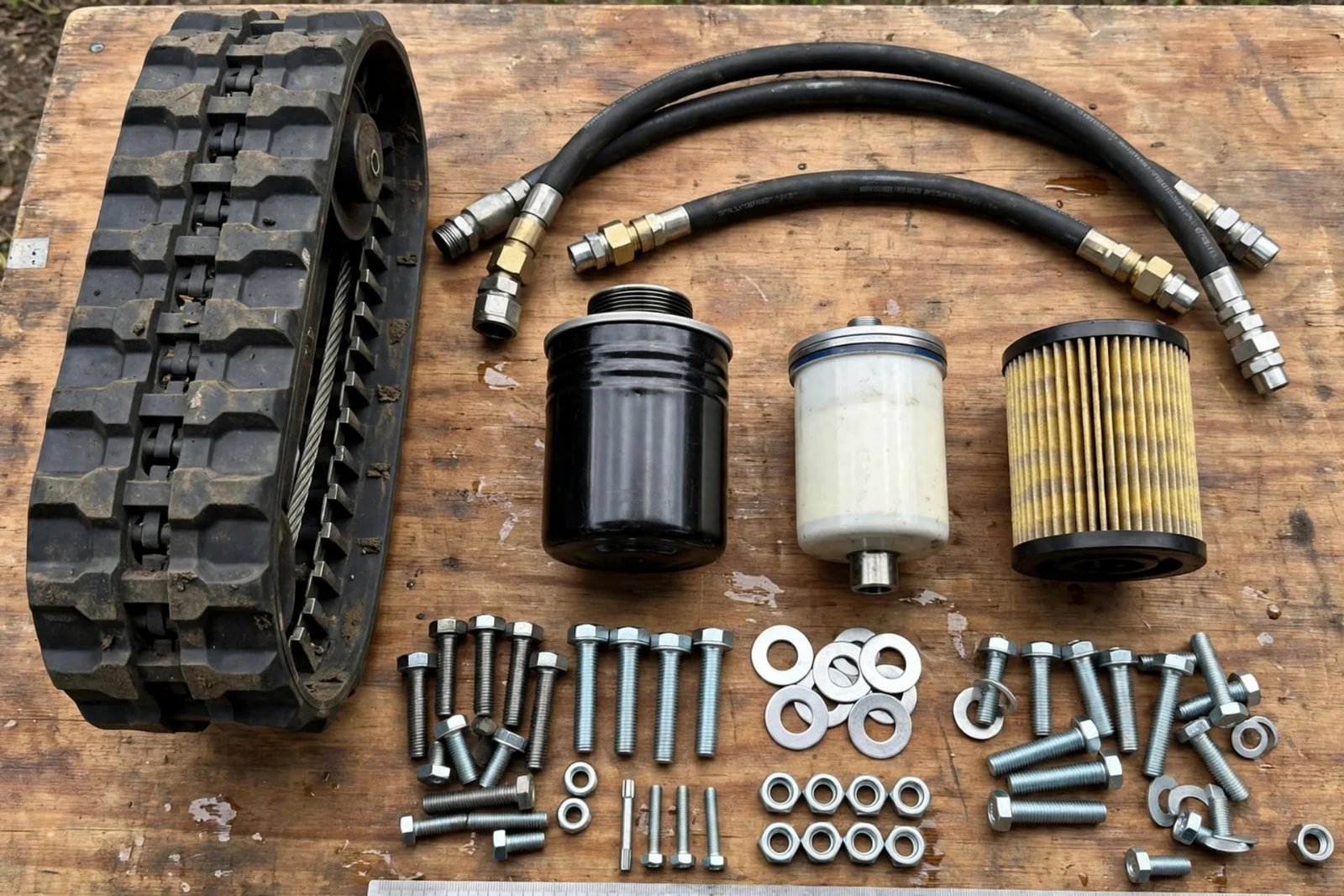
Parts are usually the largest single item on a repair bill, and their cost varies a great deal. Genuine parts made for the exact model tend to cost more, but they fit correctly and last as their makers intended. Aftermarket parts can cost less, but quality varies, and a part that does not fit quite right can wear out early or damage the part next to it. A common filter or standard hose is easy to find; a less common part can take longer to source, and the wait costs money if the machine is standing idle.
Labour: who does the work, and where
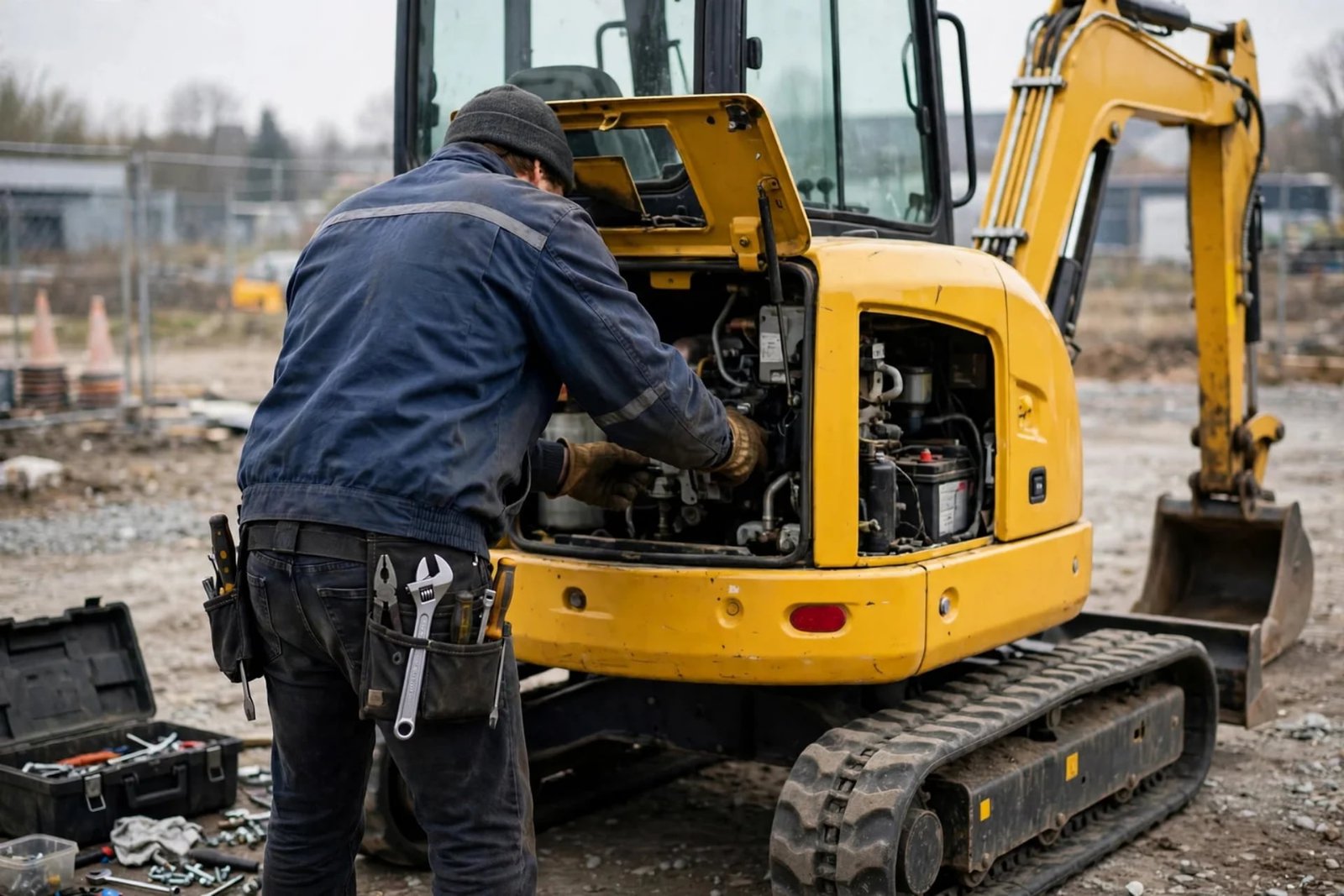
Labour is the second large part of most bills. A simple service — an oil change, a filter, greasing the pins — can be done by the owner with basic tools. A hydraulic fault, an engine problem or an electrical issue usually needs a trained technician. Workshop rates vary by country and region, and a mobile technician who comes to the site will charge differently from a workshop that takes the machine in. What matters most is a clear quote before the work starts: what the problem is thought to be, what parts are needed, and how many hours the job is expected to take.
Downtime: the cost nobody puts on the invoice
The invoice shows parts and labour. It does not show the cost of a machine that is not working. For an owner-operator, a week without the machine can mean a missed job or a delayed project.
Downtime is why prevention is worth more than repair. A daily check that finds a bulging hose, a loose track or a low oil level takes five minutes, and fixing that hose in the yard takes far less time than recovering a machine that broke down on a job site and waiting for parts.
Age, hours, and how the machine was used
Two machines of the same model can have very different repair bills, because their lives have been different. A machine that worked gently on soft ground, was greased regularly and had its oil changed on time will usually need less repair work than a machine of the same age that worked daily on rock or in demolition rubble without regular servicing. Hours on the meter matter, but they are not the whole story — what counts is the combination of age, hours, the ground it worked on, and how well it was looked after.
Common repairs, in general terms
Most mini excavator repairs fall into a few familiar groups. Tracks and undercarriage parts wear with use: rubber tracks crack and wear, rollers and idlers wear, and tensioners need adjustment. Hoses and seals age and start to leak, especially where they flex or rub. Filters clog, bucket teeth wear and break, and pins and bushings wear if they are not greased — a worn pin left too long can wear the housing it sits in.
Engine and hydraulic problems are less common but more serious. An engine that is hard to start, smokes heavily or loses power may need fuel system work, and slow or weak hydraulics may need a filter, a hose, or a pump check. These are the jobs where a technician’s diagnosis matters most.
How maintenance lowers the bill
Almost every repair bill has a cheaper version of itself, and maintenance is what makes the difference. Clean oil and filters protect the engine and hydraulics, greased pins last far longer than dry ones, and correct track tension stops tracks from wearing early. A clean machine shows leaks sooner, and a leak fixed early is a hose, not a pump. A daily walk-around, a weekly grease and clean, and oil and filter changes at the intervals in the manual — that routine is the cheapest repair insurance a mini excavator owner can buy.
Getting a fair quote
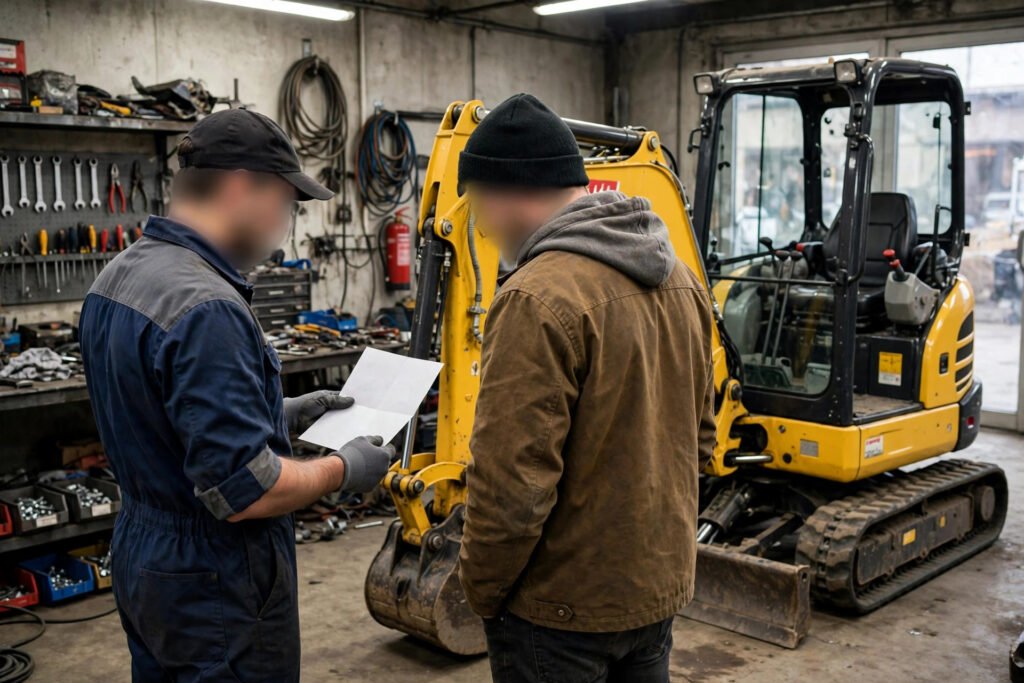
When a repair is needed, a fair quote starts with a clear diagnosis. Describe the symptom to the workshop: what you saw or heard, when it started, and what changed. A photo of the leak or the worn part helps more than a long description. Ask for the quote in writing, with parts and labour listed separately, and ask whether the parts are genuine or aftermarket. If two quotes are very different, ask why — the cheapest quote is not always the cheapest repair, because a job done properly once costs less than the same job done twice.
Plan for repairs, don’t fear them
Every working machine will need repairs. That is normal, and it is not a sign of a bad machine. What separates an expensive repair history from a manageable one is rarely luck — it is early attention to warning signs, regular maintenance, a small stock of common parts, and a workshop relationship built before the machine breaks down.
Tell Sparkle One about your machine and how you use it, and we will help you confirm the service items and spare parts worth keeping on hand for your model. Minimum order is 1 unit, and our team replies within 24 hours. Contact us on WhatsApp at +86 151 2992 2907 to discuss your requirements.