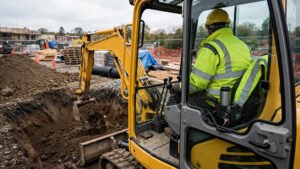
Every mini excavator comes with a spec sheet — a page full of numbers that is supposed to tell you what the machine can do. For a first-time buyer, it can look like a foreign language. Operating weight, digging depth, reach, dumping height, lifting capacity, hydraulic flow: each number matters, but only if you know what it means for your job.
This guide explains each figure in plain language, which numbers matter most, and how to compare two machines fairly. All figures are explained in general terms; exact numbers depend on the model, boom and arm, bucket, and attachments, so always confirm them for the exact configuration you plan to order.
Operating weight: the size class
Operating weight is the weight of the machine ready to work, usually including the operator, a full fuel tank, and a standard bucket. It is the number that puts a machine in a size class — 1 ton, 1.5 tons, 2 tons, and so on.
Do not choose by weight alone. Two machines in the same weight class can dig to different depths and lift different loads, because their booms, arms, and hydraulic systems differ. Weight tells you the class; the other numbers tell you what that particular machine can do.
Engine power: how strong is strong enough?
Engine power, usually given in kilowatts or horsepower, tells you how much power the engine produces. More power usually means faster digging in hard ground, but power is not the whole story. A machine with a strong engine and a weak hydraulic system will still feel slow, because it is the hydraulics, not the engine alone, that move the boom, arm, and bucket.
Digging depth: how deep can it go?
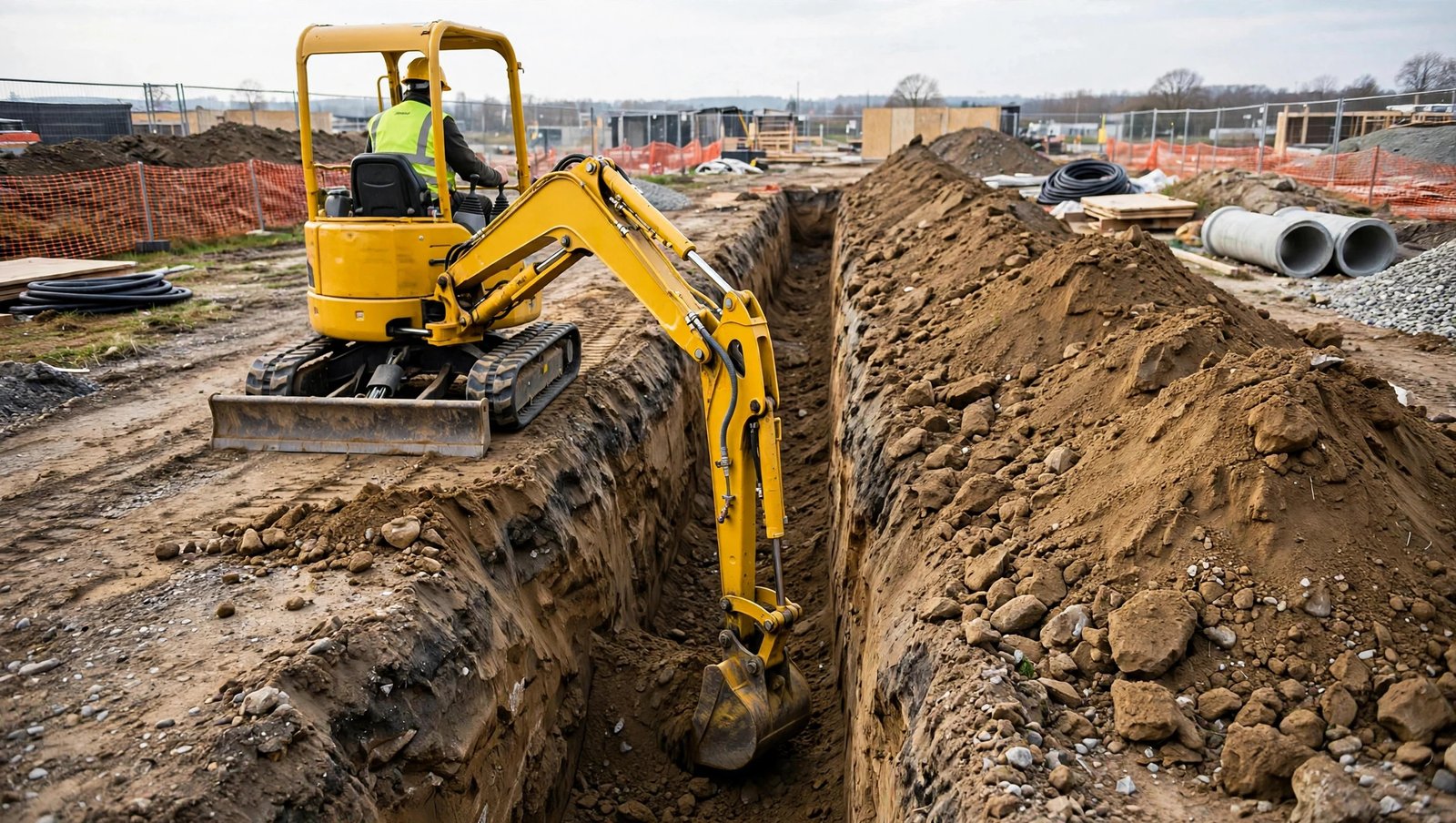
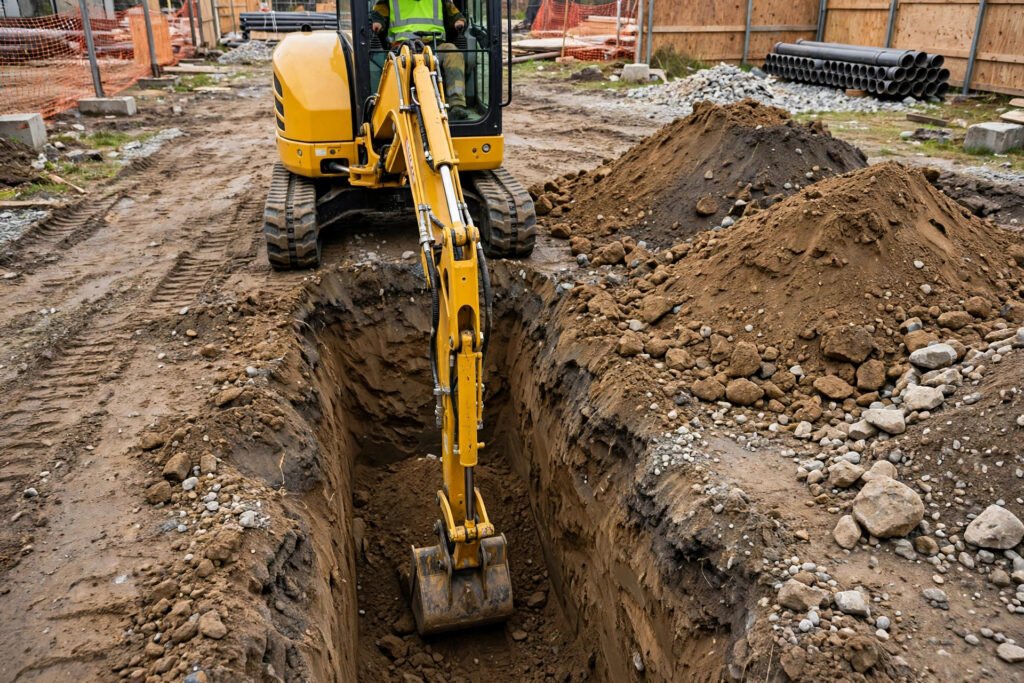
Digging depth is the deepest point the bucket can reach below ground level. It is the number that matters most for trenches, footings, drainage, and foundations. Before you buy, measure the deepest trench or footing you dig regularly. That is your minimum digging depth.
Reach: how far can the arm go?
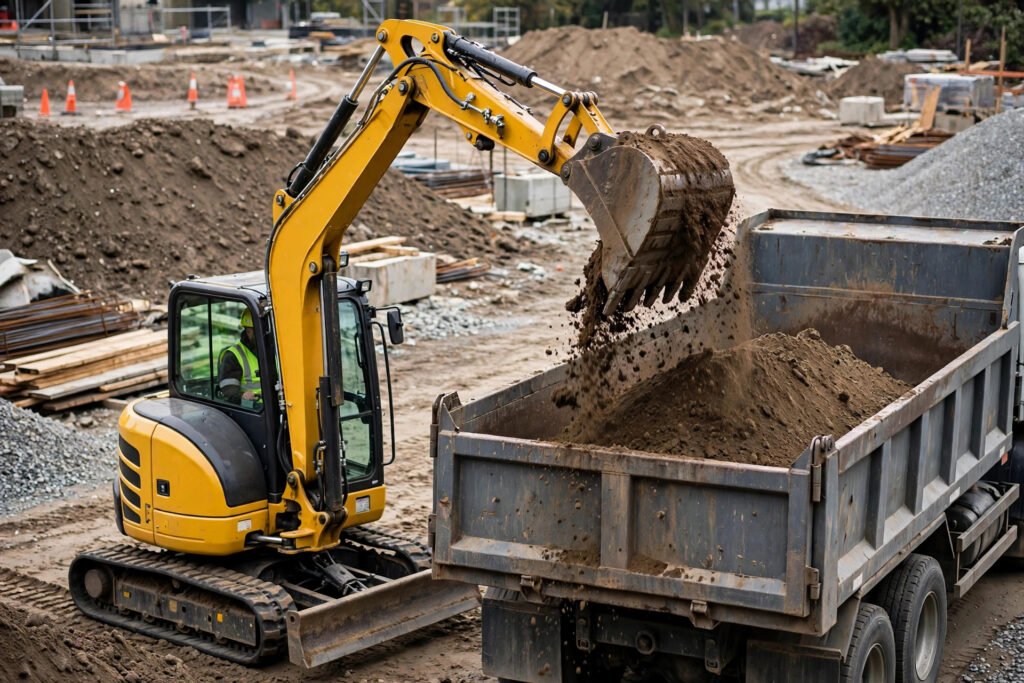
Reach is how far the bucket can extend from the centre of the machine. It matters when the machine cannot sit right next to the work — for example, when it is digging across a ditch or loading a truck parked beside it. A longer arm gives more reach and more digging depth, but it can reduce lifting capacity, because the load is further from the machine.
Dumping height: how high can it load?
Dumping height is the highest point the bucket can reach when it tips its load out. It matters every time the machine loads a truck, a skip, or a high pile. Before you order, measure the height of the truck or container you use most often and compare it with the dumping height on the specification sheet.
Lifting capacity: what can it lift, and where?
Lifting capacity is the heaviest load the machine can lift safely, and it is the number most often misunderstood. A lifting chart does not give one figure; it gives different figures for different positions. A machine lifts more when the load is close and low down, and less when the load is far out at full reach or lifted high to the side.
When you compare lifting capacity, check the position the figure applies to and whether it is for the machine with a bucket or a different attachment fitted. A single headline lifting figure, without a position, tells you very little.
Track width and tail swing: will it fit?
Track width tells you how wide the machine is and whether it can pass through your narrowest gate or doorway. Tail swing is how far the rear of the upper body sticks out beyond the tracks when the machine turns. On a zero tail swing machine, the rear stays within the width of the tracks, so the machine can turn in a space no wider than itself. If most of your work is between buildings or beside walls, tail swing matters as much as width.
Hydraulic flow: the number behind the speed
Hydraulic flow, usually given in litres per minute, tells you how much oil the pump delivers to the attachments. It matters most with powered attachments: a breaker, an auger, or a grapple each needs a certain flow to work properly. Too little flow and the attachment runs slowly; too much and it can be damaged. Before you order attachments, check that the machine has auxiliary hydraulic lines and that its flow matches the attachment’s requirements.
What numbers matter most?
It depends on your work. For trenching, digging depth and reach matter most. For loading trucks, dumping height and reach matter most. For breaking, hydraulic flow matters most. For tight sites, track width and tail swing matter most. For lifting, the lifting chart matters most.
Write down your three most common jobs before you read a spec sheet, and look for the numbers that decide whether the machine can do each one. A machine that meets all three jobs is the right machine.
Comparing like with like
Buyers are often surprised that the same model can show different figures in different places. Different configurations change the numbers: a long arm, a different bucket, a cab instead of a canopy, or extra counterweight can all change digging depth, reach, dumping height, and lifting capacity. Compare machines with the same boom, arm, and bucket, and ask your supplier which configuration the figures apply to.
Ask your supplier to confirm the exact configuration
Before you order, confirm the exact configuration in writing: model, boom and arm, bucket size, cab type, tracks, and attachments. Then ask for the digging depth, reach, dumping height, lifting capacity, and hydraulic flow for that exact configuration — not for a different version of the same model.
A spec sheet is a tool, not a score
A spec sheet does not tell you which machine is best. It tells you whether a machine fits your work. Measure your job first — your deepest trench, your furthest reach, your highest truck, your narrowest gate — and read the spec sheet against those numbers. The machine that meets them all, with a little room to spare, is the machine to buy.
Tell Sparkle One about your deepest trench, your truck height, and how far the machine must reach, and we will help you choose the size and configuration that fits. Minimum order is 1 unit, and our team replies within 24 hours. Contact us on WhatsApp at +86 151 2992 2907.