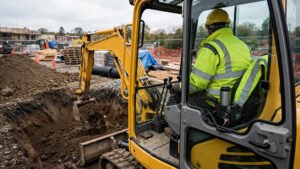
Landscaping is all about shaping ground — levelling it, digging into it, and moving soil from where it is to where it should be. Done by hand, that work is slow and hard on the back. Done with a large machine, it often damages the very lawn and garden you are trying to improve. A mini excavator for landscaping sits in the middle: small enough for a garden, strong enough to dig and grade all day, and gentle enough on lawns to leave the finished work tidy. This guide explains what it can do, how to use it without damaging the site, and how to choose the right size.
Grading and Levelling: The Foundation of Good Landscaping
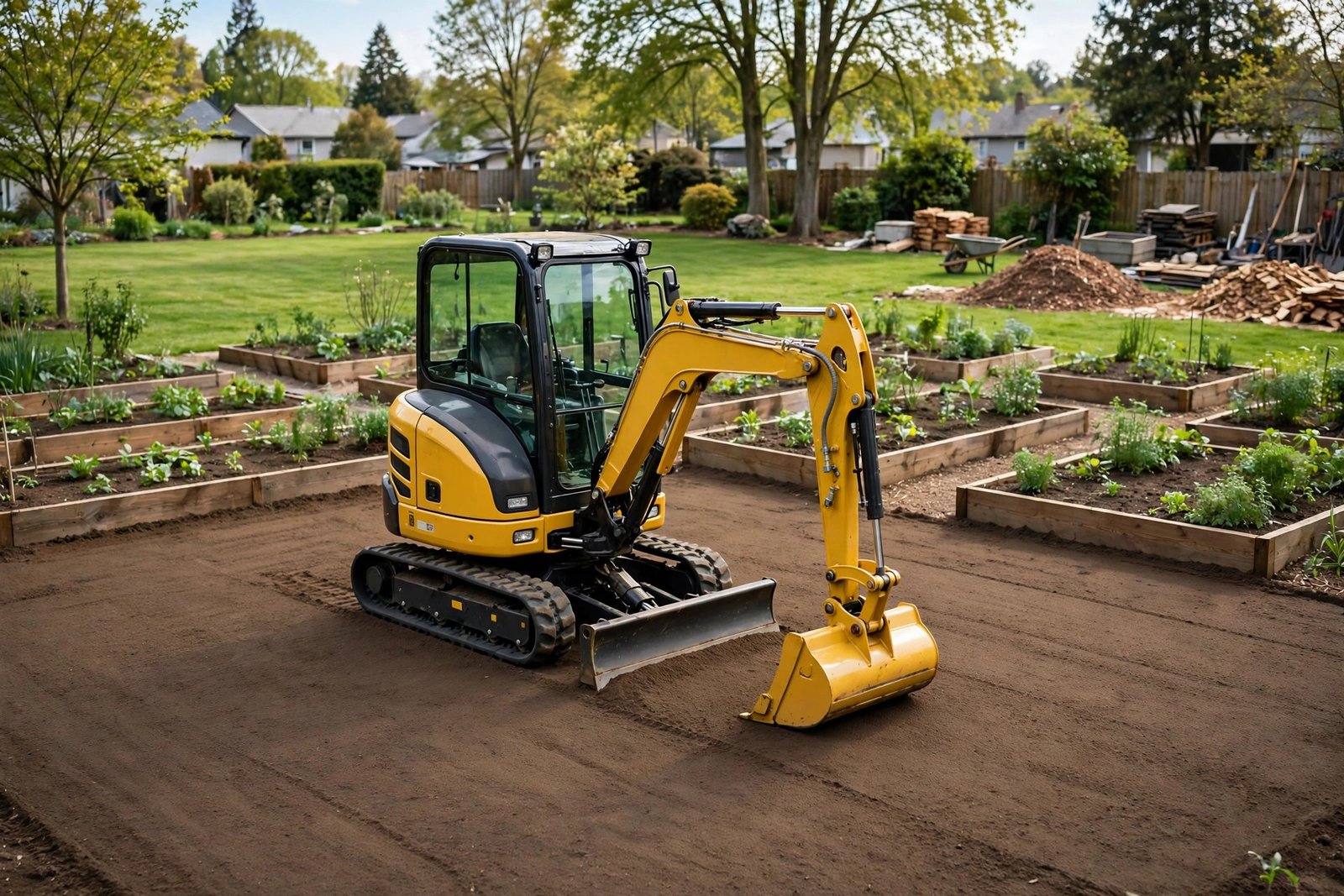
Almost every landscaping job starts with grading. A garden needs a level base for a lawn, a patio, or a path. A yard needs a gentle slope so rainwater runs away from the house, not towards it. A driveway needs a flat, firm surface before gravel or paving goes down. A mini excavator grades with its bucket and blade. The operator can scrape off high spots, fill low spots, and spread topsoil in an even layer. Because the boom and arm move in small, controlled steps, it is easy to work to a level line and to check the result as you go. The key to good grading is patience. Work in thin layers rather than trying to move a large pile in one pass. A well-graded area makes every later step — seeding, turfing, planting, or paving — easier and longer-lasting.
Digging Ponds and Tree Holes
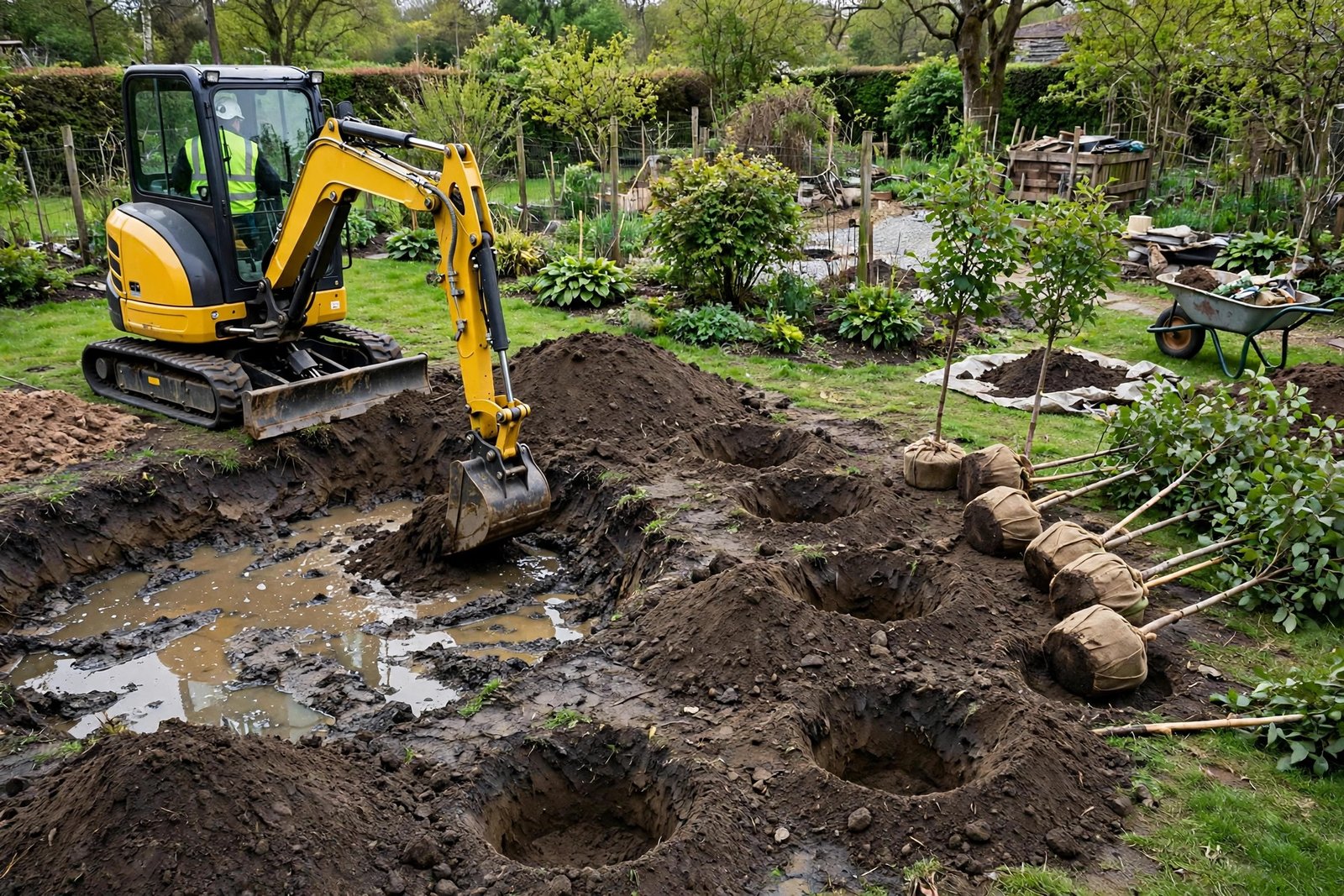
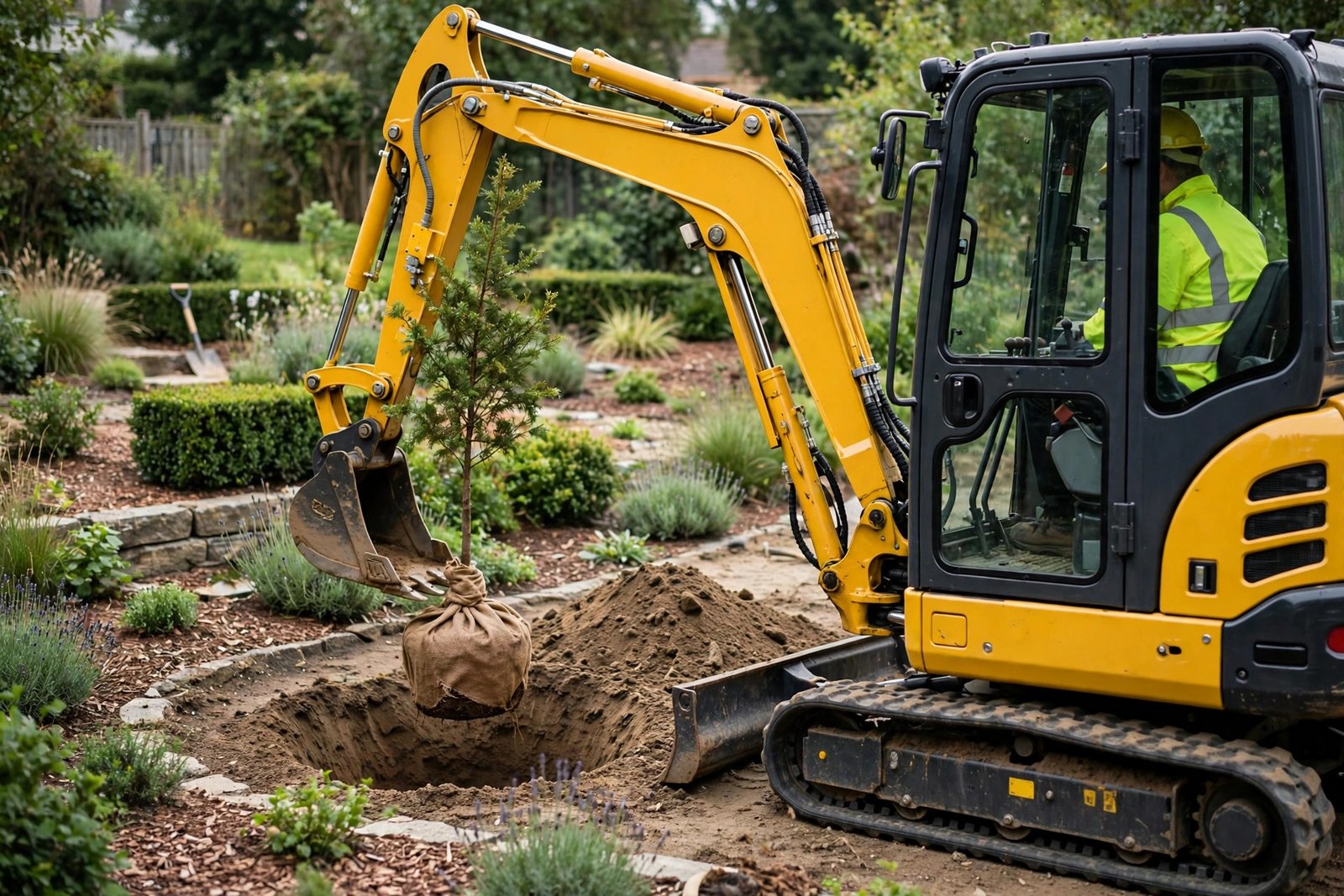
A mini excavator is also a digging machine, and landscaping gives it plenty of digging to do. A garden pond needs a hole with a level bottom and smooth sides. A tree needs a hole wide enough for its roots to spread. A new hedge needs a straight trench so the plants sit at the same depth. Digging these by hand takes hours, and the result is often uneven. A mini excavator digs a pond in a fraction of the time, and the operator can shape the edges and depth as the hole takes form. For trees, a narrow bucket cuts a clean hole without disturbing the soil around it, so nearby plants and lawns stay in place.
Moving Soil, Mulch and Gravel
On a landscaping job, material is always moving. Topsoil arrives in a pile and needs spreading. Mulch needs carrying to flower beds. Gravel needs placing along a path. Compost needs moving from a heap to the garden.
Clearing Without Ruining the Garden
Many landscaping jobs start with clearing: removing old stumps, roots, rocks, and overgrown shrubs before the new garden can take shape. A mini excavator can pull out a stump, lift a rock, and push scrub into a pile, all in a tight space. Because it is compact, it can work between trees and beside a fence without knocking them down, and once the clearing is done, the same machine can level the ground ready for planting.
Working on Lawns Without Damage
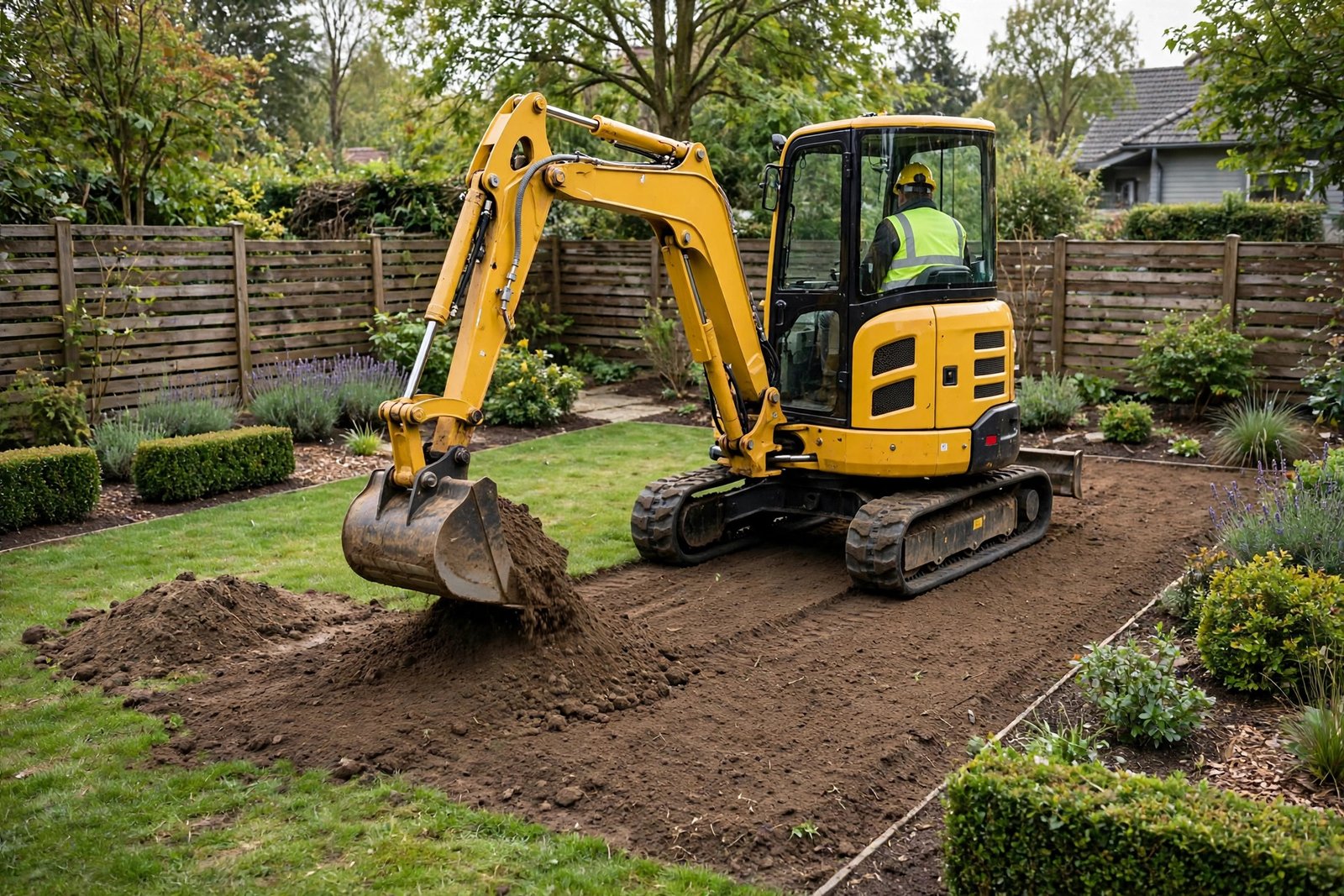
The biggest worry for homeowners is damage: will the machine tear up the lawn? The answer depends on how it is used, and a mini excavator has two advantages here. Most mini excavators run on rubber tracks. Rubber tracks spread the machine’s weight over a larger area than wheels, so the pressure on the ground is lower, and they do not leave the deep marks that steel tracks or heavy tyres can leave.
Attachments for Landscaping
Attachments turn a mini excavator from a digging machine into a full landscaping tool. The most useful ones are simple. A grading bucket, wider than a standard digging bucket, spreads soil and levels ground smoothly. It is the best choice for finishing a lawn or a garden bed. A narrow bucket is better for trenches and planting holes, where a neat, narrow cut matters more than width. A thumb clamp or grapple helps with clearing. It can grip a stump, a rock, or a bundle of branches and lift it out cleanly, without dropping material across the garden. An auger drills neat holes for trees, fence posts, and shrubs, at a consistent depth and diameter.
Choosing the Right Size: 1 to 2 Tons
For most landscaping work, a 1 to 2 ton mini excavator is the practical choice. A 1 ton machine is light, easy to trailer, and fits through a standard garden gate. It is ideal for small gardens, backyards, and jobs where access is tight. A 1.5 to 2 ton machine adds digging depth and lifting power for larger gardens, deeper ponds, and heavier soil, while still fitting through most gates and onto a small trailer. It is often the best first machine for a landscaping business, because one machine can cover many different jobs. Before you buy, measure the narrowest access point on your most common job — usually a gate or a path between buildings — and check your trailer capacity and storage space. A machine that fits through your gates and onto your trailer is a machine you will actually use.
A Machine That Fits the Garden
A mini excavator is not a smaller version of a large machine. It is a tool built for the places large machines cannot go: gardens, lawns, courtyards, and narrow sites. It grades, digs, moves soil, and clears ground, all while leaving the finished garden looking tidy. If you are a landscaper or a homeowner planning a larger garden project, start by listing the jobs you need done — grading, digging, moving soil, and clearing — then choose the size and attachments that fit those jobs. A machine matched to your work will be used every week, not left in the shed.
Get in Touch
Sparkle One supplies mini excavators for landscaping, farm work, and small construction, with a minimum order of 1 unit. To ask about models, sizes, and attachments for your landscaping work, contact us — we reply within 24 hours. WhatsApp: +86 151 2992 2907