If you are shopping for your first compact machine, you have probably asked the same question as almost every small contractor: should I buy a mini excavator, a skid steer, or a backhoe?
They all move dirt. They all look useful on a job site. But they are built for different jobs, and choosing the wrong one can cost you time, fuel, and patience on every project.
This guide explains what each machine does best, how they compare side by side, and how to decide which one fits your work. If you mainly dig, trench, and work in tight spaces, the answer is often a mini excavator. If you mainly load, lift, and move material across open ground, a skid steer or a backhoe may make more sense.
What Is a Mini Excavator?
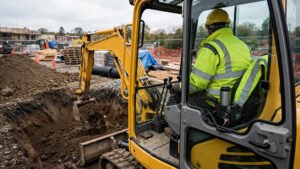
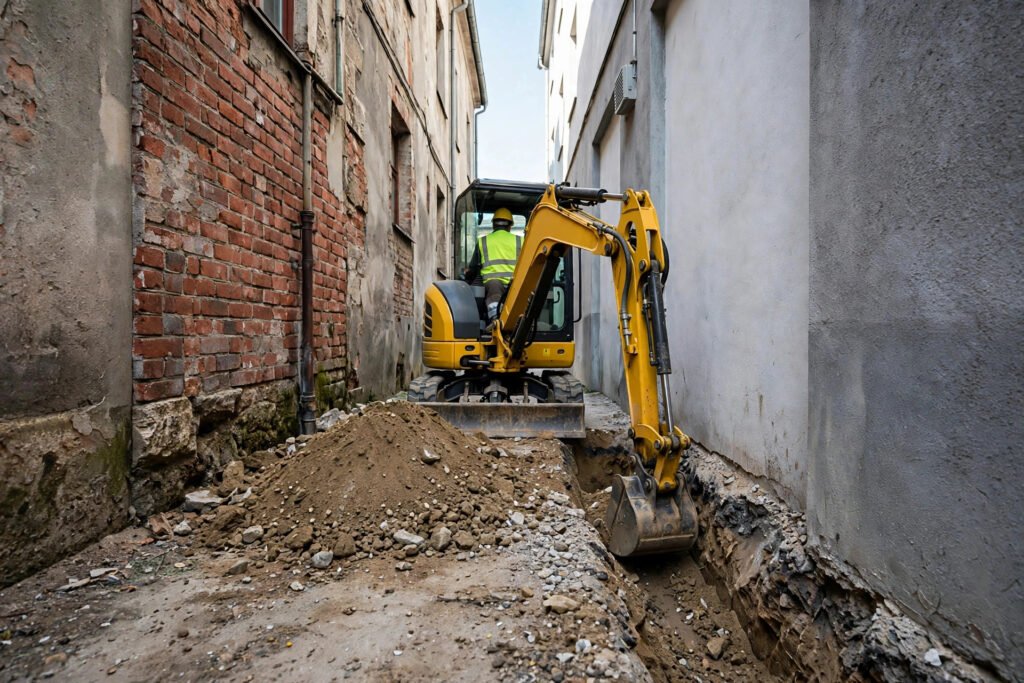
A mini excavator is a small, tracked digging machine with a boom, stick, and bucket. The operator sits in a cab or on an open station and controls the arm with joysticks. The tracks spread the machine’s weight over a larger area, so it can work on soft ground, lawns, and finished surfaces with less damage than a wheeled machine of similar weight.
Mini excavators are made for digging. They can dig trenches for water pipes, cables, and drainage, dig footings for small buildings and fences, clear stumps and roots, and load loose soil into a truck or wheelbarrow. Many models can swing the boom to the side, which is useful when you are digging close to a wall. Zero-tail-swing models are designed so the rear of the machine stays within the width of the tracks when it turns, which makes them easier to use between buildings, in gardens, and on narrow streets.
A mini excavator can also do more than dig. With the right attachment, the same machine can break concrete with a hydraulic breaker, drill holes with an auger, grab logs or debris with a grapple, grade soil with a grading bucket, or lift and place small loads. That flexibility is one reason small contractors, landscapers, farmers, and rental companies like them: one compact machine can cover several jobs in a week.
The main limitation is travel speed and lifting height. A mini excavator moves slowly on its tracks, so it is usually transported to the site on a trailer. It is not the best choice if your main job is carrying pallets or loading trucks all day.
What Is a Skid Steer?
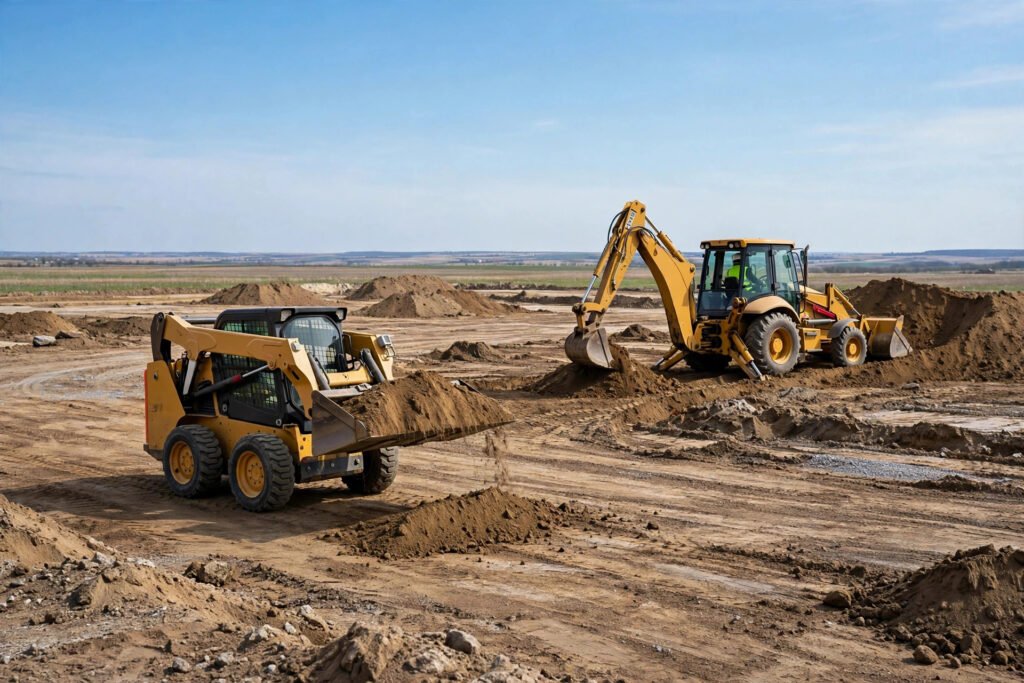
A skid steer, also called a skid steer loader, is a compact wheeled or tracked loader with a lift arm at the front. It steers by driving the wheels or tracks on each side at different speeds, which lets it turn in a very small space. The operator can swap the front attachment quickly, so the same machine can use a bucket, forks, a grapple, a brush cutter, or a sweeper.
A skid steer is made for moving material. It scoops, carries, lifts, and loads soil, gravel, mulch, and debris. On a farm, it can move feed, clean barns, and load trucks. On a construction site, it can backfill trenches, clear a yard, and move pallets with forks. A tracked skid steer, often called a compact track loader, works better on soft or muddy ground than a wheeled model.
A skid steer can dig, but only to a limited depth. Its bucket works well for shallow digging and grading, but it cannot dig a deep trench the way an excavator can. It also needs more room to work safely around the load, because the lift arm and bucket are in front of the operator.
What Is a Backhoe?
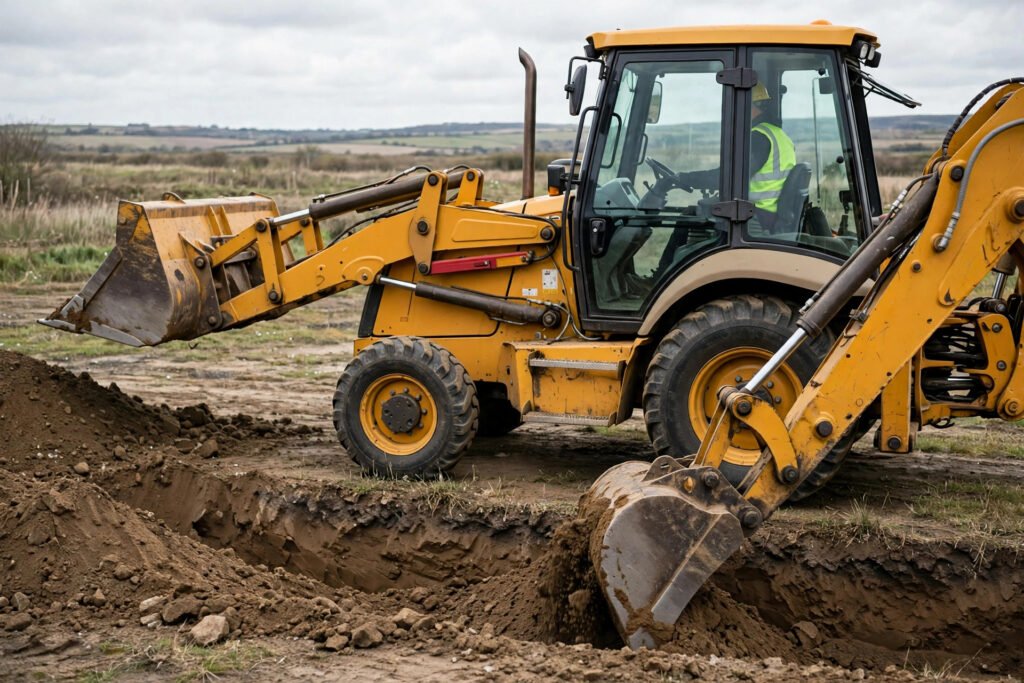
A backhoe loader, usually shortened to backhoe, is a larger machine that combines a loader bucket at the front with a digging arm at the back. It is built on a tractor-style chassis with large rear wheels and smaller front wheels. The operator drives it to the site, uses the front bucket to load and move material, then turns the seat around to dig with the rear arm.
A backhoe is a good all-round machine for larger properties and road work. It can dig deeper than a skid steer, load trucks with the front bucket, and travel on the road at a higher speed than a tracked mini excavator. For a contractor who needs one machine that can do a little of everything on open ground, a backhoe is a practical choice.
The trade-off is size. A backhoe needs more space to turn and work than a mini excavator or a skid steer. It is harder to use in a garden, between houses, or on a narrow site, and its wheels can leave marks on soft ground.
Mini Excavator vs Skid Steer vs Backhoe: Comparison Table
| Feature | Mini Excavator | Skid Steer | Backhoe |
|---|---|---|---|
| Main job | Digging and trenching | Loading, lifting, and moving material | Digging and loading in one machine |
| Digging depth | Deep for its size; best of the three for trenches and footings | Shallow; bucket digging only | Moderate to deep, but needs more room |
| Turning | Tracks and swing boom; zero-tail-swing models work in very tight spaces | Turns in a very small space by skidding | Needs the most space to turn |
| Lifting | Good for placing pipes, small loads, and attachments | Good lifting height and capacity for its size | Good front loader lifting |
| Terrain | Tracks spread weight; gentle on lawns and soft ground | Wheeled models can damage soft ground; tracked models are better | Wheels can mark soft ground; best on firm, open ground |
| Travel | Slow; usually moved on a trailer | Faster on site; can be towed on a trailer | Can travel on the road between nearby sites |
| Attachments | Breaker, auger, grapple, grading bucket, thumb | Bucket, forks, grapple, brush cutter, sweeper | Fewer quick-change options than a skid steer |
| Best jobs | Trenching, footings, drainage, landscaping, demolition in tight spaces | Loading, backfilling, clearing, farm work, material handling | Road work, larger sites, mixed digging and loading |
When to Choose a Mini Excavator
Choose a mini excavator when digging is the main job, or when space is tight.
It is the right choice if you dig trenches for utilities, drainage, or irrigation, if you work between buildings, in gardens, or on narrow plots, or if you need to protect lawns, driveways, and finished surfaces. Its tracks, compact size, and side-swing boom let it work where a larger machine cannot fit, and where a wheeled loader would damage the ground.
It is also a good choice if you want one machine that can change jobs with attachments. A mini excavator with a breaker, auger, and grapple can handle demolition, fencing, planting, and clearing without hiring a second machine for each task.
For small contractors, landscapers, and farmers, a 1-ton to 2-ton mini excavator is often the most useful first machine. It is small enough to tow on a trailer, simple to operate, and flexible enough to earn its keep on many different jobs. If your work grows into larger foundations and deeper digging, a larger mini excavator in the 2.5-ton to 3.5-ton range may be a better fit, and the same attachments and skills still apply.
When a Skid Steer or Backhoe Is Better
Choose a skid steer when your main job is moving material, not digging. If you load trucks, move gravel and mulch, clear sites, or handle pallets with forks every day, a skid steer will finish that work faster than a mini excavator. Its quick-change attachments also make it useful on farms and in yards where the job changes from hour to hour.
Choose a backhoe when you need a machine that can dig and load on open ground, and when you can drive it between nearby sites. It suits road work, larger construction sites, and properties where space is not a problem. If you only have room and budget for one larger machine, and your jobs are mixed, a backhoe can cover more of them than a single-purpose machine.
Cost and Transport: What to Think About
Before you buy, think about the total cost of owning the machine, not just the machine itself. Consider how you will transport it, whether you need a trailer and a vehicle that can tow it, how much fuel and routine maintenance it will need, and whether attachments are included or bought separately.
In general, a smaller machine costs less to transport and store, and is easier to move between jobs. A larger machine can do more in one pass, but it may need a larger trailer and more space on site. A machine with common attachments and standard parts is usually easier and cheaper to maintain over time. Ask your supplier what is included, what the warranty covers, and how spare parts are supplied, before you decide.
Do not choose a machine only because it is the biggest one you can afford. The right machine is the one that matches the jobs you actually do, week after week. A compact machine that fits your sites and your trailer will work more days a year than a large machine that cannot reach the job.
How to Decide in 30 Seconds
Ask yourself three questions:
- What will I do most — dig, or load and move material?
- How much space do I have on a typical job site?
- How will I get the machine to the site?
If the answer is digging in tight spaces, choose a mini excavator. If the answer is loading and moving material on open ground, choose a skid steer. If the answer is a mix of both on larger, open sites, consider a backhoe — or a mini excavator and a skid steer working together.
If you are still unsure, describe your typical job to your supplier: the site, the soil, the depth you need to dig, and what you need to move. A good supplier should help you match the machine to the job, not just sell you the largest model.
Conclusion
A mini excavator, a skid steer, and a backhoe are all useful machines, but they are not interchangeable. A mini excavator is the best choice for digging and tight spaces. A skid steer is the best choice for loading and material handling. A backhoe is the best choice when you need both on open ground and can accept its larger size.
Choosing the right machine starts with your work, not with the machine. Match the machine to the job, and it will pay for itself in saved time, less ground damage, and fewer hired machines.
If you are looking for a mini excavator for trenching, landscaping, farm work, or small construction, Sparkle One can help you choose the right size and configuration. Contact our team for a quote and advice on the model that fits your job. Minimum order is 1 unit, and we aim to reply within 24 hours.
Contact Sparkle One: WhatsApp +86 151 2992 2907 — tell us your job site, digging depth, and the attachments you need, and we will help you choose the right mini excavator.