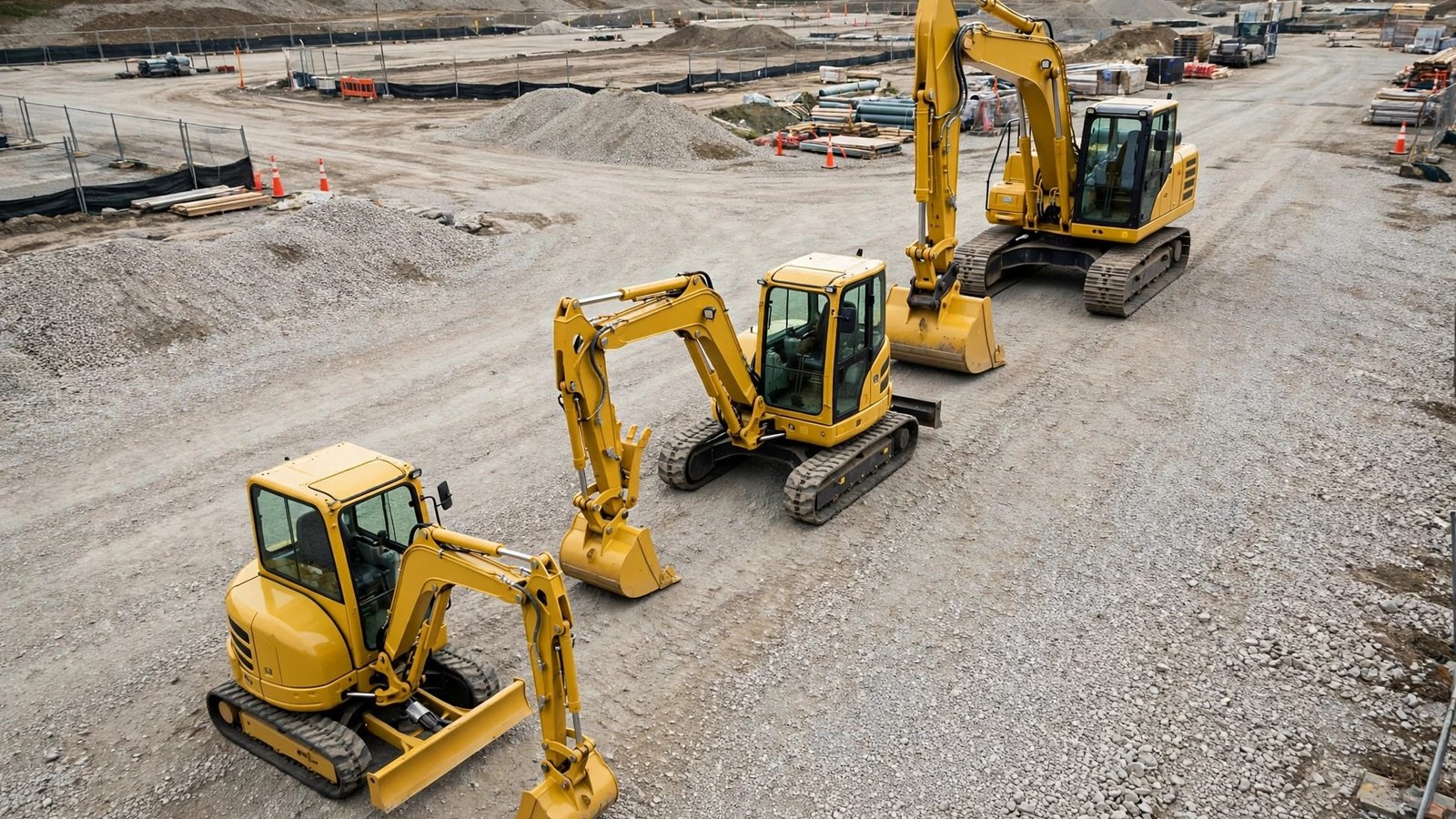
Choosing the wrong size is the most common mistake when buying a mini excavator. A machine that is too small will struggle and take longer on every job. A machine that is too big will not fit through the gate, will damage the ground, and will cost more to move. Size is not about buying the biggest machine you can afford. It is about matching the machine to your work, your space, and your transport.
This guide explains mini excavator sizes from 0.8 ton to 3.5 ton: what each size is good for, where it struggles, and how to choose in less than a minute. The wrong choice costs time on every job; the right one pays for itself in access and speed. For a model-by-model comparison, see 1 Ton vs 1.5 Ton vs 2 Ton Mini Excavator: How to Choose HT10, HT15 and HT20 at https://minimachpro.com/1-ton-vs-1-5-ton-vs-2-ton-mini-excavator-how-to-choose-ht10-ht15-and-ht20/
What does “ton” mean?
The number in tons usually means operating weight. A 1-ton machine weighs about 1,000 kg, a 1.5-ton machine about 1,500 kg, and a 2-ton machine about 2,000 kg. Heavier machines are usually more stable, dig with more force, and lift more. Lighter machines are easier to move, fit into tight spaces, and are gentler on lawns, driveways, and finished surfaces. Weight is a useful guide, but not the whole story: two machines of the same weight can differ in digging depth, width, and attachments, so always check the full specification sheet for the exact model before you order.
0.8 to 1 ton: the tight-access machine
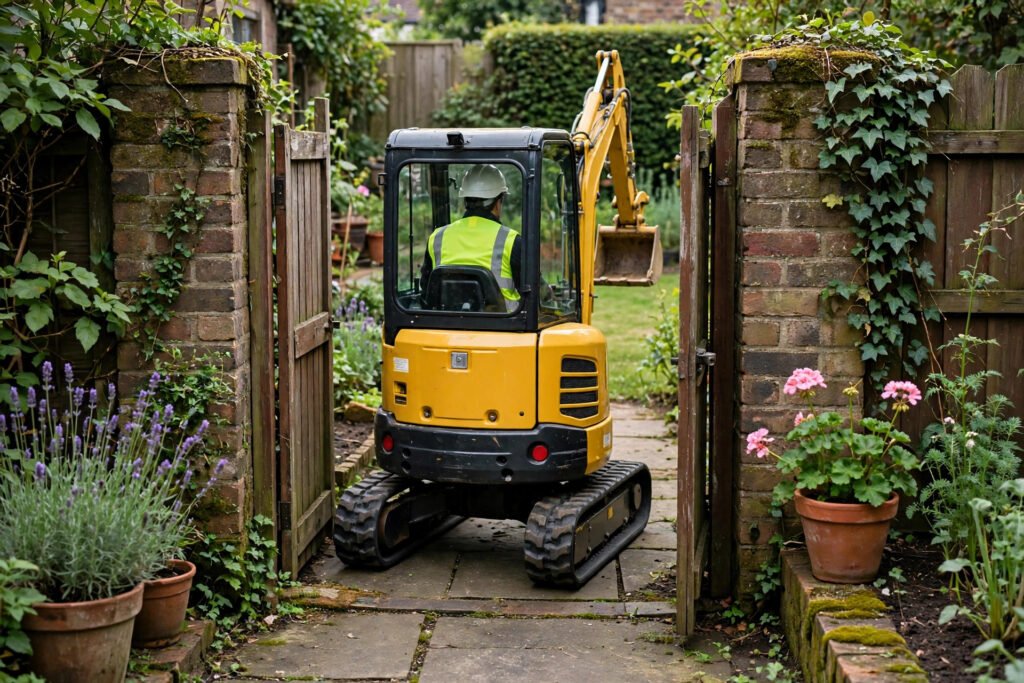
This is the smallest class in the Sparkle One range. The HT08 weighs 800 kg and the HT10 weighs 1,000 kg. Choose these when access is the hardest part of the job.
A 0.8-ton to 1-ton mini excavator is built for gardens, backyards, narrow paths, and indoor work. It suits small trenches for pipes and cables, planting trees, clearing a garden, and light landscaping.
The trade-off is power and reach. It digs shallower trenches and moves smaller bucket loads.
1.5 ton: the all-round small machine
The 1.5-ton class, including the HT15 at 1,500 kg, is the middle ground for many buyers. It is still compact enough for most residential and farm work, but it digs deeper and lifts more than a 1-ton machine.
It suits small farms, orchards, nurseries, and landscaping businesses: trenches for irrigation, clearing small plots, loading soil into a small truck, and regular maintenance around a property. Rental businesses like it too, because one machine can cover many small jobs without being hard to transport.
It is often the best first machine for varied work.
2 ton: the step up in digging power
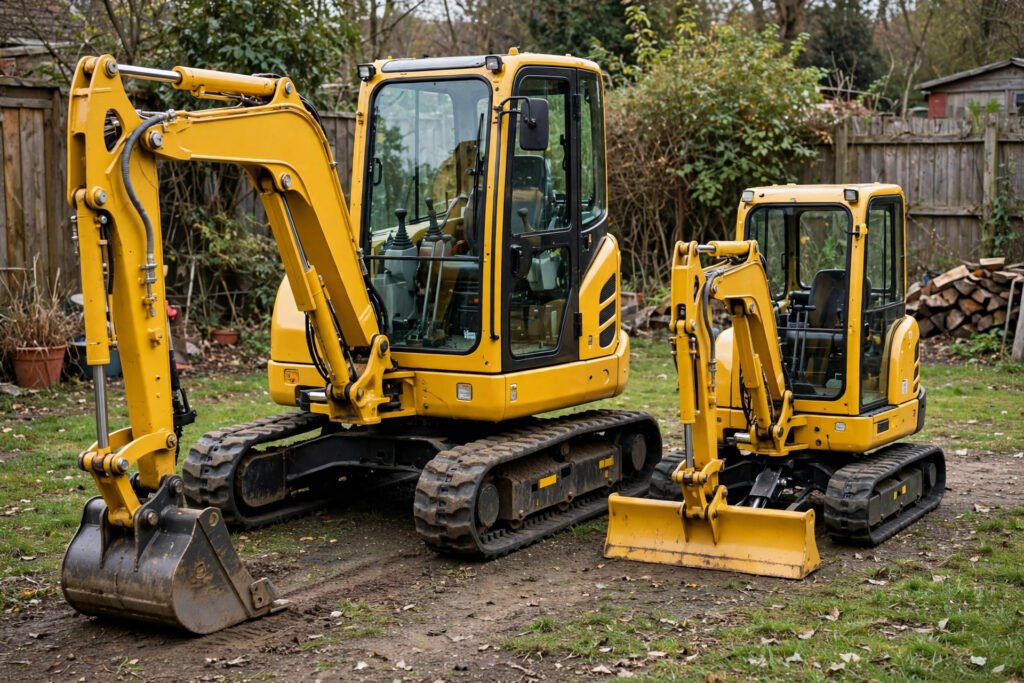
The 2-ton class, including the HT20 at 2,000 kg, is where a mini excavator starts to feel like a serious construction machine. It digs deeper, reaches further, and handles heavier soil and tougher ground than the 1-ton and 1.5-ton classes.
It suits small construction sites, foundation work, drainage projects, and road repair: digging footings, preparing ground for a small building, and working all day where a smaller machine would slow down. Many buyers choose this size when they want one machine for both residential work and light commercial work.
The trade-off is access and transport. A 2-ton machine is wider and heavier, so it needs a wider entrance and a stronger trailer.
2.5 to 3.5 ton: the larger mini excavator
Above 2 tons, mini excavators move into heavier work. A 2.5-ton to 3.5-ton machine digs deeper trenches, lifts heavier loads, and works faster on larger sites. It suits contractors who dig foundations, lay pipes, build small roads, and prepare land for construction on a regular basis. These machines need more space to turn, a wider access route, and a heavier trailer, and they are harder on soft ground — so if your work is mostly small and residential, this class is probably more machine than you need.
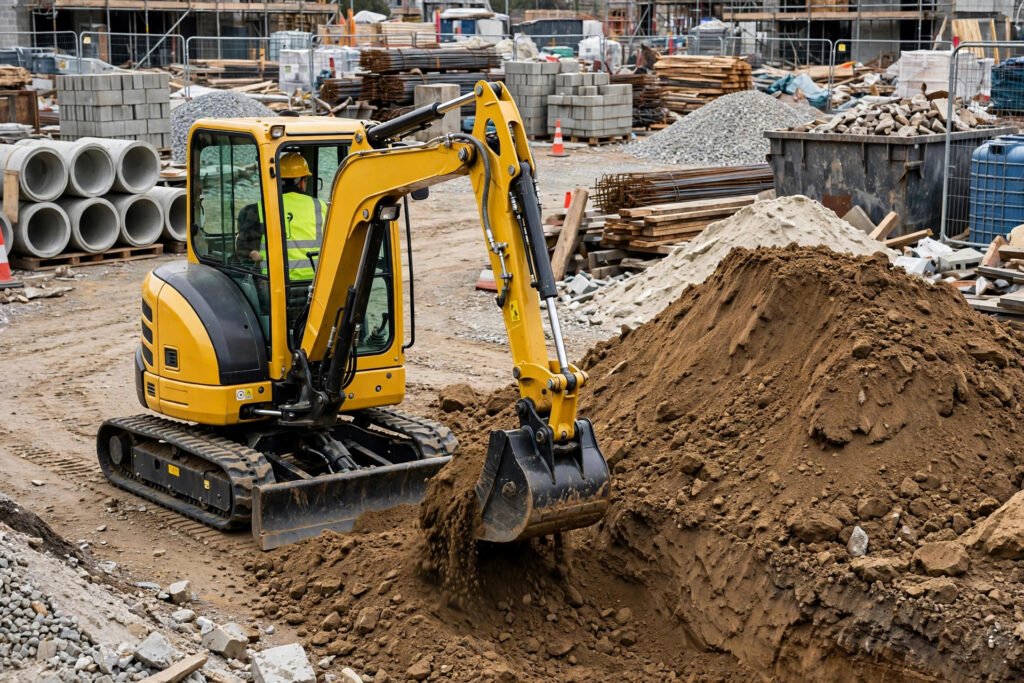
Width, access, and transport: measure before you buy
Before you choose, measure the narrowest point the machine must pass through — usually a gate, doorway, bridge, or path between buildings. Check the gate width, the height of any overhead obstacle, and the turning space on the other side. A machine that cannot reach the work area is useless, no matter how powerful it is.
Transport matters just as much. A smaller machine is easier to load, tow, and move between jobs; a larger one may need a bigger trailer and a stronger towing vehicle. If you move it every day, that affects your time and fuel on every job.
Digging depth in general terms
Digging depth grows with size, but not in a straight line. A 1-ton machine is made for shallow work: small trenches, planting holes, and light digging. A 1.5-ton machine reaches a little deeper. A 2-ton machine reaches deeper still and suits footings and drainage. A 2.5-ton to 3.5-ton machine is made for deeper trenches and heavier groundwork. Exact depth depends on the model, boom and arm configuration, and attachment fitted, so confirm it on the specification sheet for the exact configuration you plan to order.
How to decide in 30 seconds
Ask three questions. First, what is the narrowest access point on your most common job? If it is a garden gate, start with the 0.8-ton to 1-ton class. Second, what is the deepest trench you dig regularly? Shallow garden work points to the smaller sizes; footings and drainage point to 2 tons and above. Third, how do you move the machine? If you tow it with a small vehicle and move it daily, a lighter machine will make your life easier.
The right size is the one that fits your work
The 0.8-ton to 1-ton class wins on access, the 1.5-ton class wins on balance, the 2-ton class wins on digging power for small construction work, and the 2.5-ton to 3.5-ton class wins on speed and depth for heavier groundwork. The right choice is the size that fits your gates, your trenches, your transport, and your daily work.
Tell Sparkle One about your most common job — the access, the digging depth, and how you move the machine — and we will help you choose the size that fits. Minimum order is 1 unit, and our team replies within 24 hours. Contact us on WhatsApp at +86 151 2992 2907 to discuss your requirements and confirm the configuration before you order.