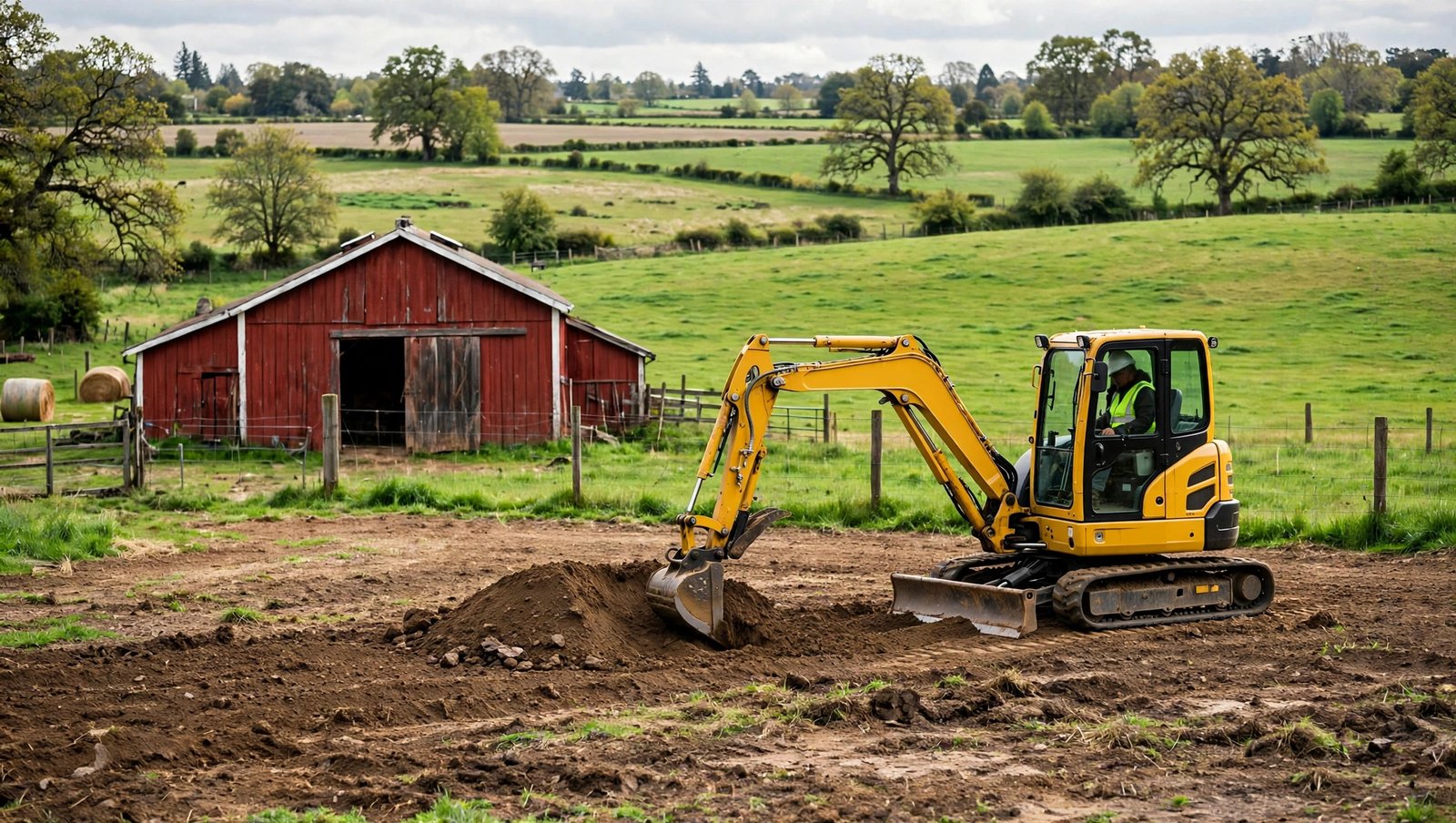
A farm is full of digging, lifting, and moving jobs that are too big for a shovel and too small — or too awkward — for a full-size machine. That is exactly where a mini excavator earns its place.
A mini excavator for farm use is compact enough to drive through a gate or work beside a barn, yet strong enough to dig trenches and clear ground that would take a person days by hand.
Here are seven jobs where a mini excavator makes the biggest difference on a farm.
1. Digging Trenches for Water and Electric Lines
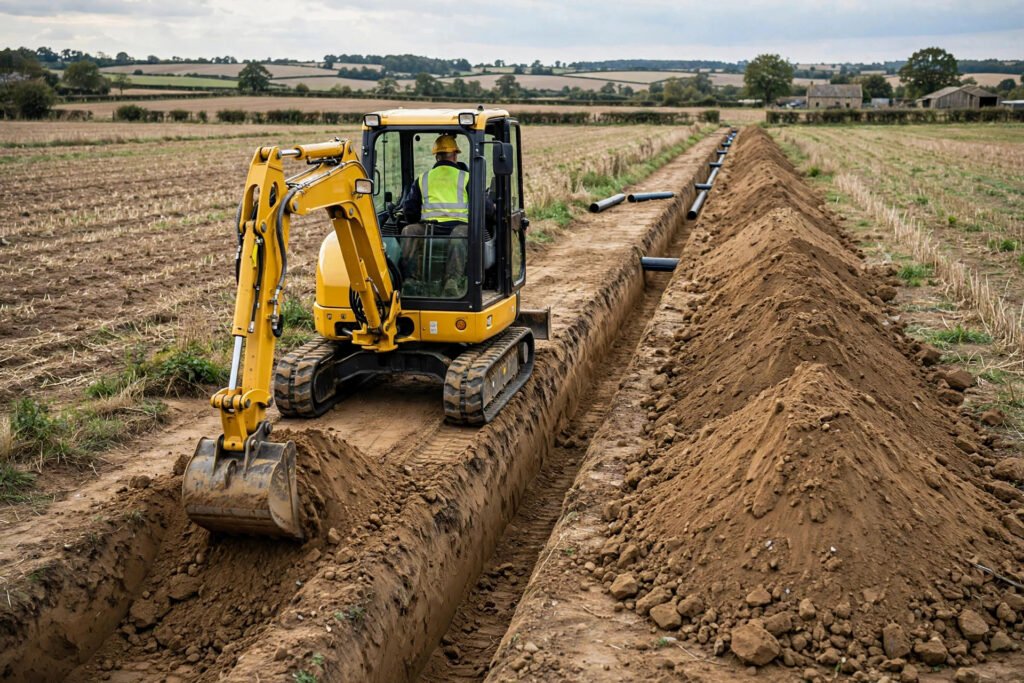
Every farm needs water and power in the right places: to a trough in a far paddock, to a new shed, or to an irrigation pump.
Digging those trenches by hand is slow and hard on the back. A mini excavator with a narrow bucket cuts a straight trench at a steady depth, so pipe or cable sits safely below the surface. Because the machine is small, you can run it close to fences and buildings, then backfill and level with the same bucket.
2. Drilling Fence Post Holes
Fencing is a job that never really ends. Posts rot, fences move, new paddocks are divided, and old boundaries need rebuilding.
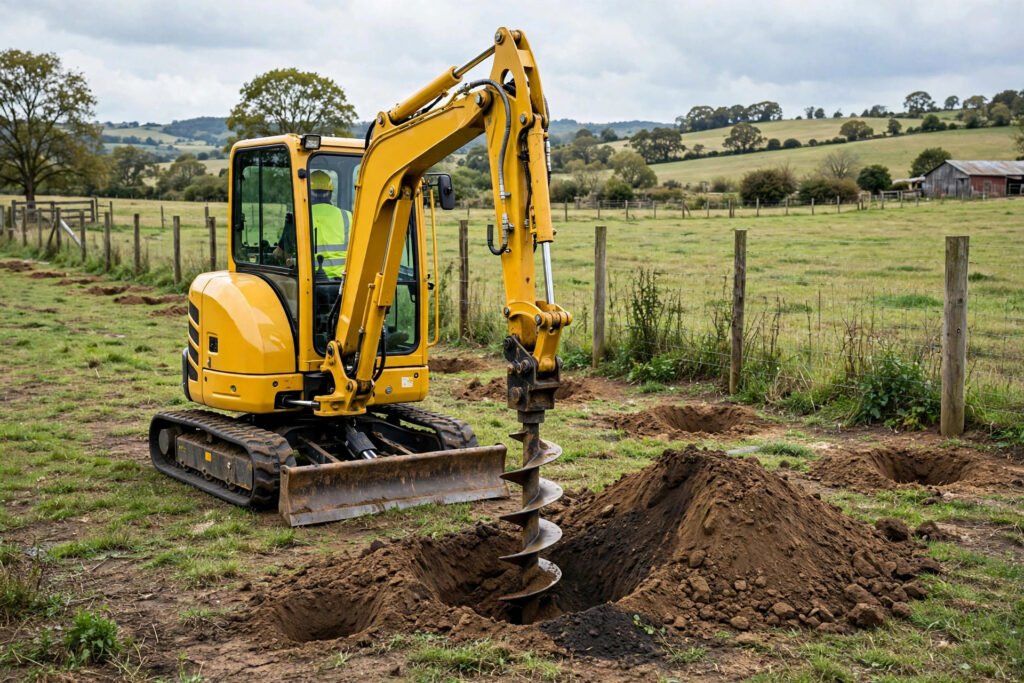
With an auger attachment, a mini excavator drills post holes far faster and more evenly than a manual digger, at a consistent depth and diameter, so the fence is stronger and straighter. On rocky or dry ground, where hand digging is almost impossible, the auger keeps working — saving days on a long fencing run.
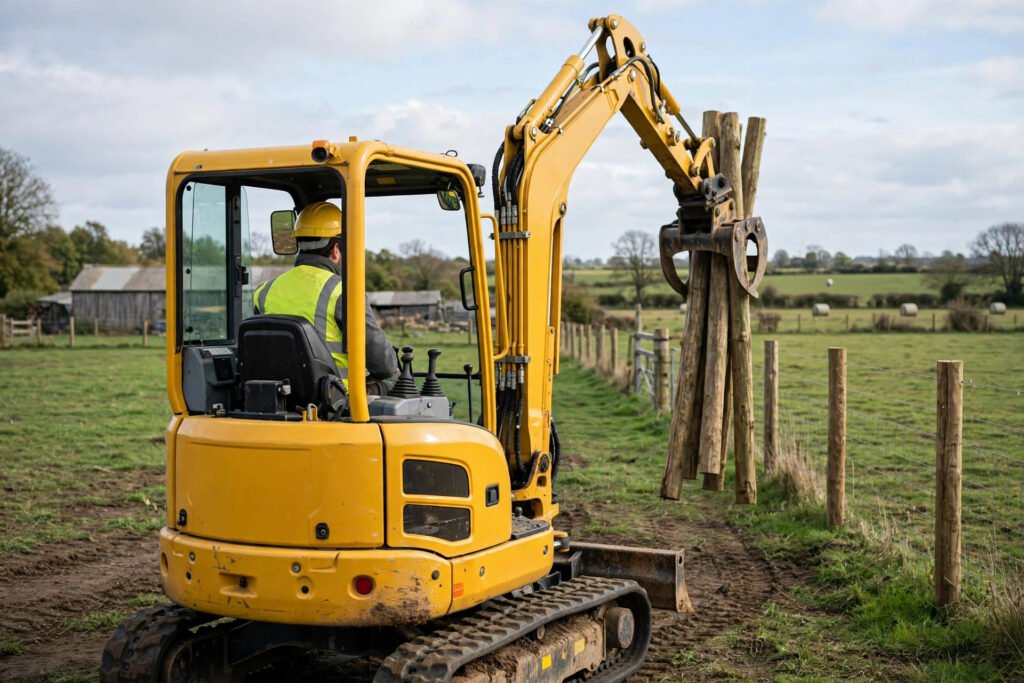
3. Clearing Land and Removing Roots
Old stumps, scrub, rocks, and tangled roots take over unused corners of a farm. Clearing them by hand is slow, and a large machine often cannot get in without damaging nearby trees, fences, or drains.
A mini excavator works in tight spaces, pulls out roots, lifts rocks, and pushes scrub into a pile. Its tracks spread its weight, so it can work on soft ground without deep ruts, and once clear, the same machine levels the area for grass, crops, or a new building.
4. Moving Soil, Feed, and Manure
On a working farm, something always needs moving: topsoil to a garden bed, compost to a field, feed to storage, or manure away from a barn.
A mini excavator with a standard bucket scoops, carries, and places material precisely where it is needed. That means fewer trips, less spillage, and less cleaning up — and for regular yard work, many farmers find it quickly becomes the most-used machine on the property.
5. Digging Drainage Ditches
Wet ground is a problem for crops, animals, and farm tracks. Standing water damages roots, makes fields unusable, and turns gateways into mud.
A mini excavator cuts drainage ditches along a field edge or beside a track, controlling depth and slope so water flows away instead of pooling. It can reach over a fence where a tractor tool cannot, and after heavy rain it cleans out a silted ditch in minutes.
6. Barn, Shed, and Foundation Work
Building or repairing a barn, shed, or storage building usually starts with digging: footings for posts, a level pad for a floor, or a trench for a concrete foundation.
A mini excavator digs accurately in a confined yard, working close to an existing building and placing spoil in a neat pile. It is also useful for repairs — digging out damaged footing, levelling ground under a sagging shed, or preparing a base for a water tank or silo.
7. Landscaping Around Farm Buildings
A farm is also a home and a workplace, and the ground around its buildings matters. Paths need levelling, a yard needs grading so water runs away from the barn, a garden bed needs topsoil, and a driveway needs repair after winter.
A mini excavator handles these jobs with the same control it brings to digging. Its size lets it work in a garden without destroying the area around it, and its bucket spreads and levels material smoothly.
Choosing the Right Size for a Farm
For most farms, a 1 to 2 ton mini excavator is the practical choice. A 1 ton machine is light, easy to trailer, and works in very tight spaces. A 1.5 to 2 ton machine adds digging depth and lifting power for deeper trenches and heavier soil.
Before you buy, think about the three things that limit a machine on a farm: gate width, trailer capacity, and storage space. A machine that fits through your gates and onto your trailer is a machine you will actually use.
Attachments That Make a Farm Machine More Useful
The right attachments turn a good mini excavator into a farm workhorse. Two are especially useful:
Auger: for fence post holes and planting trees. It drills clean, even holes quickly, even in hard ground.
Narrow bucket: for trenches for water, electric, and drainage lines. It cuts a neat trench with less soil to move and less ground disturbed.
Start with the attachments that match the jobs you do most often, and add others as your needs grow.
A Machine That Pays for Itself in Saved Time
A mini excavator makes good farm work faster, safer, and less tiring. Jobs that once took days can be finished in hours, and jobs put off because they were too hard by hand finally get done.
If you are looking for a mini excavator for farm use, start by listing the jobs you do most often, then choose the size and attachments that fit those jobs. A machine matched to your farm is a machine you will use every week, not one that sits in the shed.
Get in Touch
Sparkle One supplies mini excavators for farms, landscaping, and small construction work, with a minimum order of 1 unit. To ask about models, sizes, and attachments for your farm, contact us — we reply within 24 hours.
WhatsApp: +86 151 2992 2907