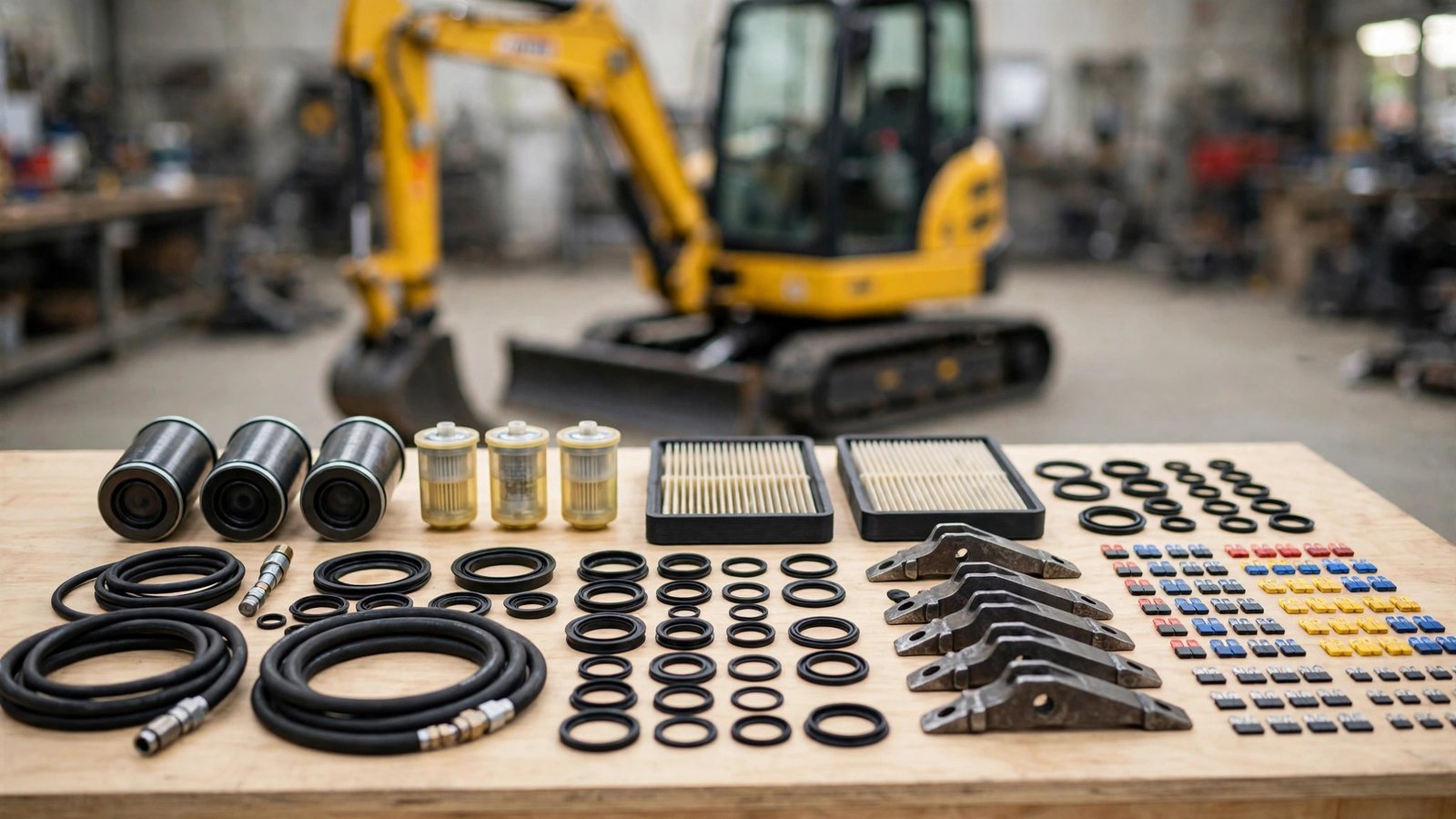
A mini excavator earns its money by working, and it loses money every day it stands still. Most of the parts that stop a machine are small, cheap, and easy to replace — a filter, a hose, a bucket tooth. The problem is not the part. The problem is that the part is not on the shelf when it is needed, and the machine waits a week for a delivery that could have been a ten-minute job.
Why stock spares at all?
A mini excavator works in dust, mud, and hard ground, and its parts wear out on a schedule, not by surprise. Filters clog, teeth wear down, hoses age, and belts stretch. None of these is a breakdown in the serious sense, but any of them can stop work if the replacement is not close by.
Stocking spares is also a matter of distance. A part ordered from the supplier takes time to ship, clear customs, and reach a farm or a building site. A part kept on a shelf takes minutes to fit.
The rule is simple: stock the parts that wear out often, cost little, and stop the machine when they fail. Leave the large, expensive parts — engines, pumps, and major hydraulic components — to the supplier, and keep the small ones close.
Filters: oil, fuel, and air
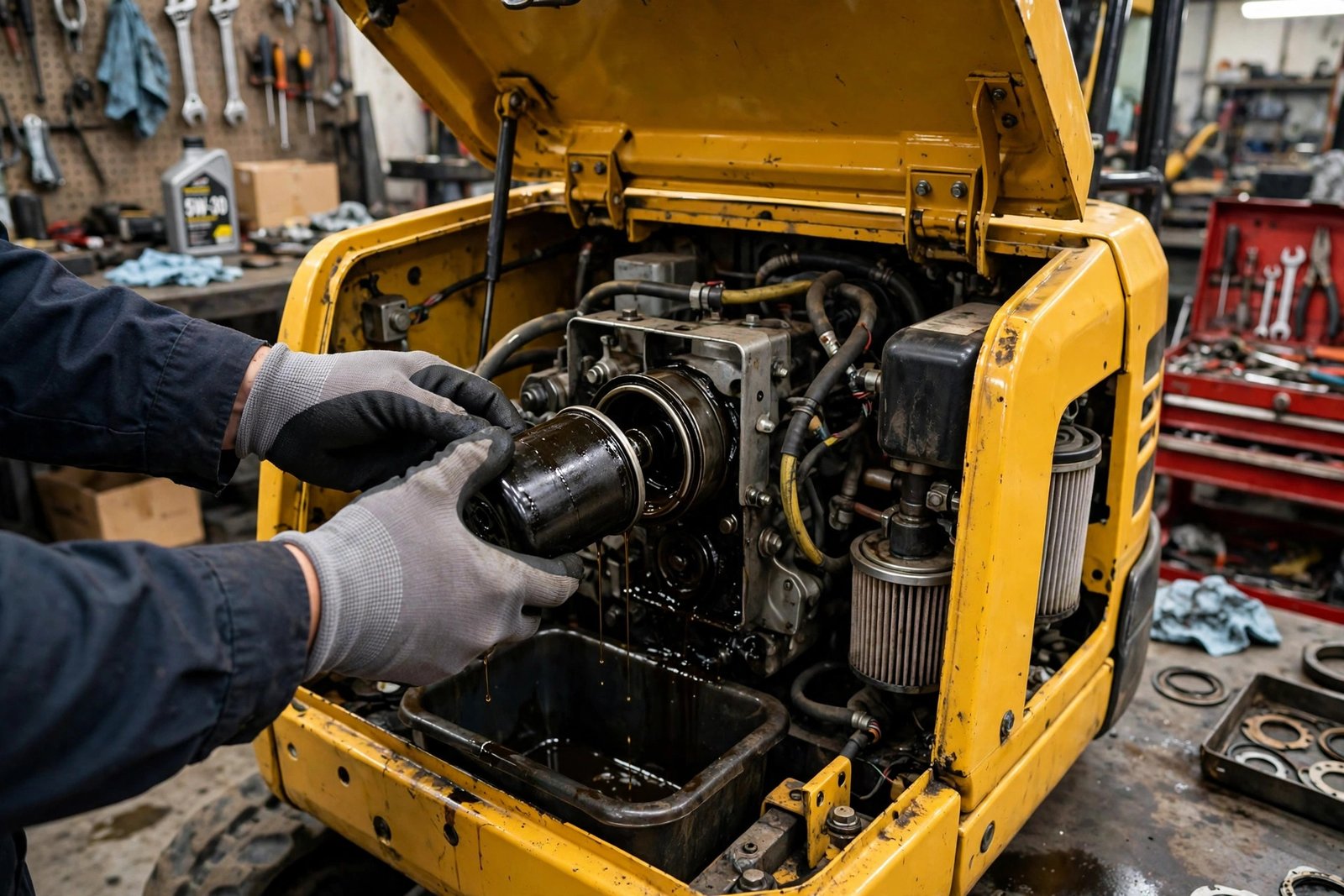
Filters are the first spares to stock, because they are changed most often and because a clogged filter makes the whole machine run badly. The engine oil filter is changed with every oil change; the fuel filter keeps dirt and water out of the fuel system; the air filter keeps dust out of the engine, and on a dusty site it clogs faster than the manual assumes — change it when it is dirty, not only when the calendar says so.
There is usually a hydraulic oil filter as well, which protects the hydraulic system. It is changed less often than the engine filters, but it should still be on the shelf, because a hydraulic filter that is left too long can starve the pump.
When you order filters, order them for the exact model and engine fitted to your machine, and keep the part numbers written down. A filter that looks right but is not the right one can cause more harm than a dirty filter.
Bucket teeth: the part that wears every day
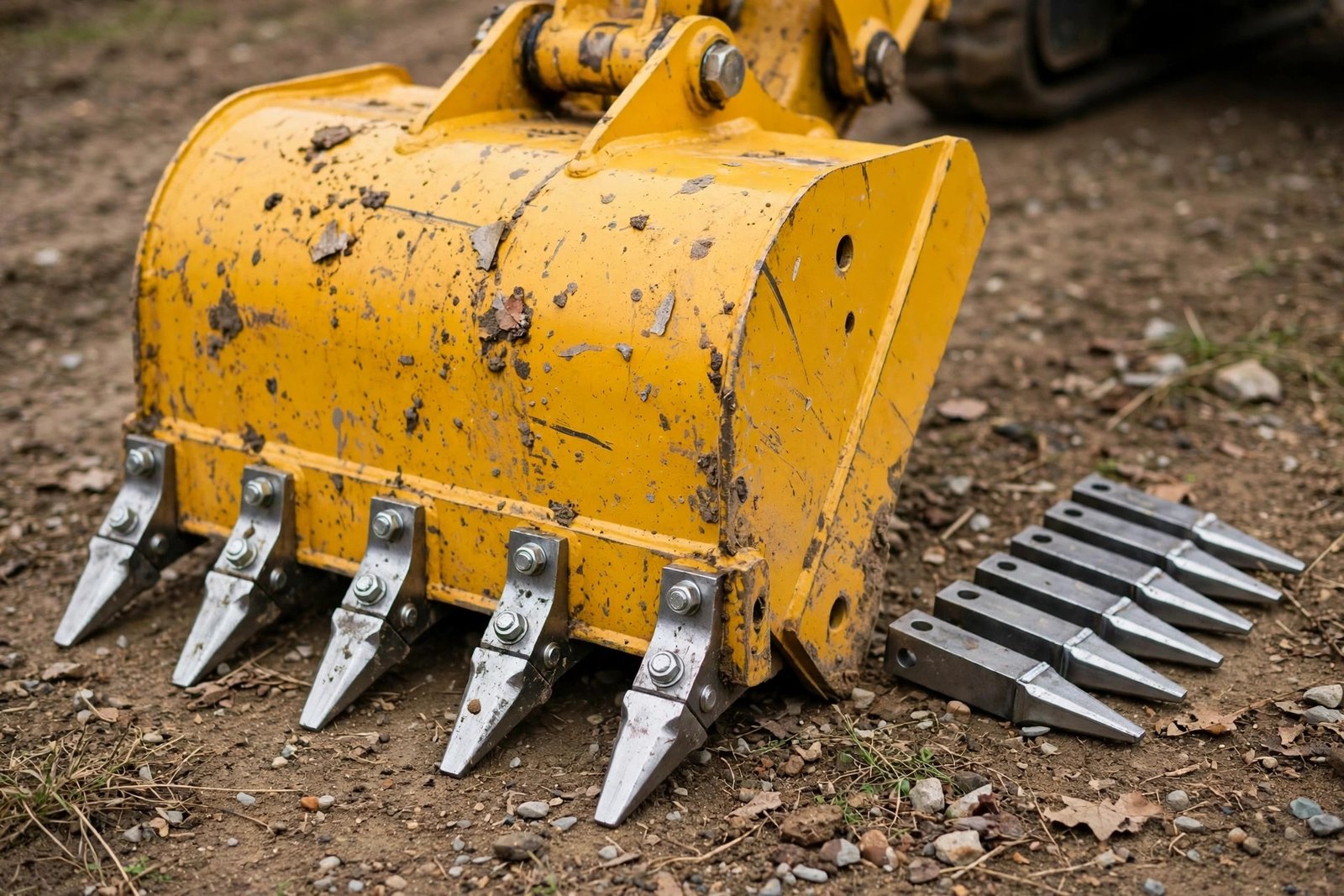
Bucket teeth do the hardest work on the machine. They cut into soil, scrape rock, and strike buried objects, and they wear down a little on every job. Worn teeth dig unevenly, make the bucket work harder, and put extra strain on the hydraulic system.
Keep a full set of spare teeth on the shelf, plus the pins or bolts that hold them on, because a tooth that falls off in the ground is a tooth that is lost. Check the teeth at the start of every working day, and change them before they are worn down to the bucket edge — a worn tooth left too long damages the bucket itself, and a bucket costs far more than a set of teeth.
Hoses and seals: small parts, big leaks
Hydraulic hoses carry oil under high pressure, and they age with heat, vibration, and rubbing against the machine. A hose that bursts stops the machine immediately, and a slow leak at a seal can drain the hydraulic tank over a working day.
Keep one spare for each of the most exposed hoses — the ones that move with the boom and arm, and the ones near the bucket — and a small set of common seals and O-rings for the cylinders and valves. A hose that is replaced in an hour is a small job; a hose that has to be ordered and shipped is a lost week.
Track parts: pins, bolts, and a spare link
Rubber tracks wear, and steel tracks wear too, though more slowly. The parts that fail first are usually small: track bolts that work loose, a track pin, or a damaged section of rubber track.
Check the track tension and the track bolts as part of the daily walk-around, and keep a small set of track bolts and pins on the shelf. For a rubber-track machine, ask the supplier about the cost and availability of a replacement track before you need one.
Fuses, belts, and the small electrical parts
A blown fuse is the cheapest reason a machine will not start, and it is also the most frustrating if there is no spare fuse in the cab. Keep a set of fuses of every size fitted to your machine, and a spare drive belt for the engine, in the toolbox. A belt that slips or breaks stops the alternator and the cooling fan, and the machine will overheat or run the battery flat.
How many of each to keep
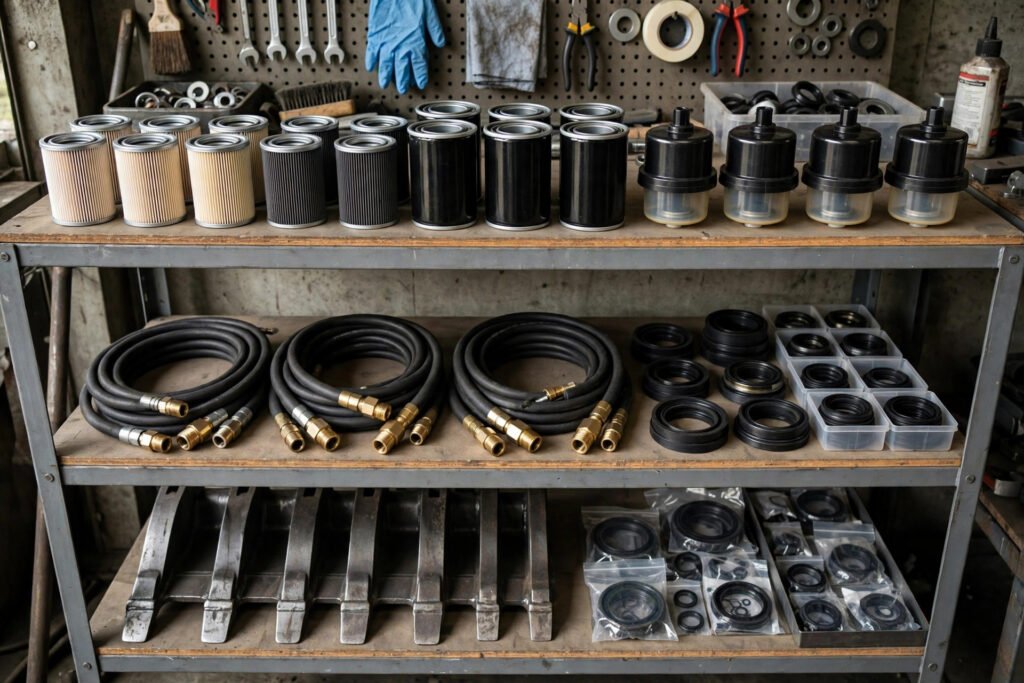
For a single machine working regular hours, a sensible first stock is a full set of filters for two service rounds, a full set of bucket teeth plus fixings, two of the most exposed hydraulic hoses, a small set of seals and O-rings, a set of fuses, one drive belt, and a handful of track bolts and pins.
For a rental business or a contractor with more than one machine, double that for the parts all the machines share, and keep the stock in one place where everyone can find it. Write the part numbers on the shelf or in a notebook, and reorder a part the day you use it — a spare that is used and not replaced is no longer a spare.
Order spares with the machine
The best time to order spare parts is when you order the machine. Ask the supplier for a recommended spare parts list for your exact model, with part numbers, and ask them to pack the first set with the machine — it can travel in the same shipment, saving freight and a second customs clearance. Check the parts against the list when the machine arrives, and store them somewhere dry and clean.
A stocked shelf is a working machine
Spare parts are not an expense. They are insurance that costs little and pays back the first time a filter clogs or a tooth wears out on a working day. Stock the filters, the teeth, the hoses, the seals, the fuses, and the belts. Keep the part numbers written down. Reorder the day you use one.
Tell Sparkle One about your model and your work — the ground, the hours, and the country you are in — and we will help you put together a spare parts list for your machine, with the part numbers, so you can order the first set with your machine. Minimum order is 1 unit, and our team replies within 24 hours. Contact us on WhatsApp at +86 151 2992 2907 to discuss your requirements.