A mini excavator looks the same in a photo whether it is ready to work or not. The difference only shows up after it arrives: a hose that leaks, a track that is loose, an attachment that does not fit, or a serial number that does not match the documents. By then the machine is thousands of kilometres away, and fixing the problem is slow and expensive.
That is why a pre-shipment inspection matters. It is a final check before the machine leaves China — while it is still in the factory yard, while the people who built it are still there, and while a problem can still be fixed in a day instead of a month.
Why inspect before shipping, not after delivery
Once a machine is packed in a container and on a ship, every fix becomes harder. A missing part has to be shipped separately. A damaged hose has to be replaced by a workshop that may never have seen this model. A wrong configuration may not be fixable at all.
An inspection before shipping catches those problems where they are cheapest to fix: at the factory. It also creates a record. Photos, a video of the machine running, and a signed checklist prove what the machine looked like when it left — evidence that settles the question if something arrives damaged or different.
Appearance: the outside tells a story
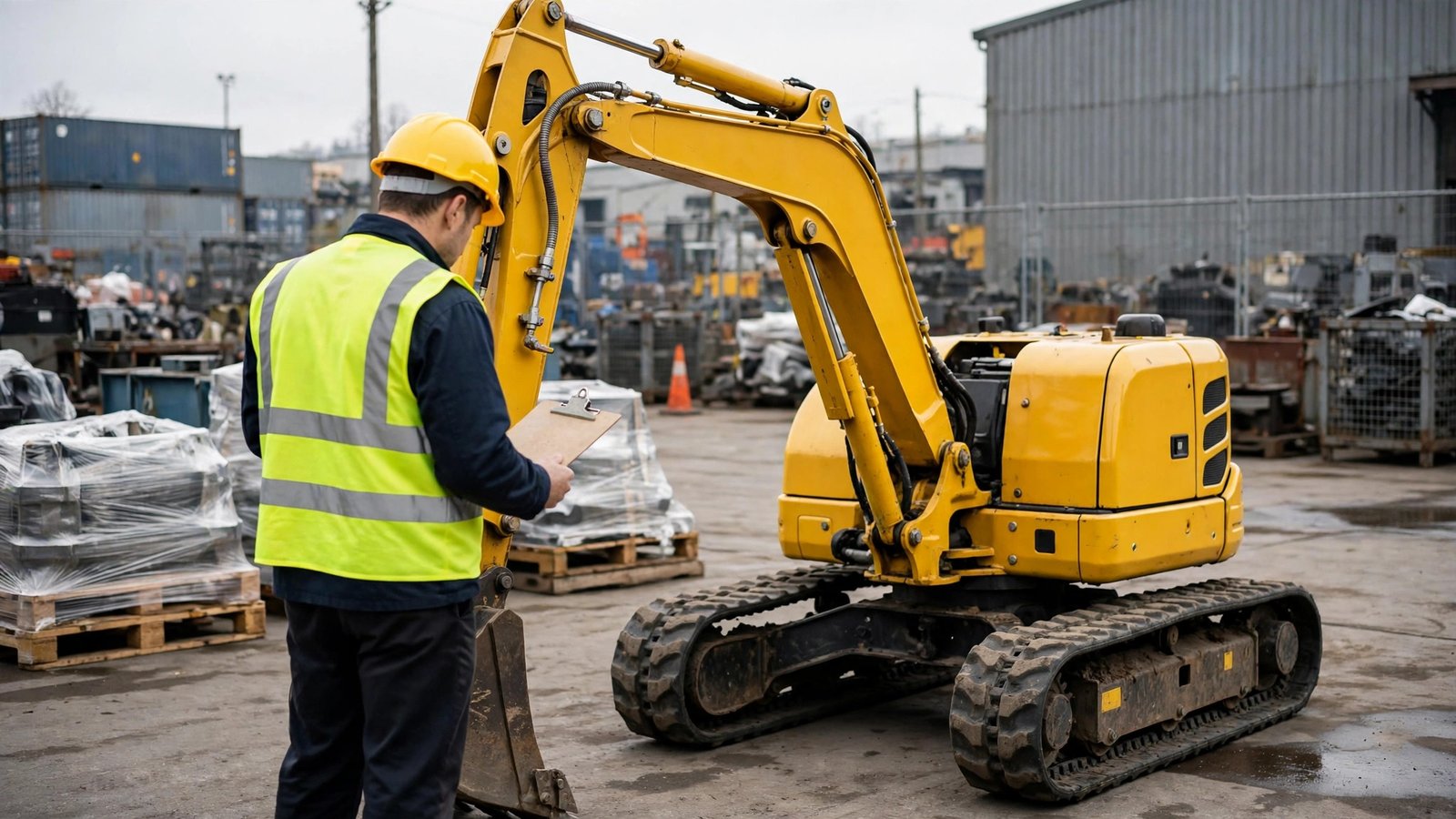
Start with a walk around the machine. Look at the paint, the body panels, and the cab or canopy. Fresh scratches, dents, or uneven paint can mean the machine was damaged in the yard.
Start the engine and listen
Ask for the engine to be started from cold, not after it has been warmed up for you. A cold start shows what the machine will do on a real morning: it should start without long cranking, settle into a steady idle, and not produce heavy smoke once it is running.
Check the gauges and warning lights while the engine is running. Oil pressure, temperature, and the fuel gauge should all read normally, and no warning light should stay on. If the machine has an hour meter, write down the reading and compare it with the number on the documents.
Hydraulics: move everything, slowly
The hydraulic system is where most hidden problems live, so test every function. Raise and lower the boom, curl the bucket, swing the machine both ways, and drive it forward and back. Each movement should be smooth, without jerking, sticking, or unusual noise.
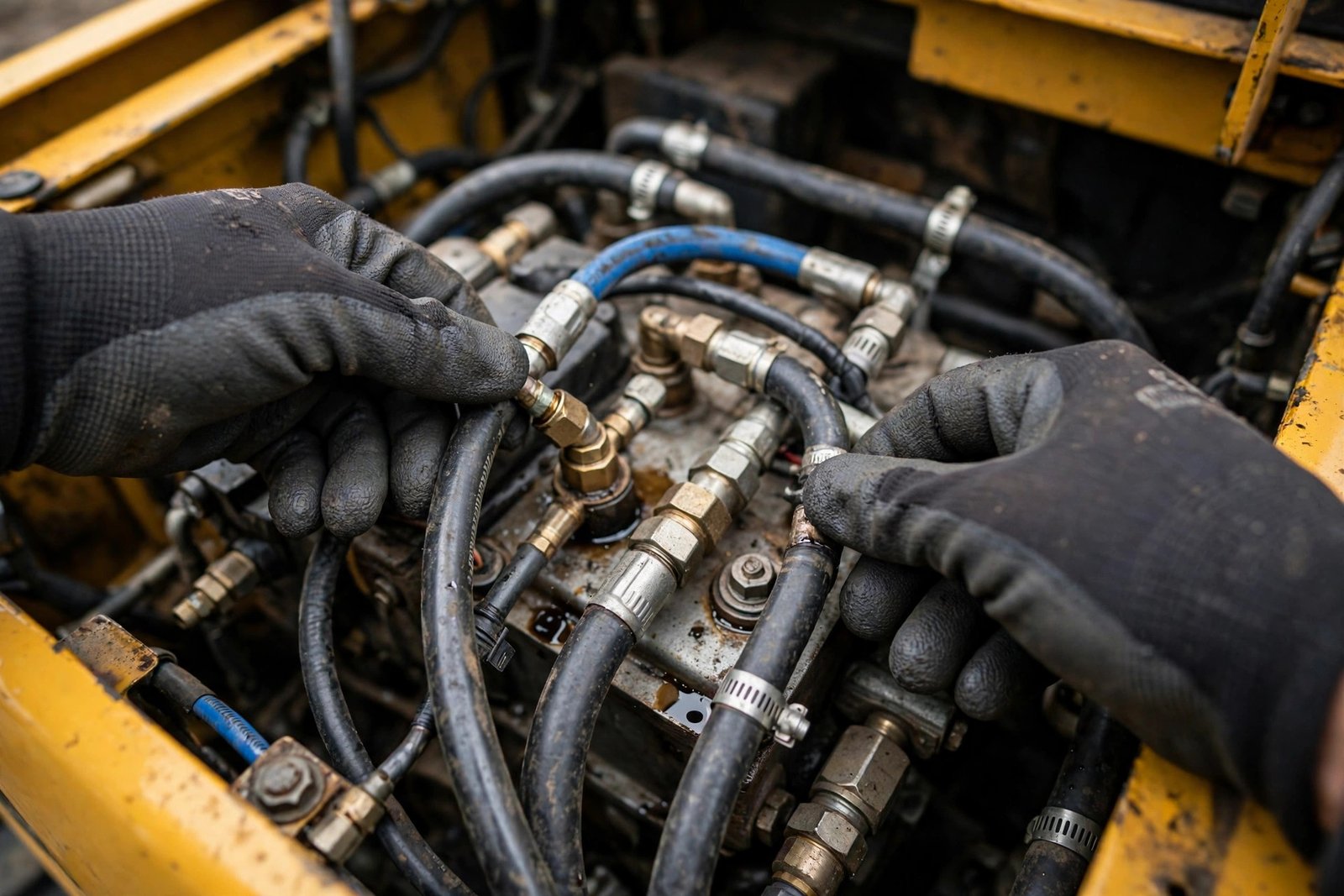
Then check for leaks. Look at every hose connection, cylinder seal, and valve while the system is under pressure — a slow leak is easy to miss when the machine is standing still. Run the bucket through its full range and watch the cylinders: a cylinder that drifts down on its own, or one that weeps oil at the seal, needs attention before shipping.
Tracks, attachments, and the serial number
Check the tracks after the machine has moved: drive it a short distance and turn both ways. Listen for grinding or clicking, and look for a track that slips or runs unevenly.
Then check every attachment you ordered against the order list: the buckets, the auger, the breaker, the grapple, and the quick coupler. Each one should be present, the right size, and fitted to the same coupler.
Finally, check the serial number. Find the serial plate on the machine and compare it, character by character, with the number on the invoice, the packing list, and the certificate. The serial number is what customs, registration, and warranty all use — if it does not match the documents, the machine can be held up at the border.
Documents: the paper that travels with the machine
A machine without its documents is a machine that cannot be imported. Before shipping, ask for copies of everything that should travel with it: the commercial invoice, the packing list, the certificate of origin, and the certificates for the machine and the engine, such as CE, EPA, or Euro 5 where required. Check that each document names the exact model and serial number, and that the certificates are still valid.
Photos and video: ask for more than you think you need
Ask the supplier for photos and a video of the inspection itself, not just stock photos of the model: a walk-around video of the actual machine, the engine starting from cold, every hydraulic function moving, and a close-up of the serial plate. Date-stamped photos and video cost the supplier almost nothing to take, and they settle almost every dispute about condition before it starts.
Third-party inspection: an extra pair of eyes
A third-party inspection is a general safeguard, not a guarantee — the inspector checks what can be seen and tested in the yard, and cannot see inside an engine or a hydraulic pump. But for a first order, or a large order, it is a sensible step. Ask the supplier whether they accept third-party inspection, and agree in advance what happens if the inspector finds a problem.

If something is wrong, stop the shipment
The whole point of an inspection is that it can stop a bad machine from leaving. If the inspection finds a leak, a missing attachment, a wrong serial number, or a document that does not match, ask the supplier to fix it and inspect it again before the machine is packed.
Get the agreement in writing: what will be fixed, by when, and who pays if the fix delays the shipment. A supplier who fixes a problem quickly and shows you the repair is a supplier worth keeping.
Check it now, or fix it later
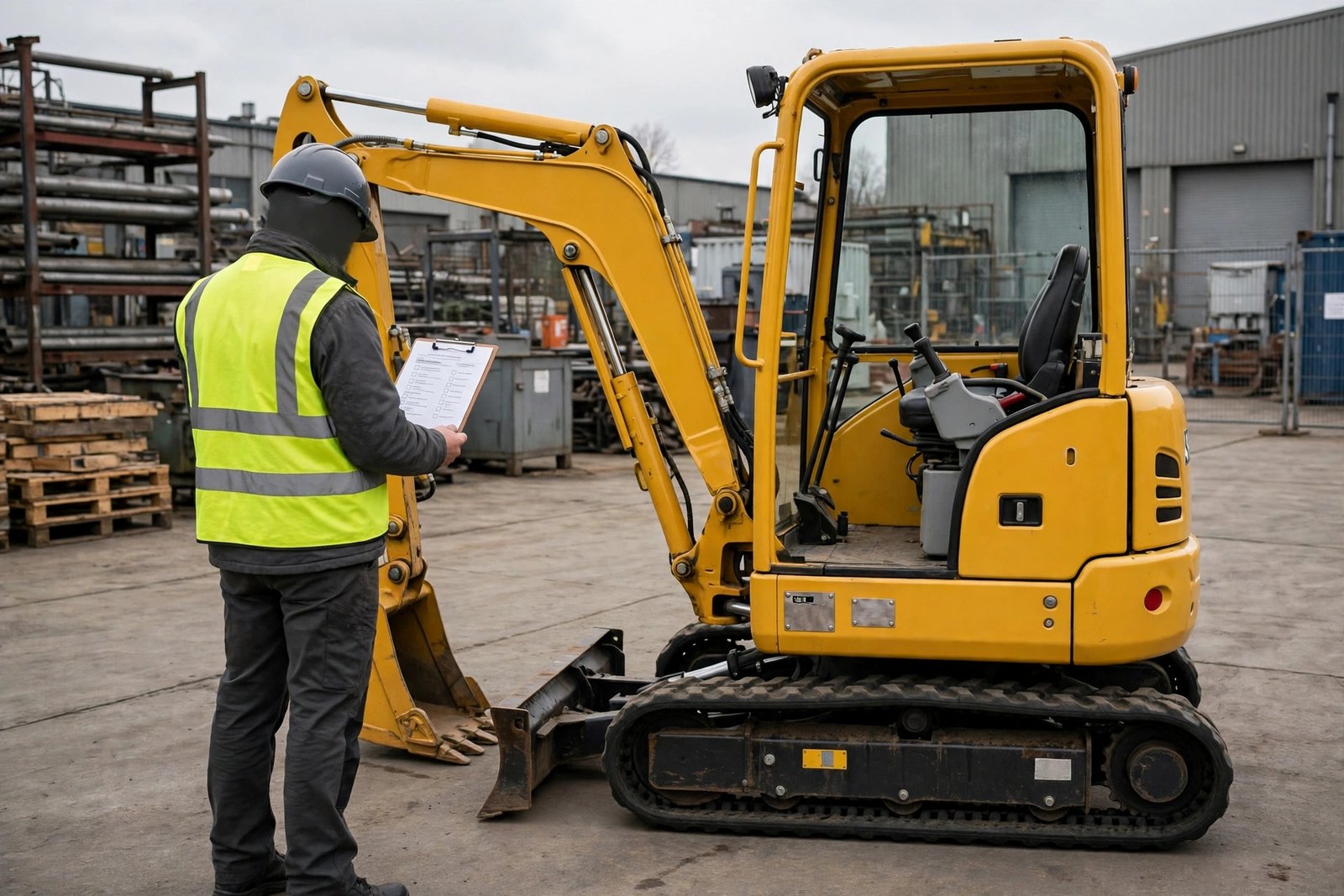
A pre-shipment inspection takes an hour. Fixing a problem after delivery takes weeks. Walk around the machine, start it cold, move every function, check the tracks and attachments, match the serial number, and read the documents. Ask for photos and video, and consider a third-party inspector for a first or large order.
Tell Sparkle One about your order — the model, the configuration, and the country you are importing into — and we will walk you through the inspection checklist for your machine and send you photos and video before it ships. Minimum order is 1 unit, and our team replies within 24 hours. Contact us on WhatsApp at +86 151 2992 2907 to discuss your requirements.