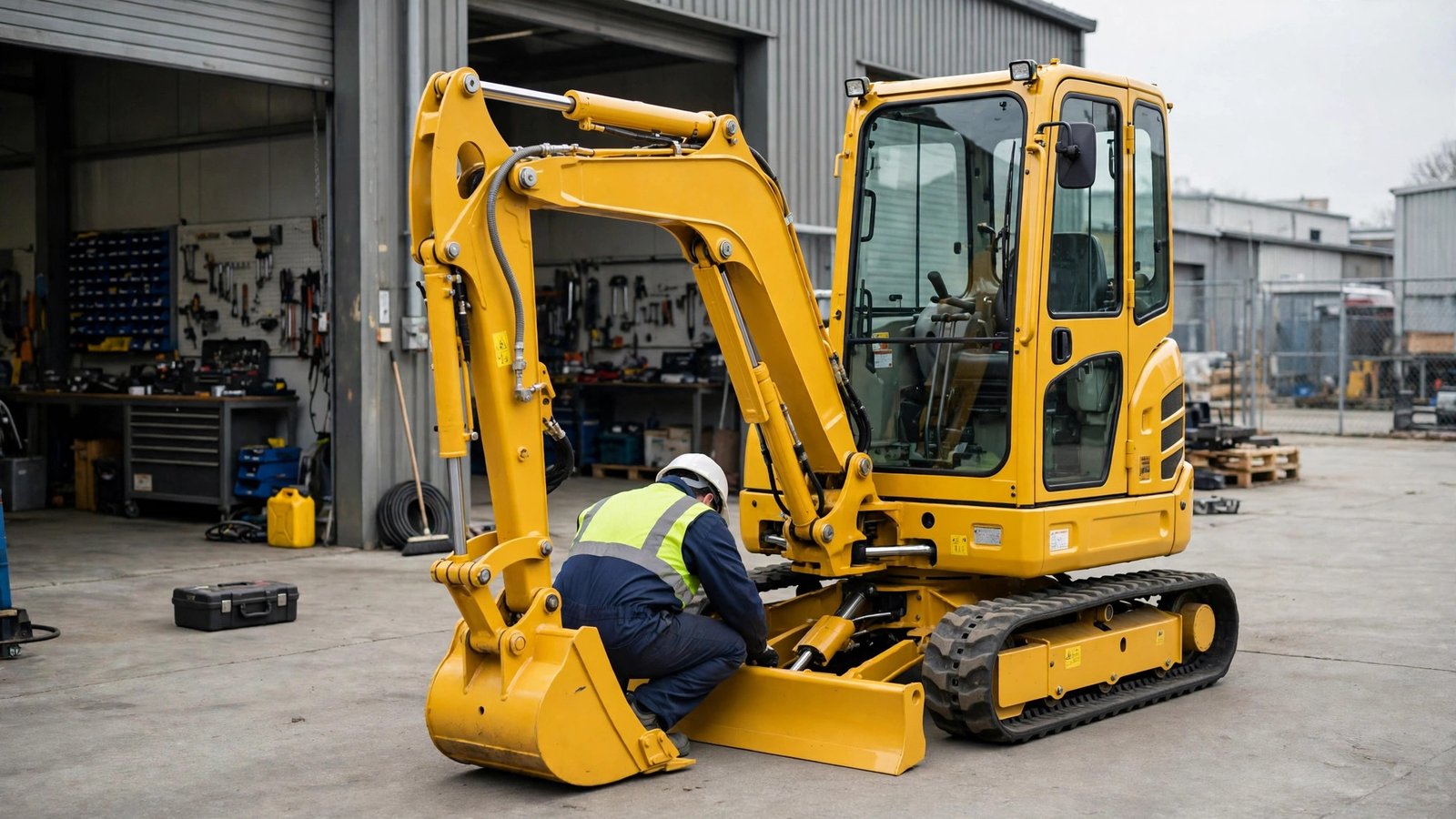
A mini excavator is a working machine, and working machines need care. Sooner or later something wears out, a hose leaks, or a part needs replacing. What happens then depends on two things you should have checked before you paid: the warranty, and the after-sales support behind it.
What a warranty usually covers
A warranty is the manufacturer’s promise to repair or replace parts that fail because of a fault in materials or workmanship. In general terms, it usually covers the main parts of the machine: the engine, the hydraulic pump and valves, the swing and travel motors, and the main structural parts such as the boom and the chassis.
It usually covers the part itself and, depending on the terms, the cost of fitting it. It does not usually cover getting the machine to a workshop, or the time the machine spends standing still while a part is on its way. The exact list of covered parts, and how long the cover lasts, varies from supplier to supplier. Ask for the full warranty terms in writing, and confirm the exact period in the contract before you pay.
What a warranty usually does not cover
A warranty is not a promise that nothing will ever go wrong. In general terms, most warranties do not cover wear items — parts expected to wear out in normal use, such as bucket teeth, tracks, filters, belts, hoses, and seals. Replacing them is part of owning the machine.
A warranty also does not usually cover damage from misuse: running the machine without oil, using the wrong fuel, overloading the bucket, or operating it in a way the manual warns against. It does not cover accident damage, or damage from attachments that were not fitted correctly, or a machine modified without the supplier’s agreement.
How long does it last?
There is no standard warranty period for a mini excavator. Different suppliers offer different periods, and the period may be measured in time, in working hours, or in whichever comes first. Some suppliers offer different cover for different parts — a longer period for the main structure, a shorter one for the engine or the hydraulics.
Do not take a warranty period from a website, a brochure, or a chat message and treat it as final. Ask the supplier to confirm the exact period, and how it is measured, in the contract, and when the period starts — from the date the machine leaves the factory, or from the date it arrives in your yard.
Who pays for shipping a replacement part?
This is the question most buyers forget to ask, and the one that causes the most arguments later. When a part fails under warranty, someone has to pay to get the replacement to you. Sometimes the supplier pays the freight, sometimes the buyer does, and sometimes the supplier pays for the part while the buyer pays for shipping.
Ask before you order, and get the answer in writing. Ask the same question about labour: if a local workshop fits the replacement part, who pays for their time? A warranty that covers the part but not the freight or the labour is still a warranty — but it is worth less than one that covers all three.
How to keep the warranty valid
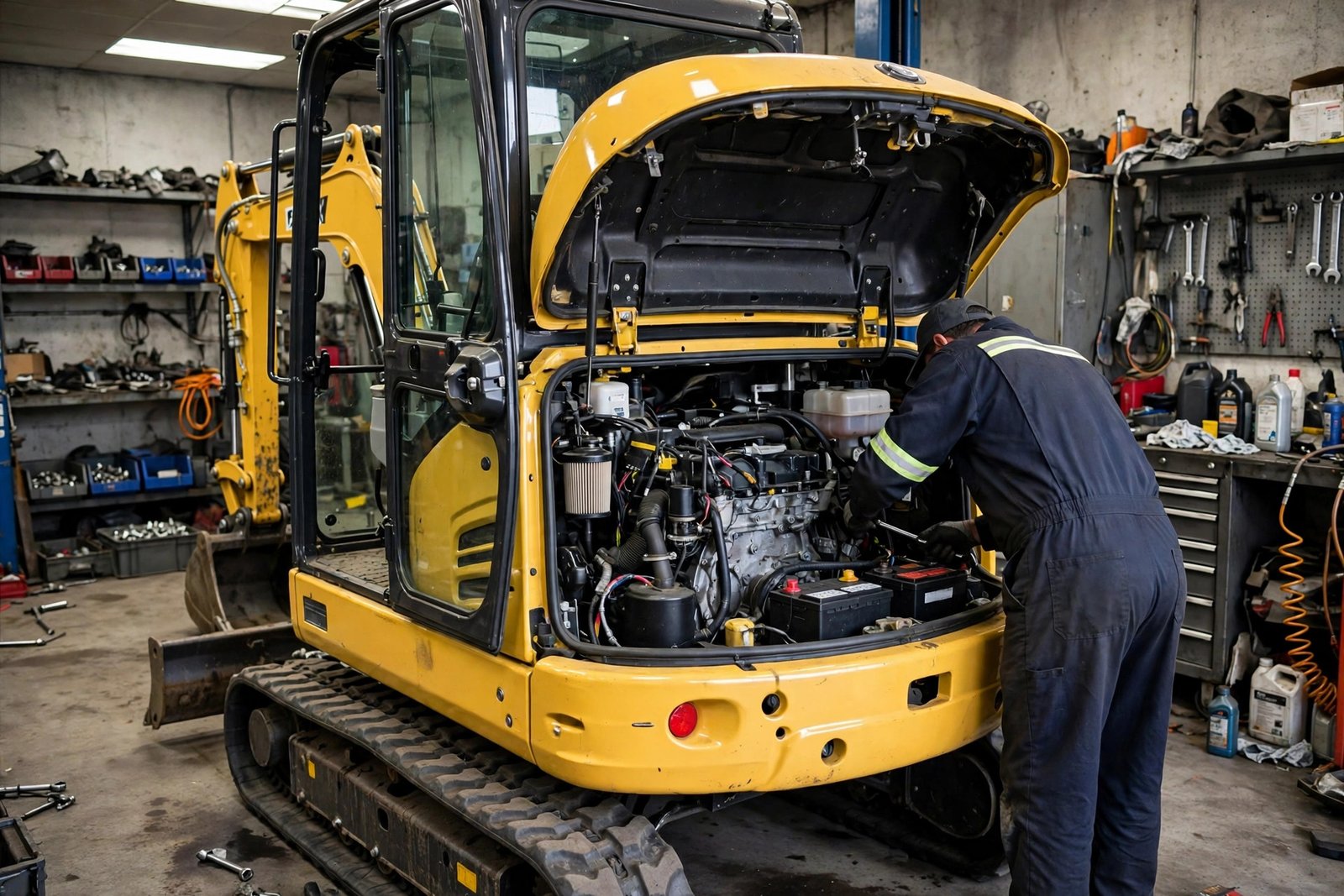
A warranty is a contract, and it has conditions. The most common is that the machine is serviced on schedule, using the right oil, filters, and parts. Keep a record of every service: the date, the hours on the meter, what was done, and what was used. If you ever need to make a claim, that record is your proof the machine was looked after.
Another common condition is that repairs use genuine or approved parts, fitted by someone the supplier recognises. Fitting a cheap copy of a part, or letting an unqualified workshop open the hydraulic system, can end the warranty on that part — or on the whole machine.
After-sales support: the part that matters most
The warranty is a document. After-sales support is what happens when you actually need help. Good support starts with the documents that come with the machine: a user manual in your language, a parts list with part numbers, and a service guide for your exact model. If those are missing, every simple question becomes a long email exchange.
Good support also means someone answers the phone. Before you order, ask who you contact if something goes wrong, how quickly they reply, and whether they can send a technician or only parts.
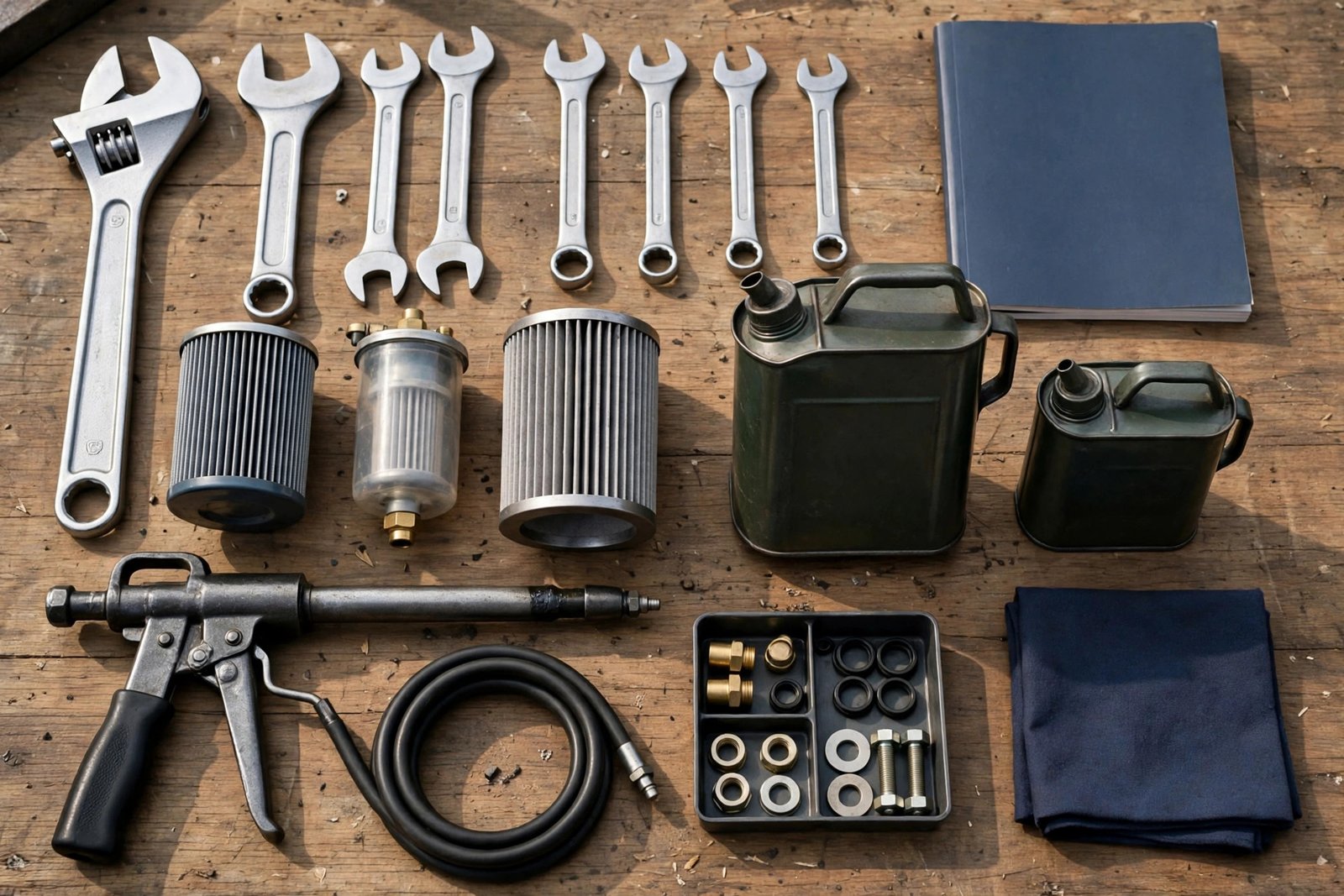
Ask, too, about spare parts. Which common parts does the supplier keep in stock — filters, bucket teeth, hoses, tracks, and seals — and how long do they take to arrive? A supplier who stocks the common parts and ships them quickly will keep your machine working. A supplier who has to order every part from scratch will keep it standing still.
Three documents decide whether a small problem stays small: the user manual, the parts list with part numbers, and the service guide for your exact model. Ask the supplier to confirm that all three come with the machine, in your language. If the manual is for a different model, or in a language you cannot read, it is not much use when the machine needs attention.

What to ask for in writing
Before you pay, ask the supplier for five things in writing. First, the full warranty terms: what is covered, what is not covered, and the exact period, confirmed in the contract. Second, who pays for shipping a replacement part, and who pays for the labour to fit it. Third, what you must do to keep the warranty valid — the service schedule, the oil and filter types, and the approved parts and repairs. Fourth, the after-sales contact: who you call, how quickly they reply, and whether they can send a technician or only parts. Fifth, the documents that come with the machine: the manual, the parts list, and the service guide, in your language, for your exact model. A supplier who puts the warranty and the support in writing is a supplier who expects to stand behind the machine.
A warranty you understand is worth more than a long one
A long warranty that nobody explains is worth less than a shorter one you fully understand. Read the terms, ask the five questions above, and keep the service record from the first day.
Tell Sparkle One about your order — the model, the configuration, and the country you are importing into — and we will confirm the warranty terms, the spare parts, and the after-sales support for your machine in writing before you pay. Minimum order is 1 unit, and our team replies within 24 hours. Contact us on WhatsApp at +86 151 2992 2907 to discuss your requirements.