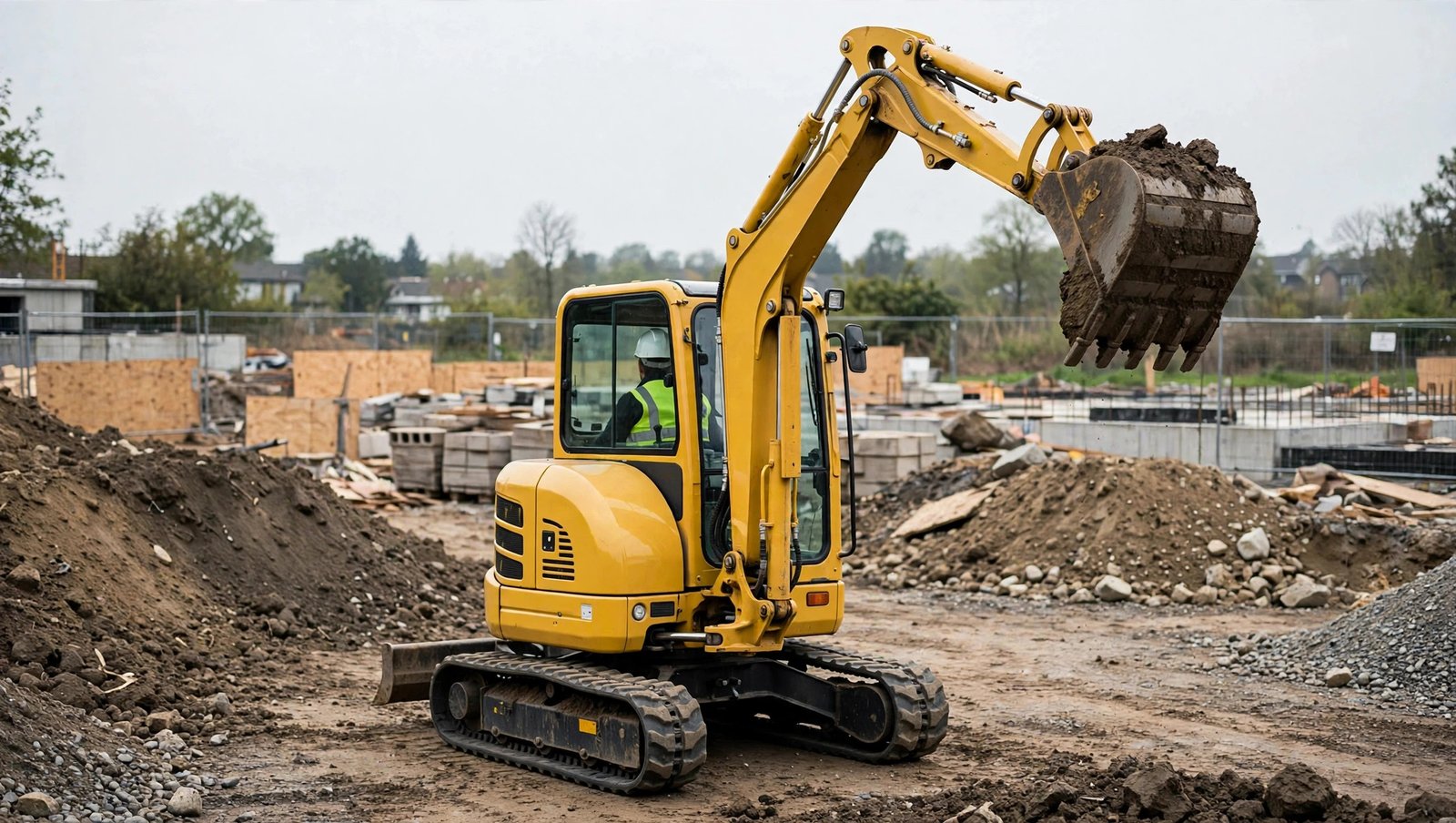
Yesterday the boom lifted smoothly. Today it crawls, the bucket curls slowly, and the swing feels weak. The engine sounds normal, so the problem is probably not the engine. Slow hydraulics are one of the most common complaints on a mini excavator, and in most cases the cause is simple — low oil, dirty oil, a blocked filter, or a hose that is restricting flow.
This guide walks through the checks in the order that finds the cause fastest, from the easiest to the hardest.
Start with what changed
Before you open anything, ask one question: what changed? Did the machine sit unused for weeks? Did someone change the oil or a filter? Did it get very hot yesterday? Did one function slow down, or all of them at once? The answer narrows the search quickly.
If only one function is slow — the boom lifts slowly but the bucket curls normally, for example — the problem is usually in that circuit: a hose, a valve, or a cylinder on that function. If everything is slow at once, the problem is usually in the shared parts of the system: the oil, the filter, or the pump.
Check the oil level first
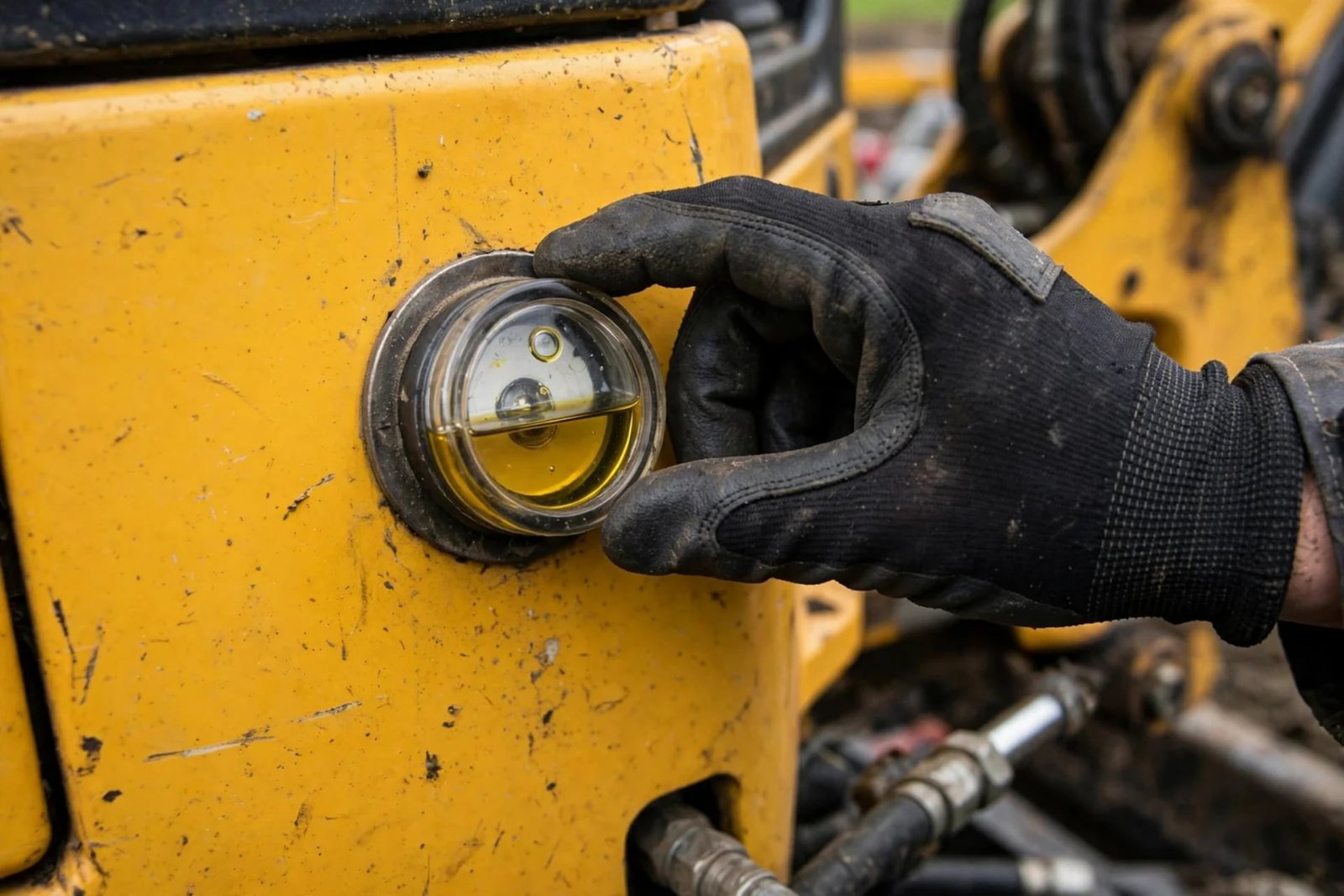
Low oil is the most common cause of slow hydraulics, and the easiest to check. Park the machine on level ground, lower the boom and arm to the position given in the manual, and check the hydraulic oil level in the sight glass or on the dipstick. It should sit in the marked range.
If the level is low, do not just top it up and carry on. Look under the machine for fresh oil, check the hoses and fittings for wet spots, and look at the cylinders for oil on the rods. A falling level usually means a leak somewhere. Top the oil up with the type listed in the manual, then find the leak and fix it.
Check the oil condition
Oil level is only half the story. The oil itself has to be clean and in good condition. Fresh hydraulic oil is clear, with a light amber colour. Look at it in the sight glass or on the dipstick.
Oil that looks milky may have water in it. Oil that looks very dark or smells burnt may be old or contaminated. Oil with visible particles in it is carrying grit through the system, and that grit wears pumps and valves from the inside. If the oil looks wrong, follow the manual for the correct oil type and change interval, and ask a technician or your supplier what to check next.
Check the filters
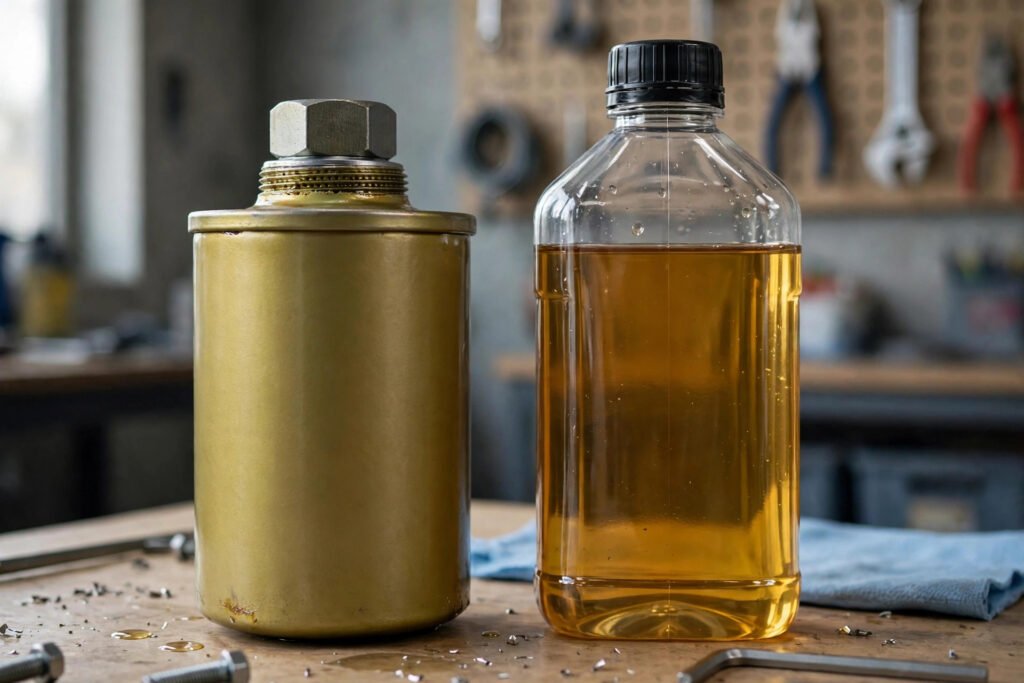
A blocked filter can make the whole machine feel slow. Filters keep dirt out of the oil, and as they catch more dirt, flow through them drops. In some cases a blocked filter can starve the pump of oil, which makes every function slow at once.
Follow the manual for when to change the hydraulic filter, and change it after any major repair, or if the oil has been contaminated. When you change a filter, keep the area clean, fit the correct part for your model, and check for leaks after the machine has run for a few minutes. If the machine speeds up after a filter change, you have found the cause.
Check the hoses for kinks and bulges
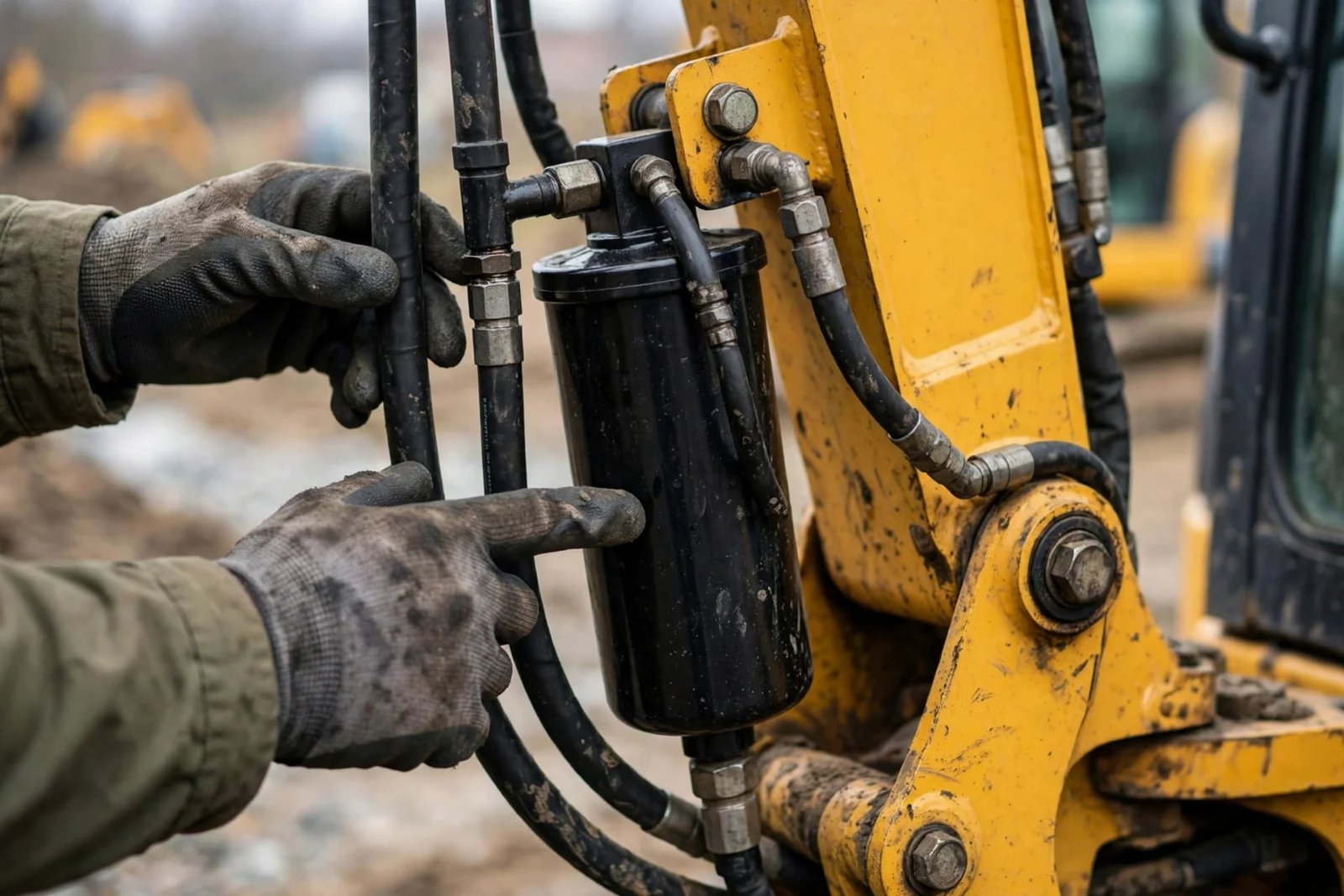
Hoses carry oil at high pressure between the pump, valves, and cylinders. A hose that is kinked, crushed, or bulging restricts flow, and restricted flow means a slow function. Walk around the machine and look at every hose you can see, especially where a hose bends, touches another hose, or passes near the frame.
Look for flat spots, sharp bends, bulges, cracks, and worn patches. Check that the quick coupler and attachment lines are connected correctly — a coupler that is only partly connected can restrict flow to an attachment and make it feel weak.
Check for overheating
Hydraulics slow down when the oil gets too hot. Hot oil is thinner, so it leaks past seals inside pumps and valves instead of pushing the cylinders, and the machine feels weak. Overheating can come from low oil, a blocked oil cooler, or a dirty radiator.
If the machine starts the day working well and gets slower as it warms up, heat is a likely cause. Check the oil level first, then look at the oil cooler and radiator. Mud and dust packed around them block airflow and make the system run hot. A quick clean can make a real difference.
Other causes: pump, valve, and air
If the oil, filter, and hoses all check out and the machine is still slow, the cause may be deeper in the system. A worn pump cannot build full pressure, a sticking valve cannot direct oil properly, and air in the system after a repair can make functions feel spongy and slow.
These are the causes that need proper testing. A technician with pressure gauges can measure what the pump is delivering and find out whether the problem is the pump, a valve, or a cylinder. Do not adjust relief valves or pump settings yourself.
When to call a technician
Call a technician if a hose has burst, if oil is spraying, if the machine drops a load on its own, or if you find metal particles in the oil or the filter. Call one, too, if the machine is still slow after you have checked the oil level, the oil condition, the filter, and the hoses, or if a cylinder drifts down when it should hold its position.
When you call, describe what you have already checked and what you found. A photo of a leaking hose or a bulging fitting helps more than a long description, and it lets the technician bring the right parts.
A simple order that saves time
Slow hydraulics are frustrating, but they are rarely a mystery. Work through the checks in this order: what changed, oil level, oil condition, filter, hoses and couplers, then overheating. Most slow machines are fixed at one of those steps, and the fix is usually a top-up, a filter, or a hose — not a new pump.
Tell Sparkle One about your machine model and how the slowness shows up, and we will help you confirm the right oil, filters, and maintenance items for it. Minimum order is 1 unit, and our team replies within 24 hours. Contact us on WhatsApp at +86 151 2992 2907 to discuss your requirements.