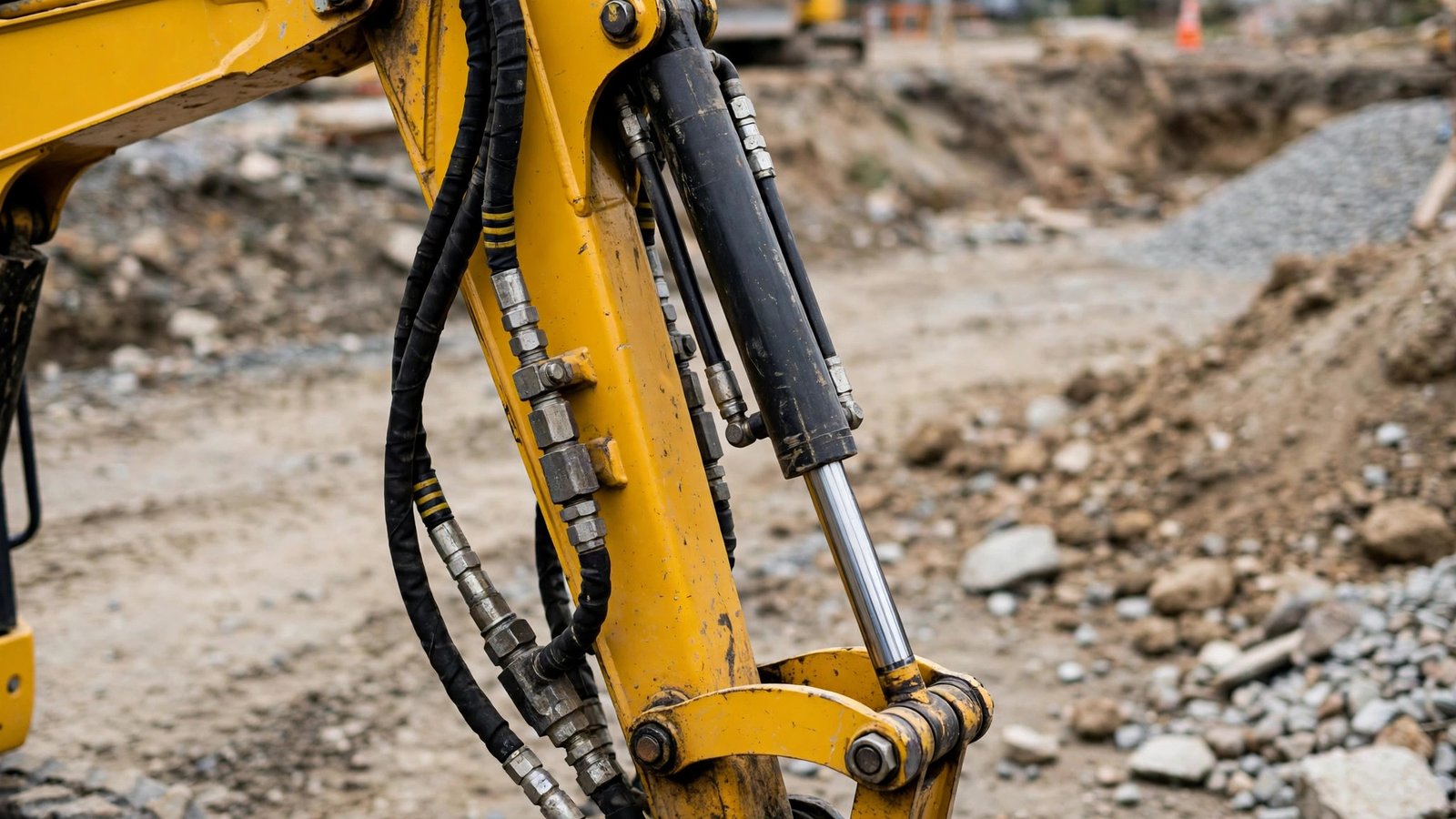
If the engine is the heart of a mini excavator, the hydraulic system is its muscles. It lifts the boom, curls the bucket, swings the upper body and drives the tracks. When it works well, the machine feels strong and smooth. When it does not, everything feels slow, weak or jerky — even if the engine sounds fine.
This guide explains hydraulics in simple terms: how the system works, what the oil does, how to look after hoses and filters, and how to spot a leak safely.
How Hydraulics Work, in Simple Terms
A hydraulic system uses oil under pressure to move things. The engine drives a pump, the pump pushes oil through hoses and valves, and that oil pushes pistons inside cylinders. Each cylinder moves one part of the machine: one lifts the boom, one moves the arm, one curls the bucket, and others swing the body or drive the tracks.
Hydraulic Oil: What It Does
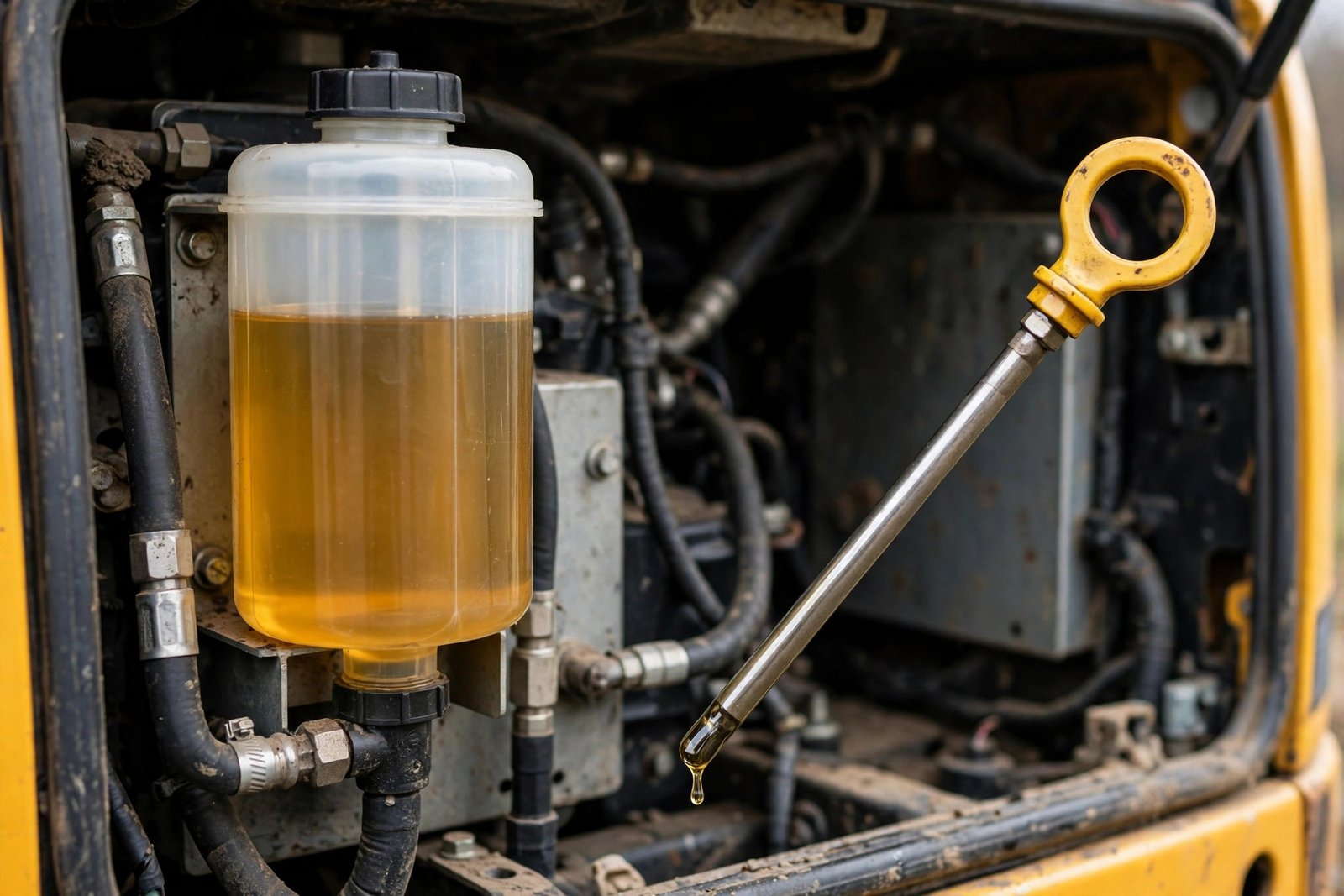
Hydraulic oil does three jobs at once. It transfers power from the pump to the cylinders, it lubricates pumps, valves and seals, and it carries heat away from the working parts.
Check the oil level regularly, with the machine on level ground and the arm in the position given in the manual. If it is low, find out why before you simply top it up — a falling level often means a leak somewhere.
Also look at the oil itself. Fresh hydraulic oil is clear, with a light amber colour. Oil that looks milky may have water in it; oil that looks very dark or smells burnt may be old or contaminated. If the oil looks wrong, ask a technician or your supplier what to check next, and follow the manual for the correct oil type and change interval.
Hoses and Fittings: The Parts That Wear First
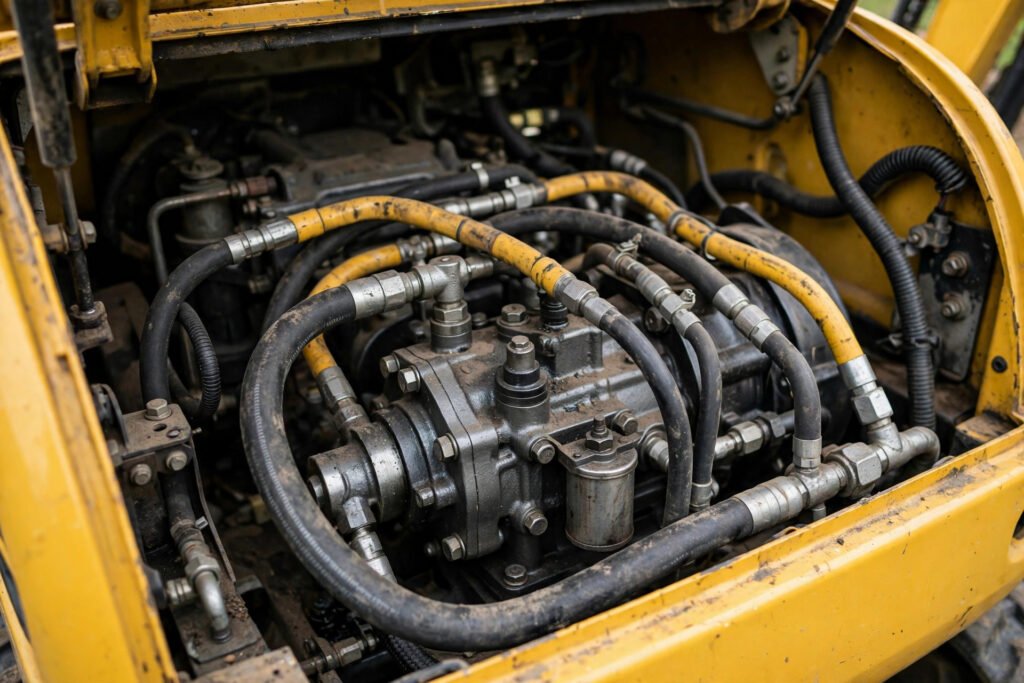
Hoses carry oil at high pressure between the pump, valves and cylinders. They flex every time the boom moves, rub against each other and against the machine, and work in dust, mud and heat. Fittings — the metal ends that connect a hose to a valve or cylinder — can loosen with vibration over time.
Walk around the machine and look at every hose you can see: cracks, flat spots, bulges, worn patches, and oil stains around fittings, especially where a hose bends or touches another hose.
A hose that is starting to fail rarely fails all at once. It usually shows a small warning first: a damp fitting, a fine crack, or a bulge.
Leaks: What to Look For — and What Never to Do
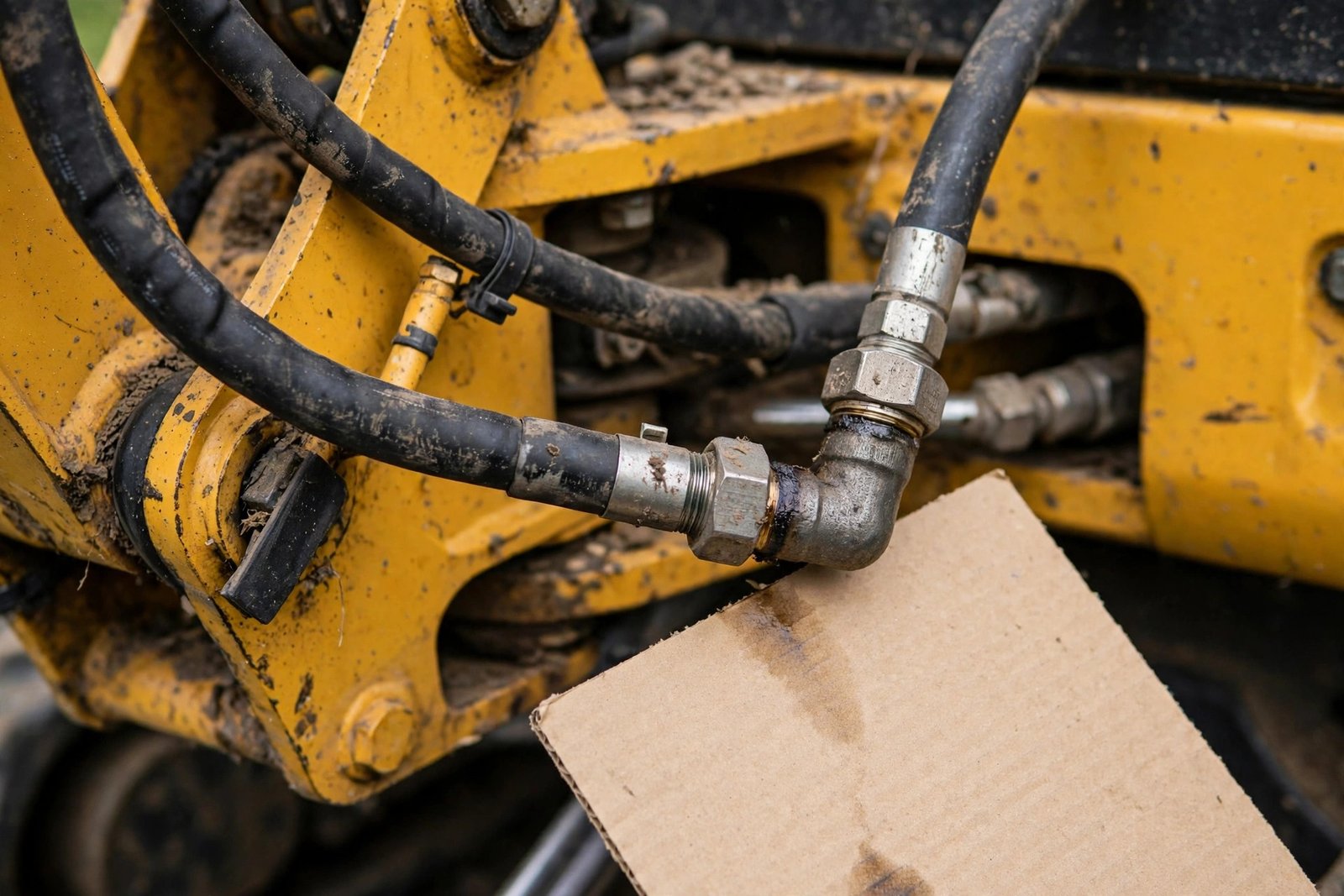
A hydraulic leak is often easy to spot once you know where to look. Check the ground under the machine after it has been parked for a while, and look for fresh oil spots, damp patches on hoses, wet fittings, and oil on the cylinders.
There is one safety rule that matters more than any other: never check for a hydraulic leak with your hands. Oil under pressure can escape through a pinhole as a fine jet that is almost invisible, and it can pierce skin. That kind of injury is serious and needs medical help straight away, even if it looks small at first.
To find a leak safely, stop the machine, lower the attachments to the ground, and relieve the pressure as the manual describes. Then use a piece of cardboard or paper and hold it near the suspect hose or fitting — a leak will show up as a dark spot on the card. Wear gloves and eye protection, keep your hands and face clear, and never run a finger along a hose while the system is under pressure.
If you find a leak, do not keep working and hope it gets better. A small leak can turn into a burst hose, and a burst hose can drop a load or spray hot oil.
Filters: Small Parts, Big Job
Filters keep dirt out of the oil. A hydraulic system has very small clearances inside its pumps and valves, and even fine grit can wear them out over time.
A blocked filter can make the machine feel slow or weak, and in some cases it can starve the pump of oil. Follow the manual for when to change the filter, and change it after any major repair, or if the oil has been contaminated. When you change a filter, keep the area clean, fit the correct part for your model, and check for leaks after the machine has run for a few minutes.
Slow or Weak Hydraulics: Common Signs
If your mini excavator starts to feel slow or weak, work through the simple checks first, in this order.
First, check the oil level and look for a leak. Low oil is the most common reason for weak hydraulics. Second, check the filter and the oil condition. Dirty oil or a blocked filter can slow the whole system down. Third, check the hoses for a bulge or a kink that is restricting flow, and check that the quick coupler or attachment lines are connected correctly.
Other causes are possible, too: a worn pump, a sticking valve, or air in the system after a repair. Those jobs belong to a technician with the right gauges.
When to Call a Technician
Some hydraulic work is routine — checking oil, cleaning around fittings, and looking for leaks. Other work is not, and trying it without the right tools and training can be dangerous.
Call a technician if a hose has burst, if oil is spraying, if the machine drops a load on its own, or if you find metal particles in the oil or filter. Call one, too, if the machine is slow after you have checked the oil and filter, or if a cylinder drifts down when it should hold its position. Those symptoms can point to internal wear or a valve problem that needs proper testing.
A Few Minutes That Save a Big Repair
The hydraulic system does the heavy work on a mini excavator, and it asks for very little in return: clean oil at the right level, hoses that are checked often, filters changed on time, and leaks fixed while they are still small.
Tell Sparkle One about your machine and how you use it, and we will help you choose the right model and configuration — and point you to the maintenance items that matter most for your work. Minimum order is 1 unit, and our team replies within 24 hours. Contact us on WhatsApp at +86 151 2992 2907 to discuss your requirements.