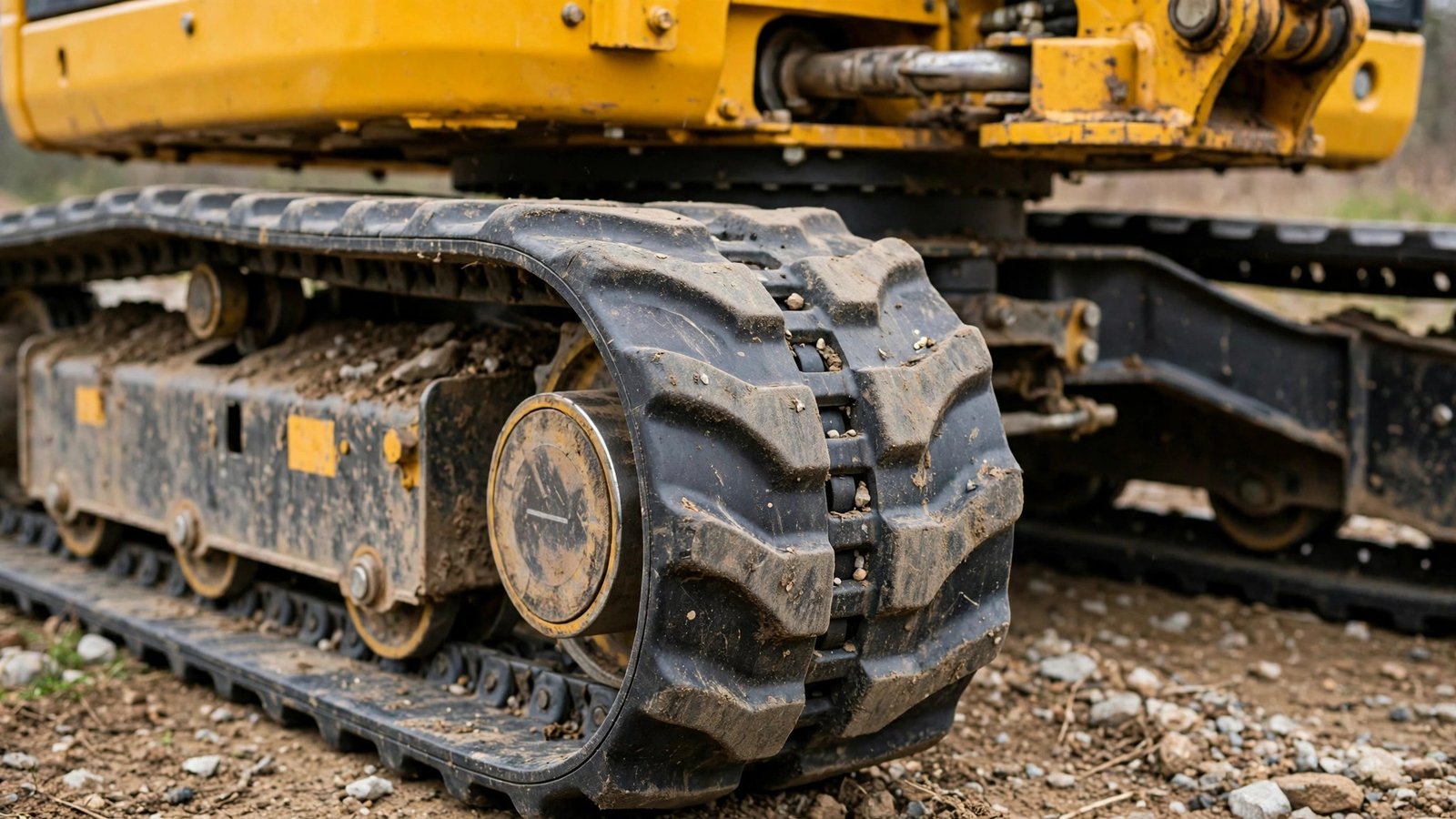
Rubber tracks are the part of a mini excavator that touches the ground every minute it works. They carry the whole machine, grip soft soil, protect lawns and driveways, and absorb much of the shock from uneven ground. They are also one of the first parts to wear out if they are ignored.
The good news is that most track wear is avoidable. Correct tension, regular cleaning, careful turning, and sensible storage will add a long working life to a set of rubber tracks. This guide explains how to look after them and when to start planning a replacement.
Why rubber tracks wear out
A rubber track is made of reinforced rubber with steel cords inside. It is tough, but it is not made for every surface. Sharp rock, broken concrete, scrap metal, and demolition rubble can cut or tear the rubber. Constant sharp turning on hard concrete grinds the edges. Stones trapped between the track and the rollers rub the rubber and the steel parts underneath.
Get the tension right
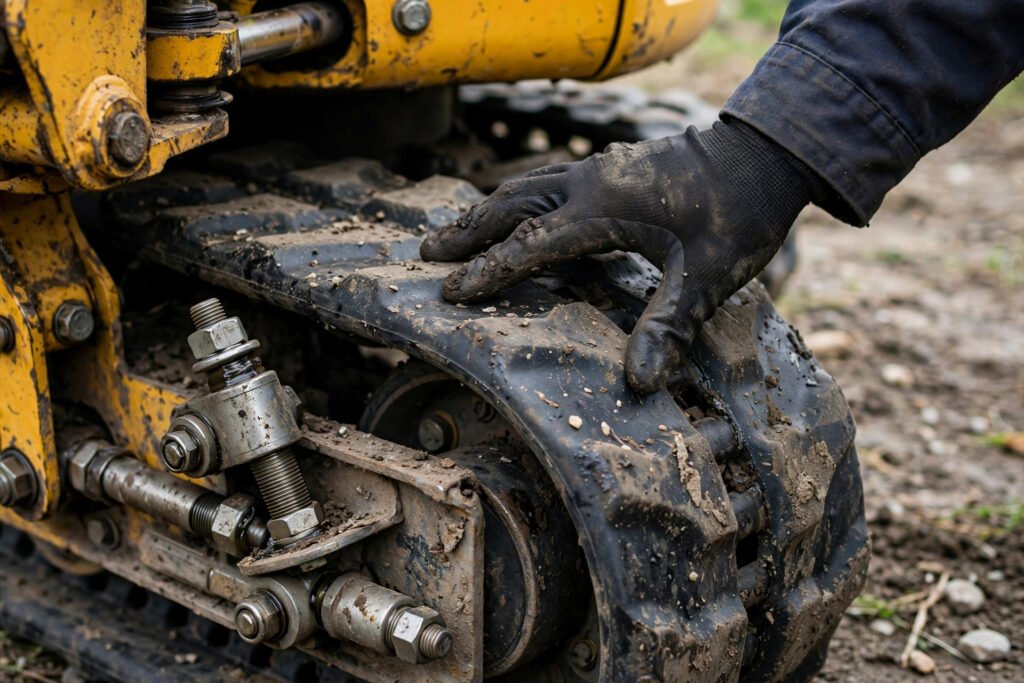
Track tension is the first thing to check, and the most common cause of early wear. If a track is too loose, it can slip, wear unevenly, and in the worst case come off the rollers. If it is too tight, it puts extra load on the rollers, the rubber, and the drive parts, and the machine works harder than it needs to.
Check the tension the way the manual for your exact model describes it, and check it regularly — not only when something feels wrong. Tension changes as the track wears and as the temperature changes, so a track that was correct last month may not be correct today.
Clean the tracks after every job
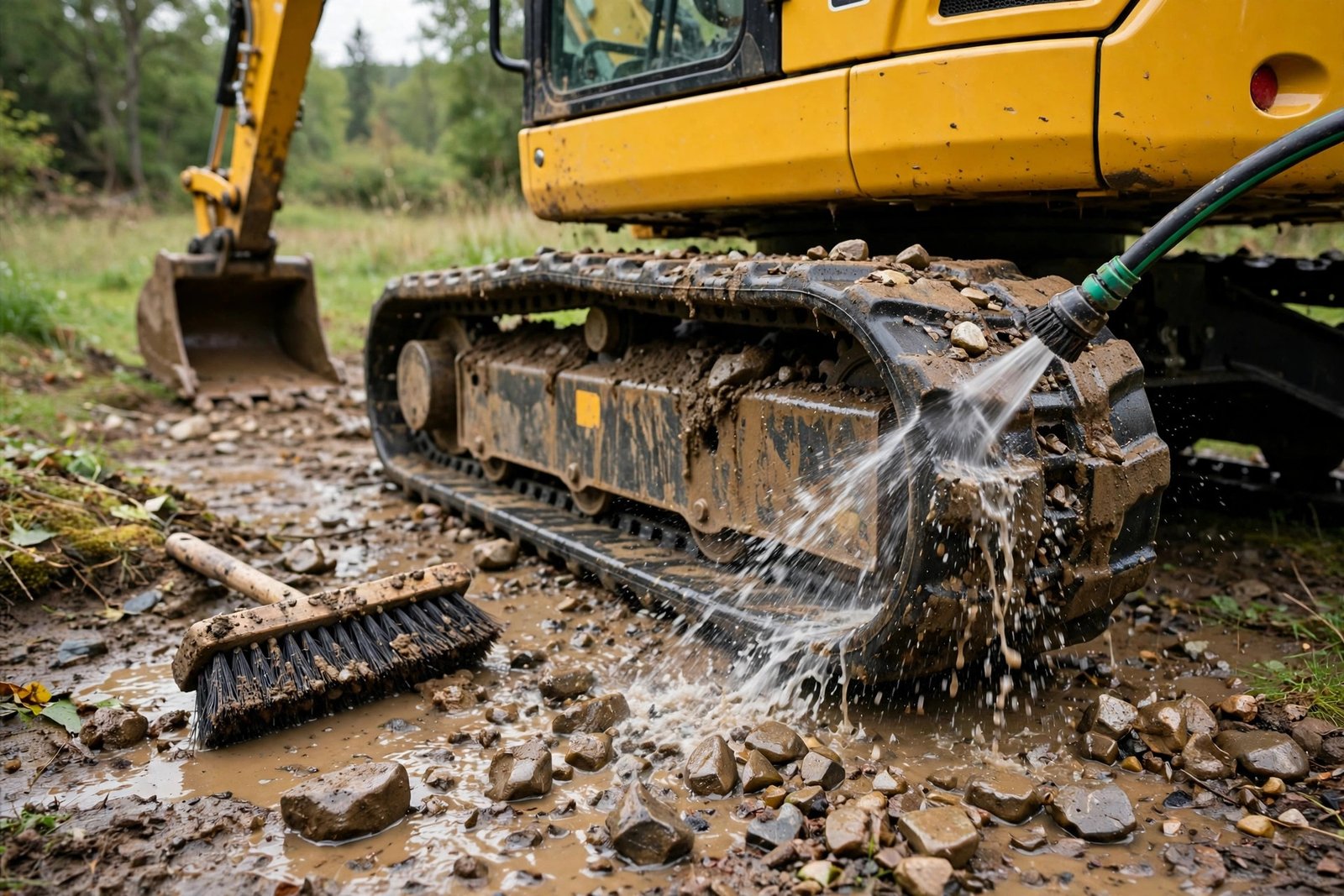
Mud, stones, and debris do more damage when they are left in place than when they are cleaned out the same day. Wet mud dries hard in the undercarriage, stones wedge between the track and the rollers, and packed soil hides small cuts before they grow into tears.
After the job, wash the tracks and the undercarriage with water and pick out any stones caught in the tread and around the rollers. It takes only a few minutes, and it also gives you a chance to look at the tracks while you clean them. A small cut found early is a repair you can plan; the same cut found months later may be the reason the track has to be replaced.
Turn gently on hard surfaces
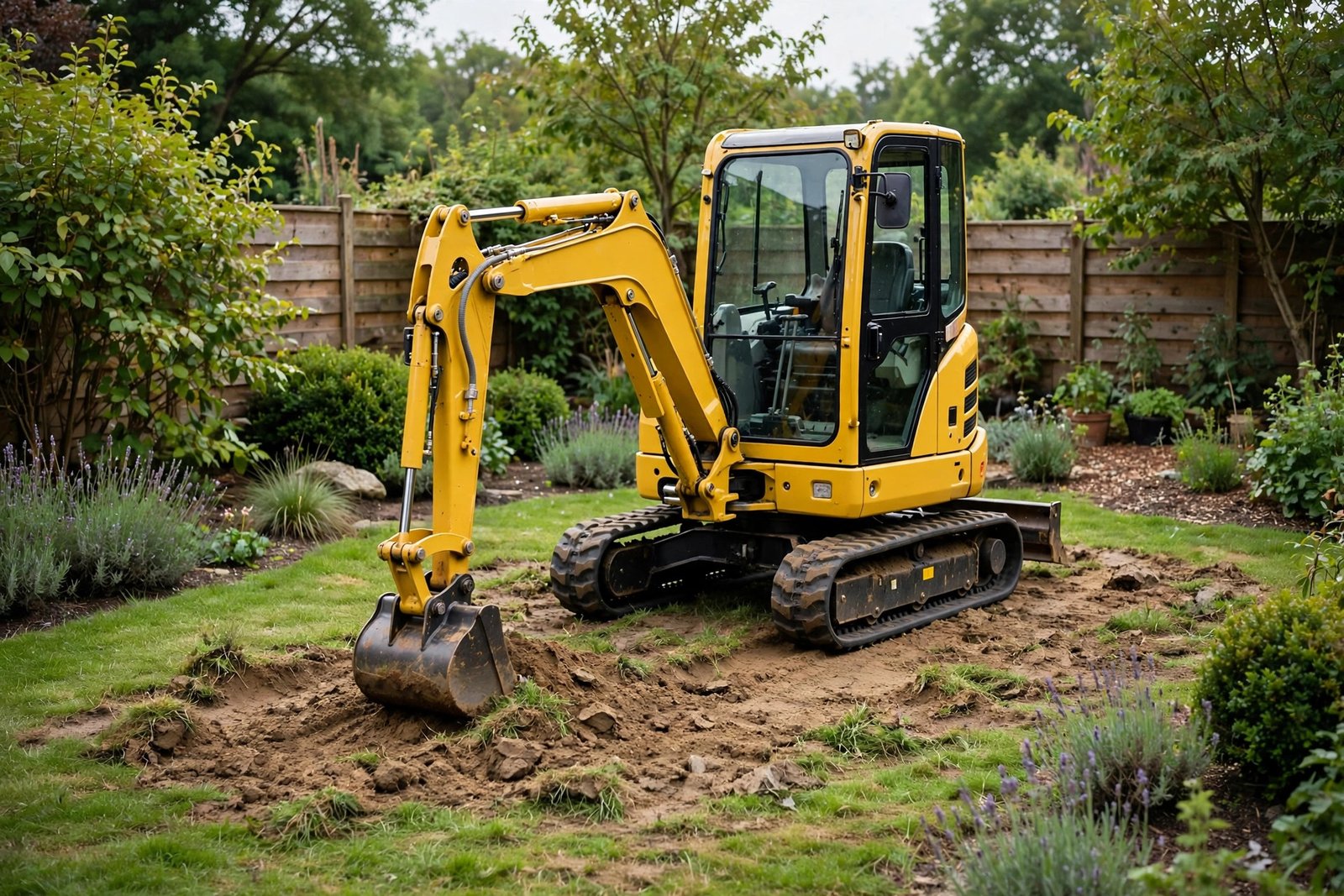
Sharp turns are hard on rubber tracks, especially on concrete and asphalt. When a tracked machine turns sharply, the tracks skid sideways across the ground. On soft soil that does little harm, but on a hard surface it grinds the rubber and puts a twisting load on the track.
Where you can, turn in a wide arc, or make a three-point turn instead of spinning in place. Avoid turning sharply on concrete driveways and paved yards, and keep the speed low when you do have to turn on a hard surface. The few seconds a gentle turn costs are far cheaper than a new set of tracks.
Keep sharp rock and rubble in mind
Rubber tracks are made for lawns, gardens, farms, and soft construction ground. They are not made for constant work on sharp rock, broken concrete, or demolition rubble. If most of your work is on that kind of ground, steel tracks may be the better choice — and if you are not sure, ask your supplier before you order.
Even on normal jobs, watch where you drive. A pile of broken concrete, a scrap yard, or a rocky track can cut a rubber track in a single pass. Drive around sharp debris where you can, and walk the ground first if you are entering a site you have not worked on before.
Store the machine properly
How a mini excavator is stored matters as much as how it is used. Sunlight, heat, and chemicals all age rubber over time. If the machine will sit unused for a while, park it on a flat, clean surface, out of direct sun where possible, and keep oil, fuel, and solvents away from the tracks. Before a long rest, clean the tracks, check the tension, and make sure no stones are trapped in the undercarriage.
Wear signs to watch for
Check the tracks regularly for the signs that tell you they are wearing out. Look for cracks across the tread, cuts that reach the steel cords inside, chunks missing from the edges, and uneven wear from one side to the other. Look at the drive lugs — the raised parts inside the track that the drive wheel grips. If they are worn down, cracked, or missing, the track can slip. Also watch how the machine behaves. A track that slips, makes an unusual noise, or feels loose on one side is telling you something. Do not wait for it to come off.
When to replace the tracks
There is no fixed working life for a rubber track that fits every machine and every job. A track used gently on grass and soft soil can last far longer than the same track used daily on rock and concrete. The right time to replace it is when the wear signs say so: deep cracks, exposed steel cords, missing lugs, or wear that makes the track slip or run unevenly. Plan the replacement before the track fails. A track that comes off on a job site costs far more in lost time than a planned change in the yard.
Small habits, long track life
Rubber track care is not complicated. Check the tension, clean out mud and stones after every job, turn gently on hard ground, avoid sharp rock where you can, store the machine clean and out of the sun, and look at the tracks while you work. Those small habits are the difference between a set of tracks that wears out early and a set that keeps working season after season.
Tell Sparkle One about the ground you work on and the size of your mini excavator, and we will help you choose the right track option and spare parts for your machine. Minimum order is 1 unit, and our team replies within 24 hours. Contact us on WhatsApp at +86 151 2992 2907 to discuss your requirements.