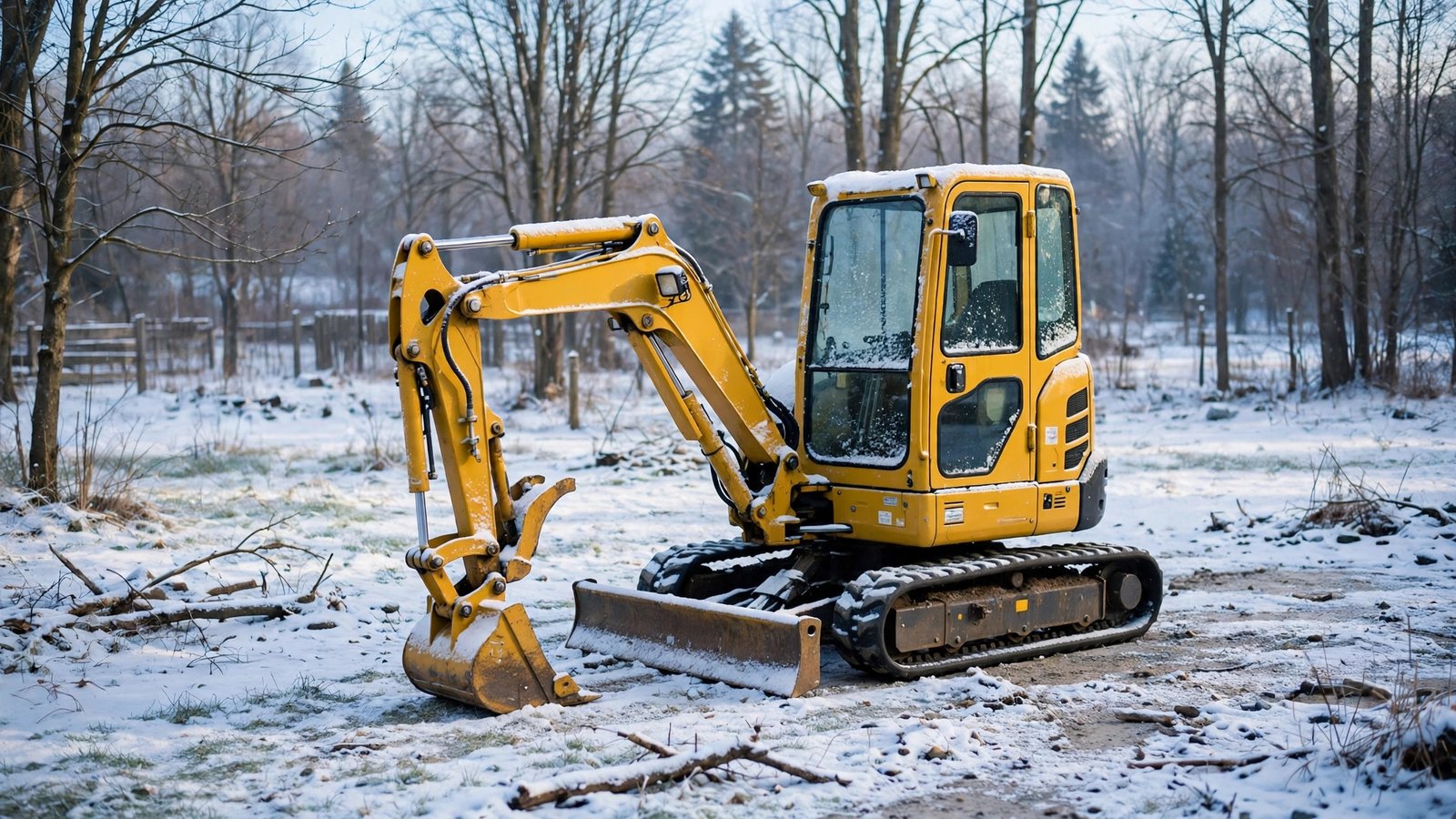
Winter is the hardest season for a mini excavator. Cold oil is thick, batteries are weak, diesel can wax, and tracks can freeze to the ground overnight. A machine that starts easily in summer can refuse to start on a cold morning, and one that sits unused for weeks can come back with a dead battery and rust in the fuel system.
None of this needs expensive equipment. Winter care is mostly small habits: the right fuel and coolant, a healthy battery, a gentle start, and clean storage.
Cold starts: be patient with the engine
A cold engine needs more care than a warm one. Overnight, the engine oil thickens, the battery loses power, and the metal parts contract. Cranking the starter again and again will not fix that — it will only flatten the battery. Do the daily check first, then give the machine a little extra time. If your machine has glow plugs, wait for the glow plug light to go out before you turn the key, and repeat the cycle once more on a very cold day if the manual allows it. Crank the engine in short bursts rather than holding the key down for a long time. If it does not start after a few tries, stop and find the cause — fuel, battery, or a blocked filter — instead of draining the battery completely.
Once the engine is running, let it warm up at low idle for several minutes before you work. Cold hydraulic oil is thick, so the controls will feel slow and stiff at first. Move each function slowly through its range and let the oil warm up before you dig at full speed.
Fuel and water in fuel: winter’s hidden problem
Diesel fuel behaves differently in cold weather. In low temperatures, wax in the fuel can form crystals that block the fuel filter, and the engine starves and stops. Water in the fuel is a second problem: it can freeze in the filter or lines, and it encourages rust and injector damage. Use the fuel grade suited to the season, as the manual and your fuel supplier recommend, and keep the tank full overnight to reduce condensation. Drain water from the fuel filter bowl or water separator regularly, especially after the machine has been standing, and more often in damp or freezing weather. If the engine starts to lose power or run unevenly in cold weather, check the fuel filter and water separator before anything else.
Never add anything to the fuel unless the manual for your exact model allows it, and never use open flames to warm a fuel line or filter.
Coolant and antifreeze: check before the first frost
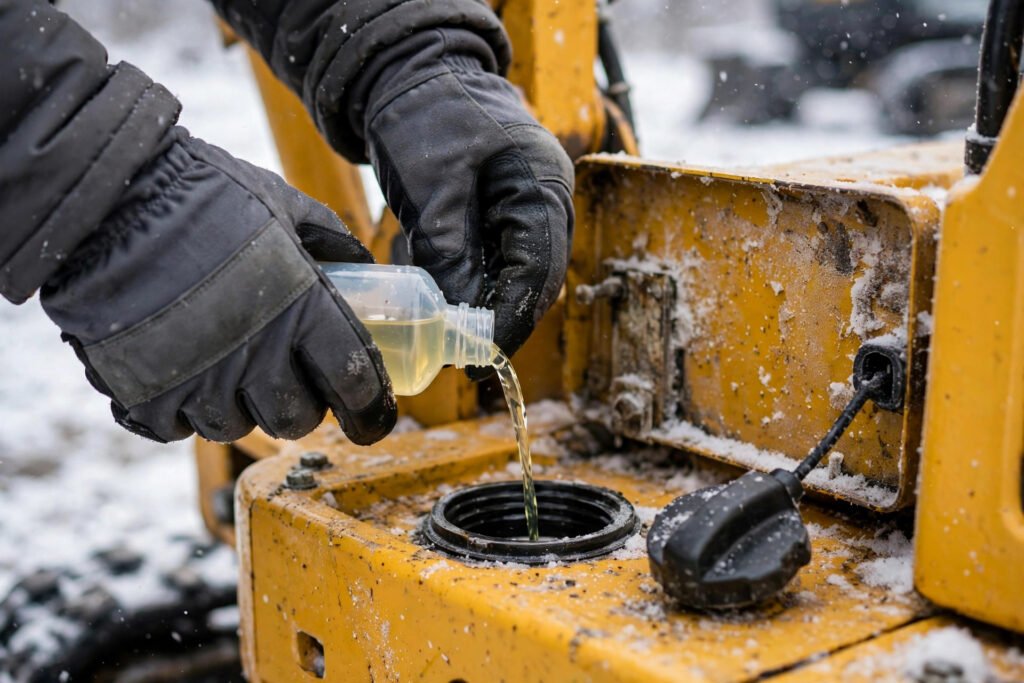
Coolant, also called antifreeze, stops the cooling system from freezing in winter. If the coolant is weak, diluted, or old, it can freeze, expand, and crack the engine block or radiator — a repair that costs far more than a coolant change.
Before the cold season starts, check the coolant level when the engine is cold, and check that the coolant mixture is correct for the lowest temperature the machine will face. Your manual or your supplier can confirm the right type and mixture for your model. Never open a hot radiator cap. If the coolant level keeps dropping, look for a leak at hoses, clamps, and the radiator instead of just topping it up.
Battery care: the most common winter failure
A weak battery is the most common reason a mini excavator will not start in winter. Cold reduces a battery’s power, and a battery that was already old or partly charged in autumn will often fail on the first cold morning.
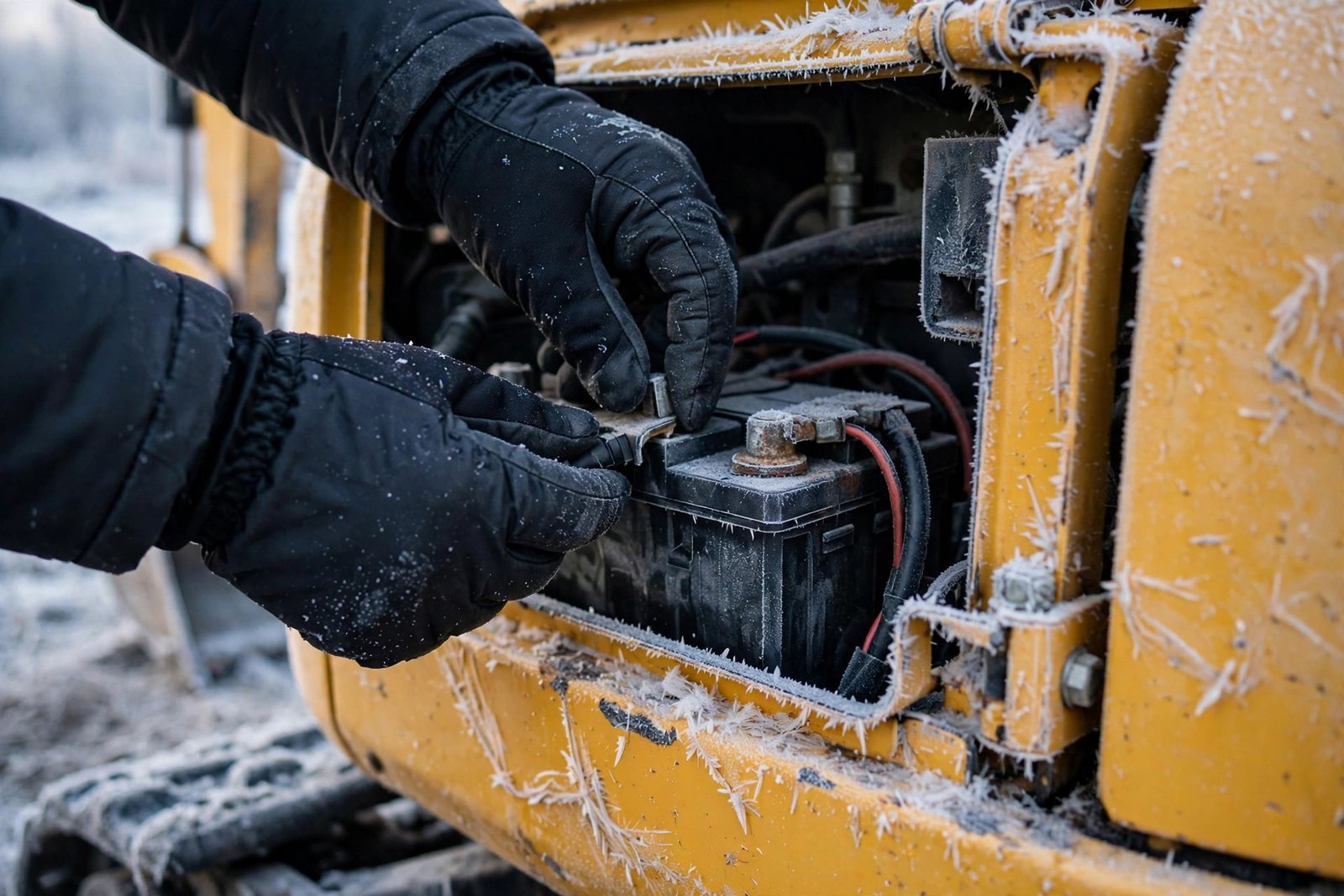
Keep the battery clean and dry, and check that the terminals are tight and free of corrosion. A white or green crust on the terminals is corrosion — clean it off and make sure the connections are firm. If the machine will sit unused for a while, start it and let it run until warm once a week, or remove the battery and store it in a dry place above freezing, charging it as the manual or the battery maker recommends.
If the machine turns over slowly, do not keep cranking. Charge the battery properly, or jump-start the machine only in the way the manual describes, with the correct voltage and the right connection order.
Tracks in cold and mud: clean them before they freeze
Wet mud on the tracks and undercarriage can freeze overnight, locking the tracks to the ground or to the rollers. Forcing the machine to move the next morning can tear a rubber track or damage the drive parts.
Clean the tracks and undercarriage at the end of the working day, before the mud freezes. Pick out stones caught in the tread, and park the machine on dry boards, timber, or a clean, flat surface where you can, rather than in a wet hollow. If the tracks have frozen to the ground, do not force them. Let the machine warm up, and free the tracks gently — warm water on the frozen area, or careful movement once the ice has loosened, is safer than full power against a frozen track.
Storage when idle: a little preparation saves a spring repair
If the mini excavator will not be used for weeks, spend an hour preparing it. Wash off mud and concrete, grease the pins so they are protected, and check the oil, coolant, and fuel levels. Fill the fuel tank to reduce condensation, and drain water from the fuel filter bowl.
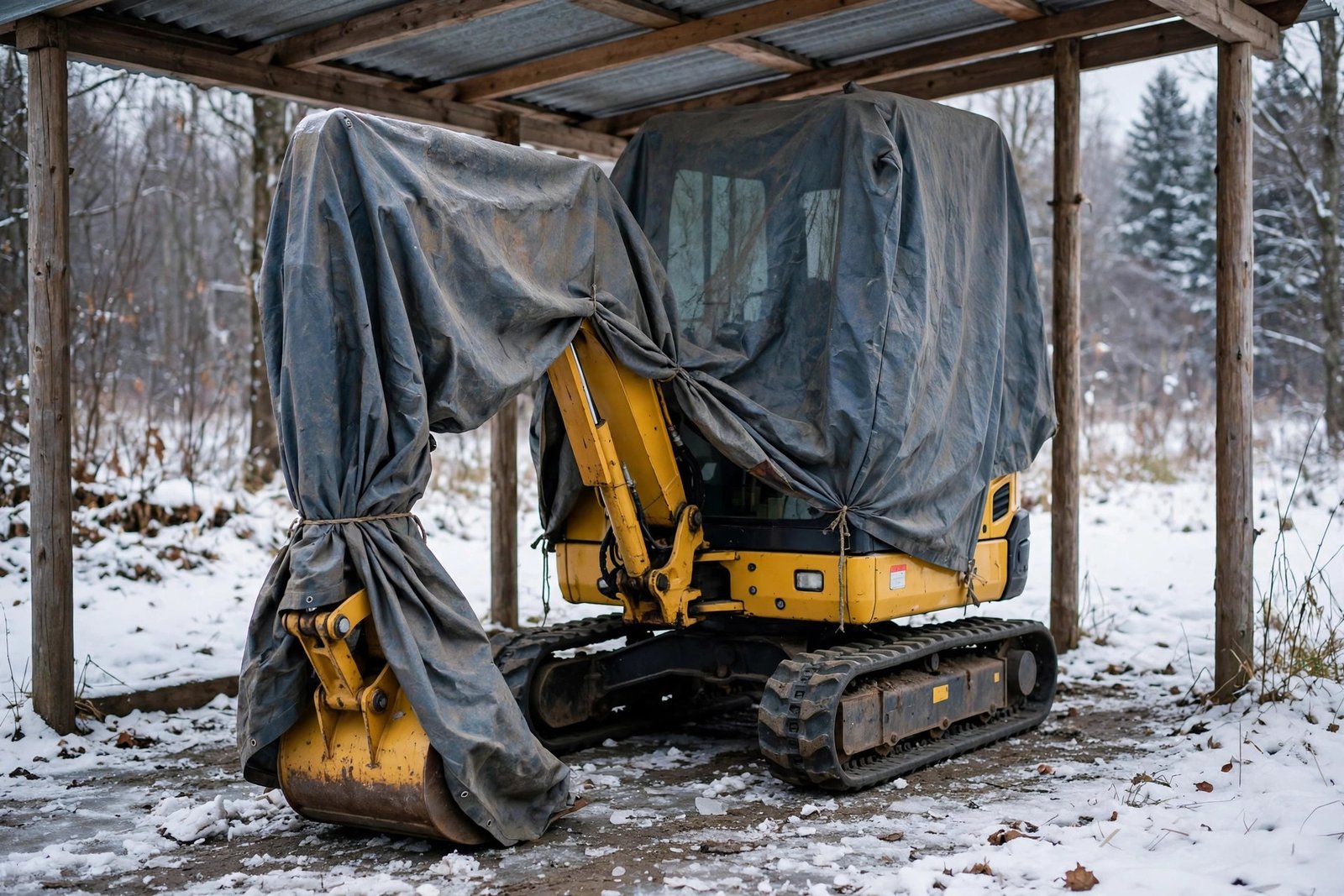
Park the machine on a flat, clean surface, out of direct wind and rain where you can, and cover it with a tarpaulin if it will sit outside. Lower the bucket and arm to the ground so the cylinders are not left extended and exposed.
A short winter routine
Winter care comes down to a short routine: check the coolant before the first frost, keep the fuel clean and the tank full, look after the battery, clean the tracks before they freeze, and warm the machine up gently every morning.
Tell Sparkle One about the climate where you work and the model you use, and we will help you confirm the right fuel, coolant, and winter preparation for your machine. Minimum order is 1 unit, and our team replies within 24 hours. Contact us on WhatsApp at +86 151 2992 2907 to discuss your requirements.