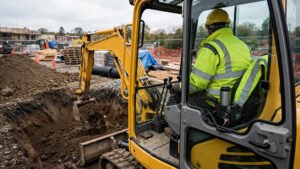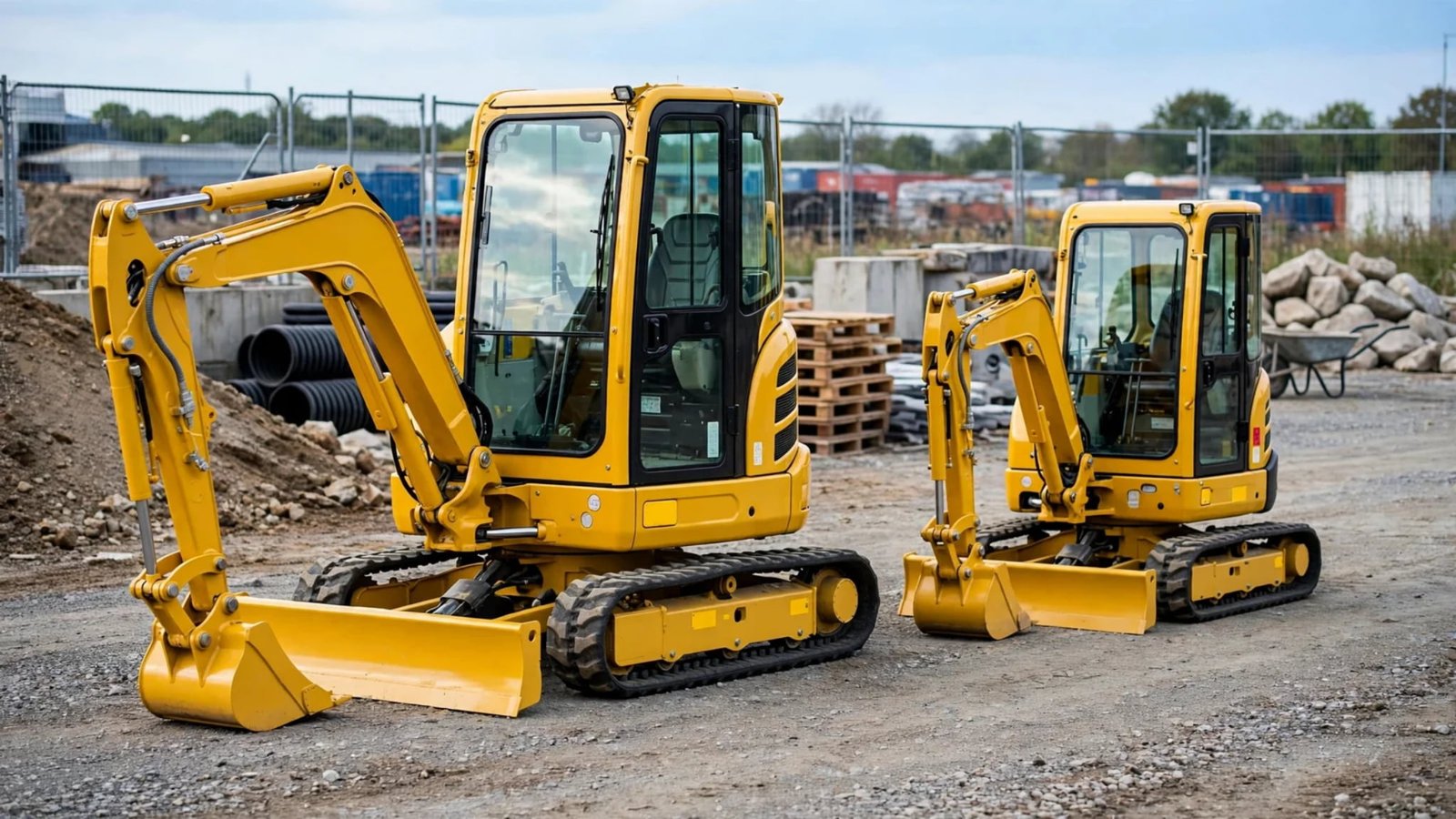
If you are shopping for a mini excavator in the 1.5 to 2 ton class, you will probably compare the HT15 and the HT18 first. They look similar and work on the same kinds of jobs, but they are not the same machine. Choosing the right one comes down to your gates, your trenches, your truck, and how the machine will be moved.
This guide compares the two. It does not quote digging depth, engine power, operating weight, or any other figure for either model, because those numbers depend on the exact configuration — boom and arm, bucket, cab or canopy, counterweight, and attachments. Confirm the exact figures on the specification sheet for the configuration you plan to order.
The HT15: the lighter, more compact choice
The HT15 sits at the lighter end of this size class. That makes it the easier machine to move and the easier machine to get into tight places. It fits through narrower gates, works in smaller gardens, and is simpler to load onto a trailer. For a farm, a landscaping business, or a homeowner with regular small jobs, that access matters more than extra digging power most days.
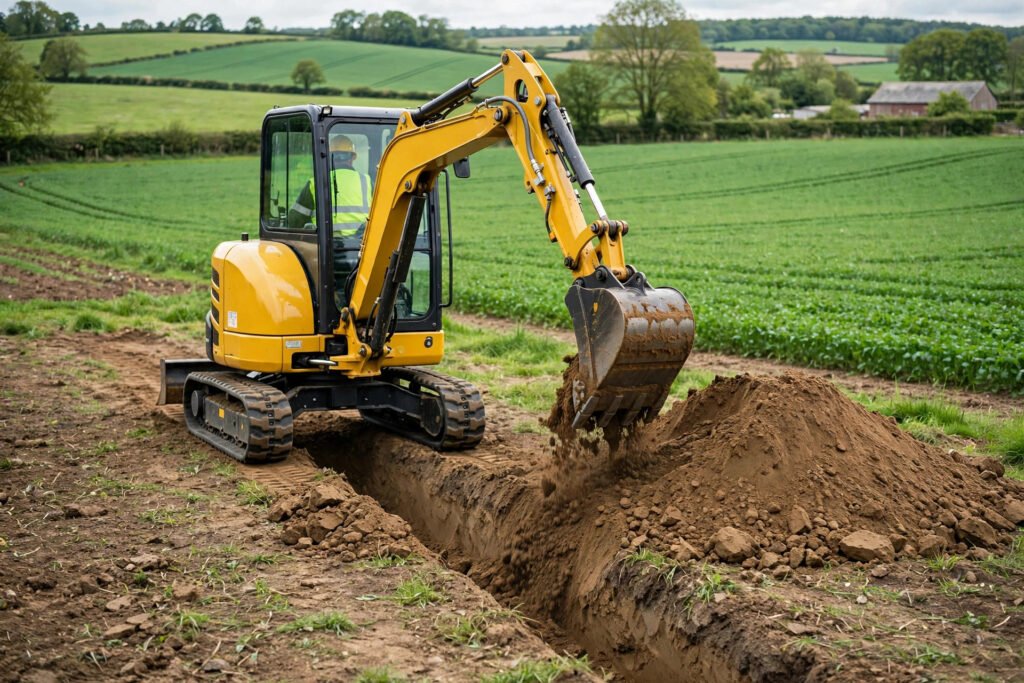
The HT15 suits shallow to medium trenches, planting holes, drainage work, garden landscaping, small footings, and general farm work. If most of your work is in a garden or on a smallholding, where the machine has to pass through a gate and turn in a small yard, the HT15 is usually the practical choice.
The trade-off is straightforward: a lighter machine in this class digs a little less deep, reaches a little less far, and lifts a little less than a heavier one.
The HT18: a step up in digging and lifting
The HT18 is the heavier machine of the two, and that extra size brings extra capability. In general terms, a machine in the 1.8 ton class digs deeper, reaches further, and lifts more than a 1.5 ton machine, and it handles heavier ground and longer working days more comfortably. It suits deeper trenches, small foundations, and drainage on a larger property.
That extra capability comes with a cost in access and transport. The HT18 is wider and heavier, so it needs a wider gate, a larger trailer, and more room to turn. If your most common job is a garden with a narrow gate, the extra digging power does not help if the machine cannot get in.
The HT18 suits a contractor or a farm that already has a 1 ton machine and finds it too small, or a buyer whose trenches and loads have outgrown the smaller class.
Digging and lifting: how to compare without guessing
Do not compare the HT15 and HT18 by tonnage alone. Two machines in the same weight class can differ in digging depth, reach, dumping height, and lifting capacity, because they may have different boom and arm lengths, different buckets, and different configurations.
Before you choose, measure three things on your most common job. First, the deepest trench or footing you dig regularly. Second, the furthest point the machine must reach from where it will sit. Third, the highest point it must load into — measure the side of your truck, skip, or container. Take those three numbers to your supplier and ask which model meets all three with room to spare.
Ask for the lifting chart for each model too, especially if you lift pipes, concrete blocks, or heavy attachments. A compact machine can be less stable lifting a heavy load at full reach, so check the chart for the exact configuration.
Transport and access: measure before you order
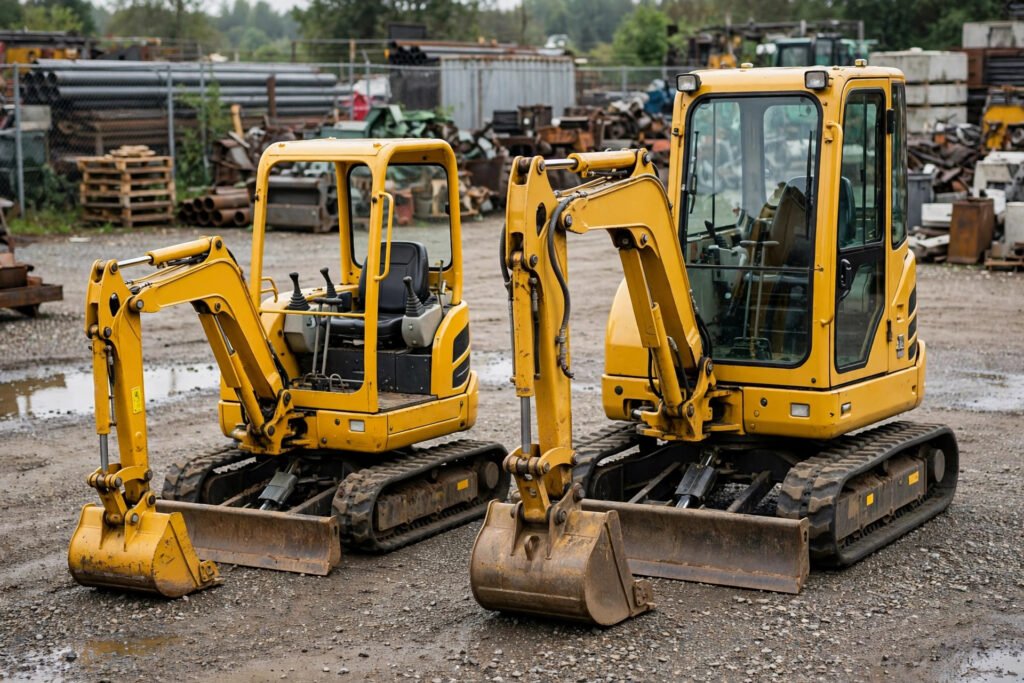
Access decides more purchases in this size class than digging power does. Measure the narrowest point on your most common job before you order: the gate, the doorway, the path between buildings, and the width of the trailer you will use. Compare those with the width and weight of each model in the configuration you plan to order, and leave room to spare.
Transport matters too. A lighter machine is easier to load and tow, and easier to move between jobs. A heavier machine may need a larger trailer and a more capable towing vehicle. If you move the machine every day, that difference adds up.
Attachments: both machines take the same idea further
Both the HT15 and the HT18 work with the same kinds of attachments: buckets of different widths, an auger for fence posts and planting, a hydraulic breaker for small concrete, a grapple or thumb clamp for sorting rubble, and a quick coupler so one operator can change between them in minutes. Before ordering, check the machine has auxiliary lines for the breaker and grapple, the hydraulic flow matches the attachment, and the attachments fit the same coupler.
How to choose in five questions
- What is the narrowest gate on my most common job, and which model fits through it comfortably?
- What is the deepest trench I dig regularly, and which model reaches it with room to spare?
- How high must the machine dump to load my truck or container?
- Do I lift heavy loads at full reach, where I should check the lifting chart?
- How will I move the machine — what trailer and towing vehicle do I already have?
If the HT15 meets your depth, reach, and dumping height, and fits your gates and trailer, it is the simpler and more flexible choice. If it falls short on depth or lifting, or your work has outgrown it, step up to the HT18.
A quick summary
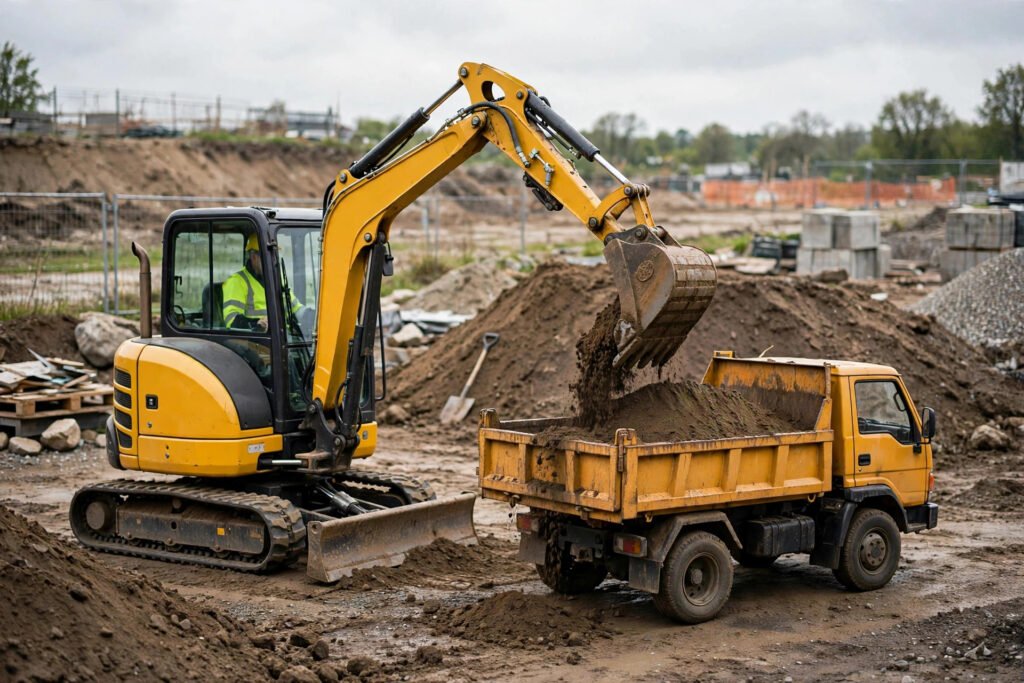
The HT15 is the compact, easy-to-move machine for gardens, farms, landscaping, and small sites. The HT18 is the stronger machine for deeper trenches, heavier loads, and longer days on small construction work. The right choice is the one that fits your gates, your trenches, and your truck — not the one with the bigger number.
Tell Sparkle One about your most common jobs — the deepest trench, the narrowest gate, the truck you load, and how you move the machine — and we will help you compare the HT15 and HT18 for your work and confirm the exact specification sheet for the configuration you order. Minimum order is 1 unit, and our team replies within 24 hours. Contact us on WhatsApp at +86 151 2992 2907 to discuss your requirements.