A 1 ton mini excavator is handy for gardens and tight spaces. But when the work gets serious — deeper footings, longer days, harder ground, heavier lifting — many owners wish for more machine. That is where the 2 ton class comes in, and the HT20 is Sparkle One’s machine in that class.
A 2 ton mini excavator is not just a bigger 1 ton machine. It is strong enough for small construction work, yet still small enough to move easily and work where a larger machine would be too big.
Who a 2 ton machine suits
A 2 ton mini excavator suits the owner who has outgrown a 1 ton machine, and the contractor who needs a capable second machine: a small builder digging footings, a landscaper grading ground all day, a farmer digging drainage, or a rental business that needs one machine for many kinds of jobs.
It fits when most of the work is too much for a 1 ton machine but not enough to justify a larger one. If your jobs are mostly light garden work, a smaller machine may still be better. If they regularly involve deep trenches, heavy lifting, or long days of digging, a 2 ton machine will work faster and with less strain.
Farm work: drainage, ditches, and fencing
On a farm, a 2 ton mini excavator earns its keep on drainage and groundwork: digging trenches, cleaning out ditches, levelling ground for a shed, and digging holes for fence posts. It is heavy enough to dig in firm ground, yet light enough to be towed on a trailer in many cases, depending on local rules. Rubber tracks grip soft ground and protect grass, and the machine handles farm attachments such as a narrow bucket and an auger.
Small construction: footings, trenches, and groundwork
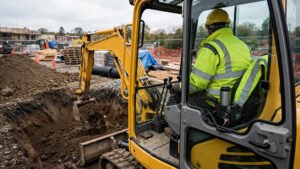
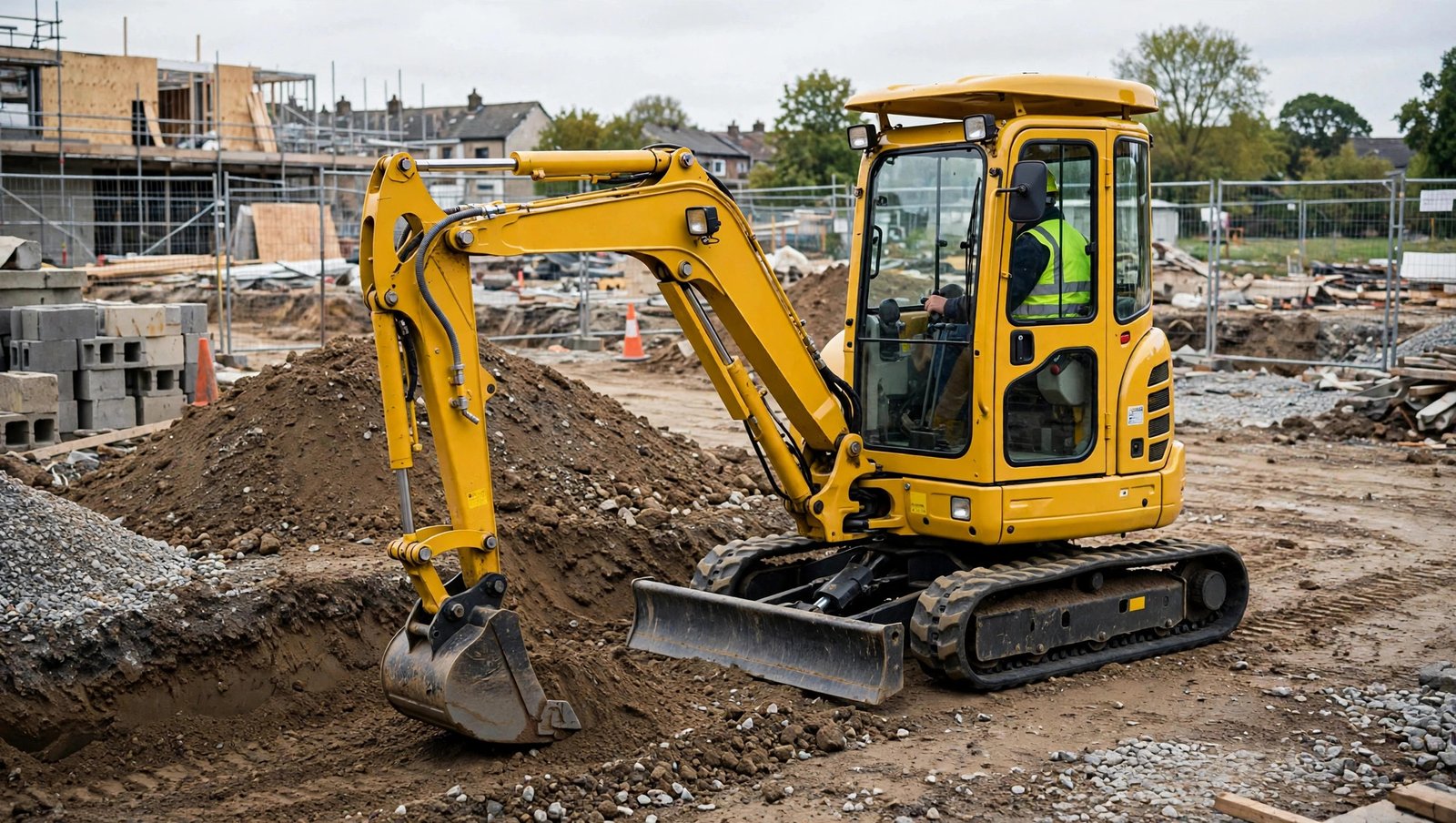
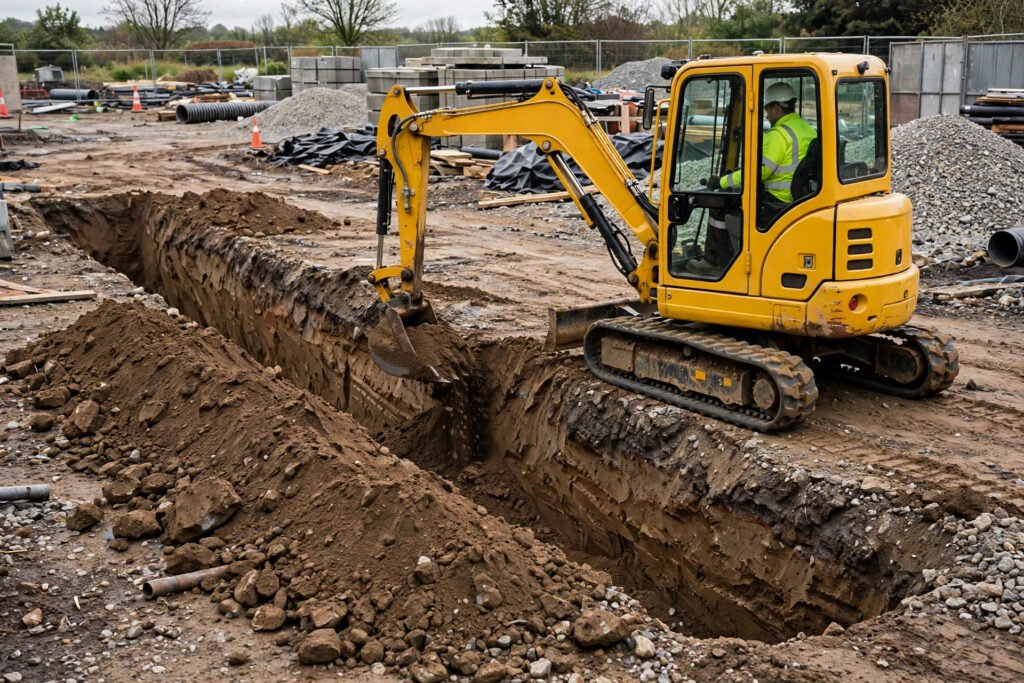
On a small construction site, a 2 ton mini excavator is often the main digging machine: footings for a house extension, trenches for water and drainage, groundwork for a driveway, loading a small truck, and breaking a concrete slab with a breaker.
The step up shows most clearly here: a 2 ton machine digs deeper, reaches further, and lifts more. Before you order, measure the deepest trench on your most common job, the furthest reach, and the height of the truck it must load — then confirm the digging depth, reach, and dumping height on the specification sheet for the exact configuration you plan to order. Tonnage tells you the weight class; only the specification sheet tells you what that machine can do.
Landscaping: grading, moving soil, and site clearance
For landscaping, a 2 ton machine is a good middle ground. It is strong enough to move soil, level ground, and dig out old roots, yet compact enough to work in a large garden and pass through a wide gate. A dozer blade pushes soil and steadies the machine while it digs, rubber tracks protect lawns, and a grading bucket gives a smooth finish. For a landscaper on a different site every week, doing all of this with one machine is what makes the 2 ton class so useful.
Digging and lifting in general terms
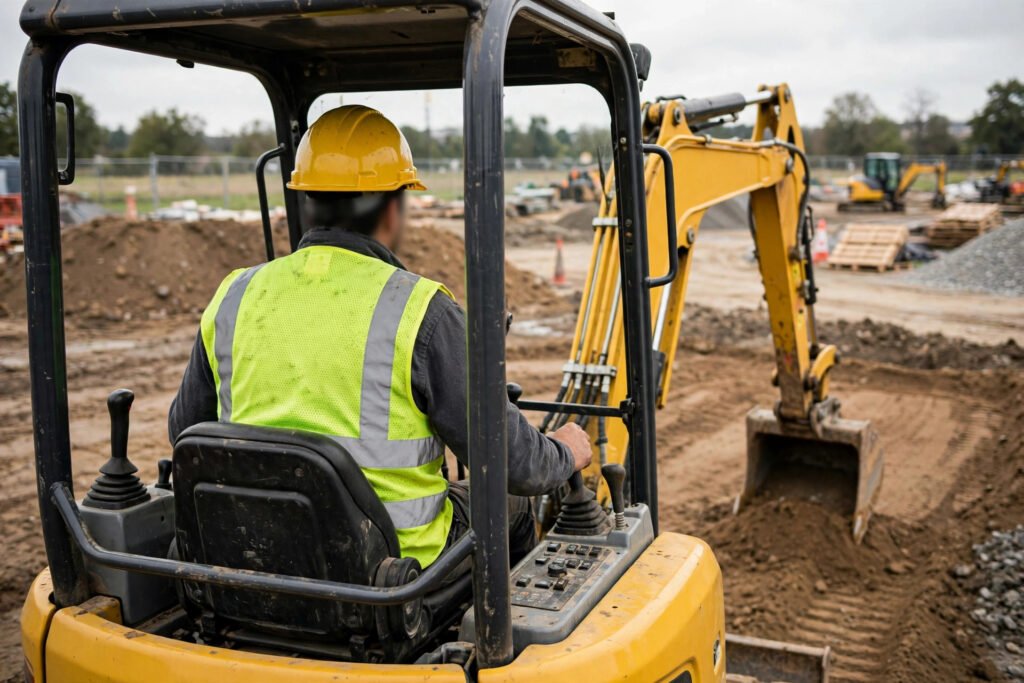
A 2 ton mini excavator digs deeper, reaches further, and lifts more than a 1 ton machine — the general rule for the class. But the exact figures depend on the model, boom and arm, bucket, and cab type, so do not judge a machine by its tonnage alone.
Check the lifting chart before you buy. Capacity changes with reach and direction — lifting to the side is different from lifting over the front. If you regularly lift pipes or blocks, ask for the chart for the exact model and configuration you plan to order, at the reach you actually work at. Also think about stability: a compact rear, a long arm, or a cab can all change how the machine behaves, especially on slopes.
Cab options: open canopy or closed cab
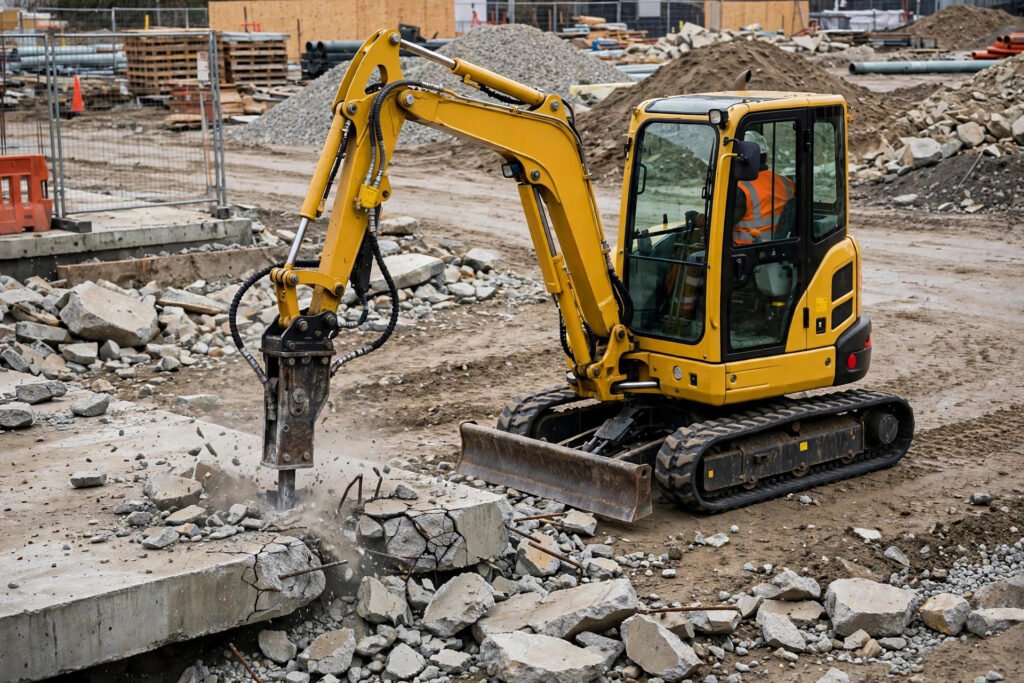
A 2 ton mini excavator usually comes with an open canopy or a closed cab. An open canopy is lighter, gives a clear view, and suits warm climates and short jobs. A closed cab protects the operator from rain, cold, dust, and noise, and suits long days and dusty work such as demolition. If the machine will work long days in all weather, a closed cab is worth considering; for mostly warm-weather work, an open canopy may be enough.
Attachments: one machine, many jobs
Attachments turn a 2 ton mini excavator from a digging machine into a machine for almost any small job. A standard bucket digs and loads, a narrow bucket digs trenches, a grading bucket levels ground, a hydraulic breaker breaks concrete and rock, an auger drills holes for fence posts, and a grapple picks up logs and rubble.
Before you order attachments, check three things: that the machine has auxiliary hydraulic lines for a breaker or an auger; that its hydraulic flow matches the attachment; and that the attachments fit the same quick coupler, so one operator can change them in minutes.
Transport: getting the machine to the job
A 2 ton mini excavator can usually be moved without a large truck — one of its biggest practical advantages. In many cases it can be carried on a trailer behind a pickup, depending on the weight of the machine, the trailer, and local towing rules. Always check the total weight and the local rules before you tow.
Drive the machine slowly up the ramps, keep the boom low, and make sure the trailer is level and the ramps are secure. Tie it down firmly at the points the manual describes, lower the bucket and arm, and check the load before you drive off.
What to check before you order
Before you order, measure your most common job: the deepest trench, the furthest reach, and the highest load point. Confirm the digging depth, reach, and dumping height on the specification sheet for the exact configuration — model, boom and arm, bucket, cab, and attachments — and ask for the lifting chart for that configuration. Check the access on your sites: the narrowest gate and the ground the machine will work on. Confirm the track type and whether the machine has the auxiliary lines your attachments need. Finally, ask what spares to keep on hand — filters, bucket teeth, and a spare hose are a good start.
A machine for serious work
A 2 ton mini excavator is the size where a mini excavator stops being a garden tool and becomes a serious working machine. It digs footings and trenches, loads trucks, breaks concrete, and grades ground day after day on farms, small building sites, and landscaping jobs — yet it is still small enough to move easily and work where a larger machine cannot.
Tell Sparkle One about your most common jobs — the ground, the depth, the lifting, and the access — and we will help you confirm the right configuration, cab, and attachments for your work. Minimum order is 1 unit, and our team replies within 24 hours. Contact us on WhatsApp at +86 151 2992 2907 to discuss your requirements and confirm the specification sheet before you order.