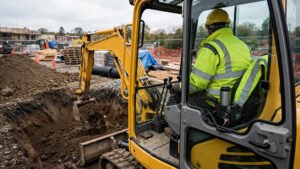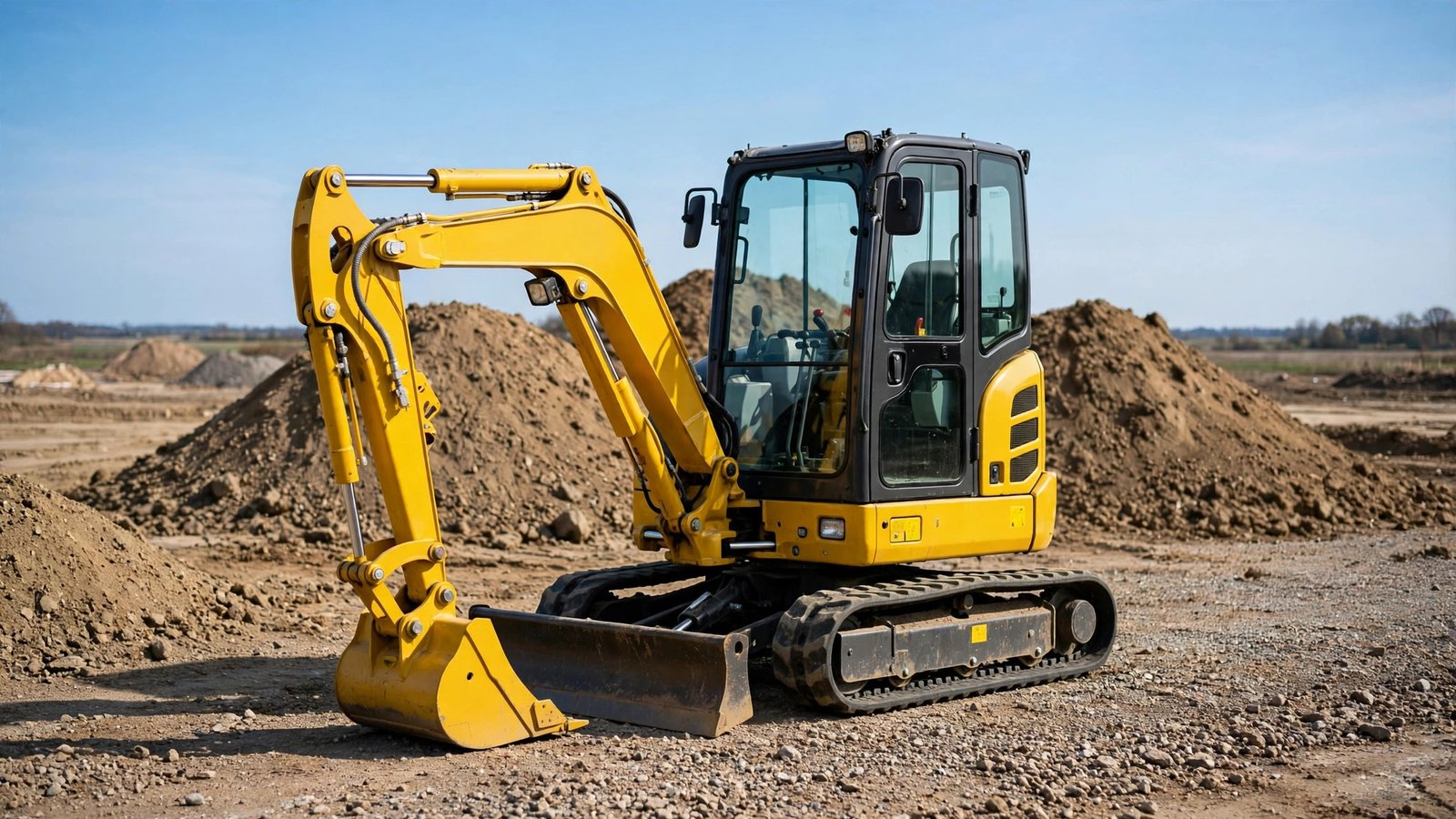
If you have ever watched a small digging machine squeeze through a garden gate or work beside a house, you have probably seen a mini excavator. It looks like a scaled-down full-size excavator, but it is built for a different kind of work: smaller jobs, tighter spaces, and buyers who need real digging power without the cost and footprint of a large machine.
This guide explains what it is, what jobs it can do, and what to check before you buy one — for dealers, rental companies, farmers, and small contractors buying for the first time.
What Is a Mini Excavator?
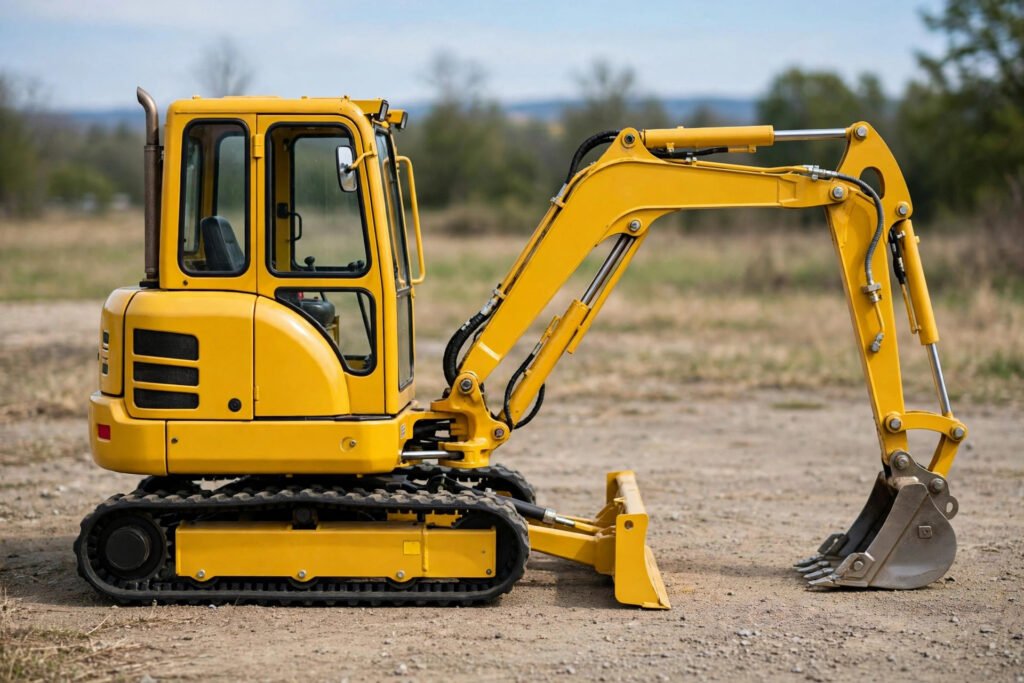
A mini excavator, also called a compact excavator, is a small tracked digging machine, usually weighing between 0.8 and 3.5 tons. It has a rotating upper body, a boom and arm for digging, a bucket for moving soil, and tracks instead of wheels. The operator sits in a cab or under a canopy and controls it with joysticks and pedals.
The key idea is simple: it brings digging, lifting, and trenching into places a large machine cannot reach. It can pass through a standard gate, work inside a yard, turn in a narrow street, and travel on a small trailer. At Sparkle One, our smallest model is the HT08, at 800 kg — light enough to move easily, yet still a real excavator.
The Key Parts
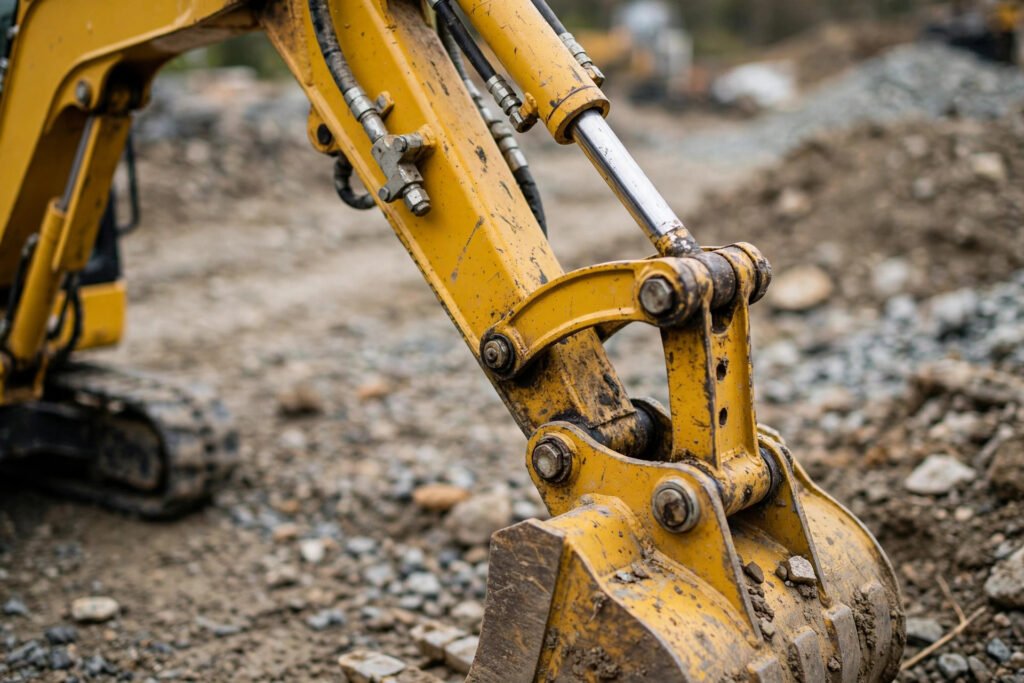
Boom and arm. The boom connects to the body, and the arm extends from it. Together they control how far the bucket can reach and how deep it can dig.
Bucket. The bucket scoops soil, gravel, and sand. A narrow bucket suits trenches; a wider one moves more material per pass. Owners can later add a breaker, auger, grapple, or thumb clamp.
Tracks. Most run on rubber tracks, which are gentle on lawns and driveways and grip well on soft ground. Steel tracks are tougher on rock but can damage finished surfaces.
Cab or canopy. A closed cab protects the operator from rain, dust, and cold. An open canopy keeps the machine lighter and lower, a good choice for warm climates and short jobs.
Engine and hydraulics. The engine powers the hydraulics, which drive the boom, arm, bucket, swing, and tracks.
What Sizes Are Available?
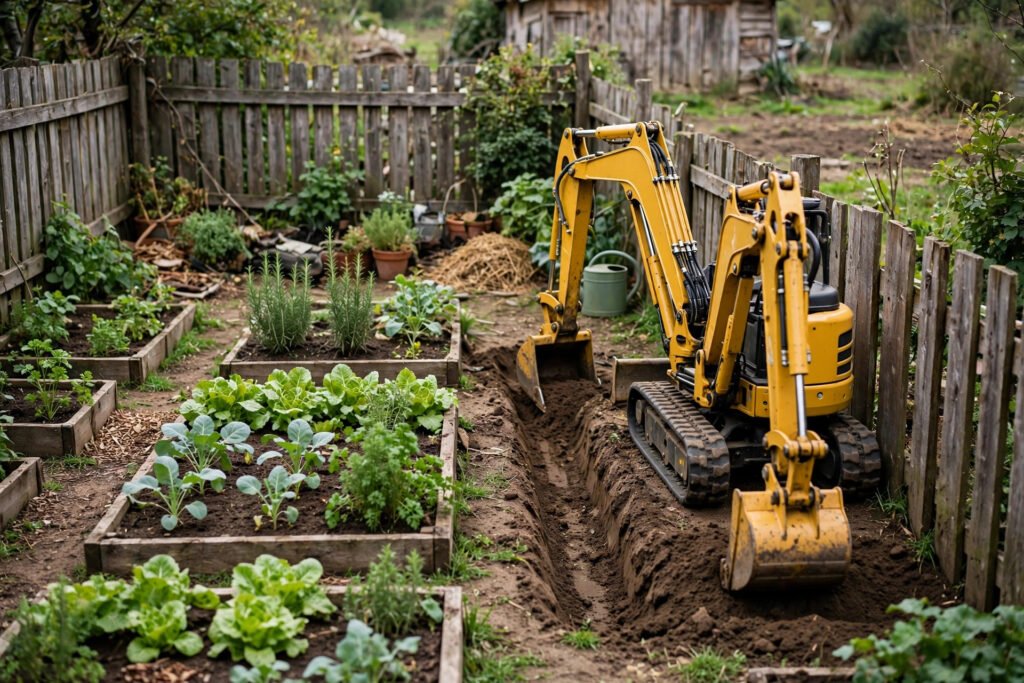
Machines of 0.8 to 1.5 tons are the most compact: easy to transport and store, and ideal for gardens, small farms, and backyard work. A 1-ton machine can dig a foundation trench or clear a small plot without taking up the whole site.
Machines of 1.5 to 2.5 tons are the most popular for general work. They dig deeper, lift more, and still fit through most gates and onto a small trailer.
Machines of 2.5 to 3.5 tons are the largest in the mini class, suiting longer trenches, heavier soil, and small demolition work. Match the machine to the work: too small and it will struggle; too large and it will be harder to transport and use in a tight space.
What Jobs Can It Do?
A mini excavator can dig, lift, grade, and carry with different attachments. Common jobs include trenching and drainage for pipes, cables, and irrigation; foundations and small construction, including footings and backfilling; and landscaping, such as shaping a garden, digging ponds, and removing stumps.
On a farm, it cleans ditches, digs fence post holes with an auger, and clears land. With a breaker, it breaks concrete or clears rubble in a confined area, and it is also used for utility work such as road repairs and cable laying.
Who Uses a Mini Excavator?
Small contractors use it as their main digging machine: affordable, easy to transport, and flexible enough for trenching, foundations, and landscaping in the same week. Rental companies keep them because they are easy to rent out and a first-time user can learn the controls quickly.
Farmers buy one for regular land work, and dealers buy them to sell locally, asking which sizes sell best and how easy the machine is to service.
Mini vs. Full-Size Excavator
A full-size excavator is built for large construction and heavy earthmoving. It digs deeper and works faster on a large, open site, but it needs a large trailer, a wide access road, and a big budget.
A mini excavator is built for the opposite situation: it wins where space is limited, transport is a problem, or the job is small. It uses less fuel and is easier to store and move. Do not choose by power alone — choose by the site, the transport, and the work you do most often.
What to Check Before You Buy
- Size and transport. Measure the narrowest gate, the trailer, and the storage space, and confirm the width, height, and weight.
- Digging depth and reach. Make sure they cover your deepest trench and longest reach, not just the average job.
- Engine and emissions. Ask which engine options are available and which standard the machine meets for your country, such as CE in Europe or EPA in the United States.
- Attachments. Decide what you need on day one, and check that the hydraulic lines match.
- Cab and controls. Check the view, the seat, and the joysticks.
- Service and parts. Ask what spare parts are available and what maintenance the machine needs.
- Documents and support. Ask for the import documents your country needs, and confirm who to contact after delivery.
Start With the Right Size
A mini excavator is a purpose-built tool for small sites, tight access, and varied work. It can dig a trench, shape a garden, clear a farm ditch, and prepare a small building site.
If you are buying your first one, start with the job, not the model: list the trenches, gates, trailer, and attachments you need, then choose the smallest machine that can do that work comfortably.
Sparkle One supplies mini excavators from 0.8 tons upward, including the compact HT08, with a range of models, engines, and attachments for different markets. If you are a dealer, rental company, or contractor, tell us about your jobs and local requirements, and we will help you narrow it down.
Contact Sparkle One for a quotation and model advice. Minimum order is 1 unit, and we aim to reply within 24 hours. You can reach us on WhatsApp at +86 151 2992 2907.