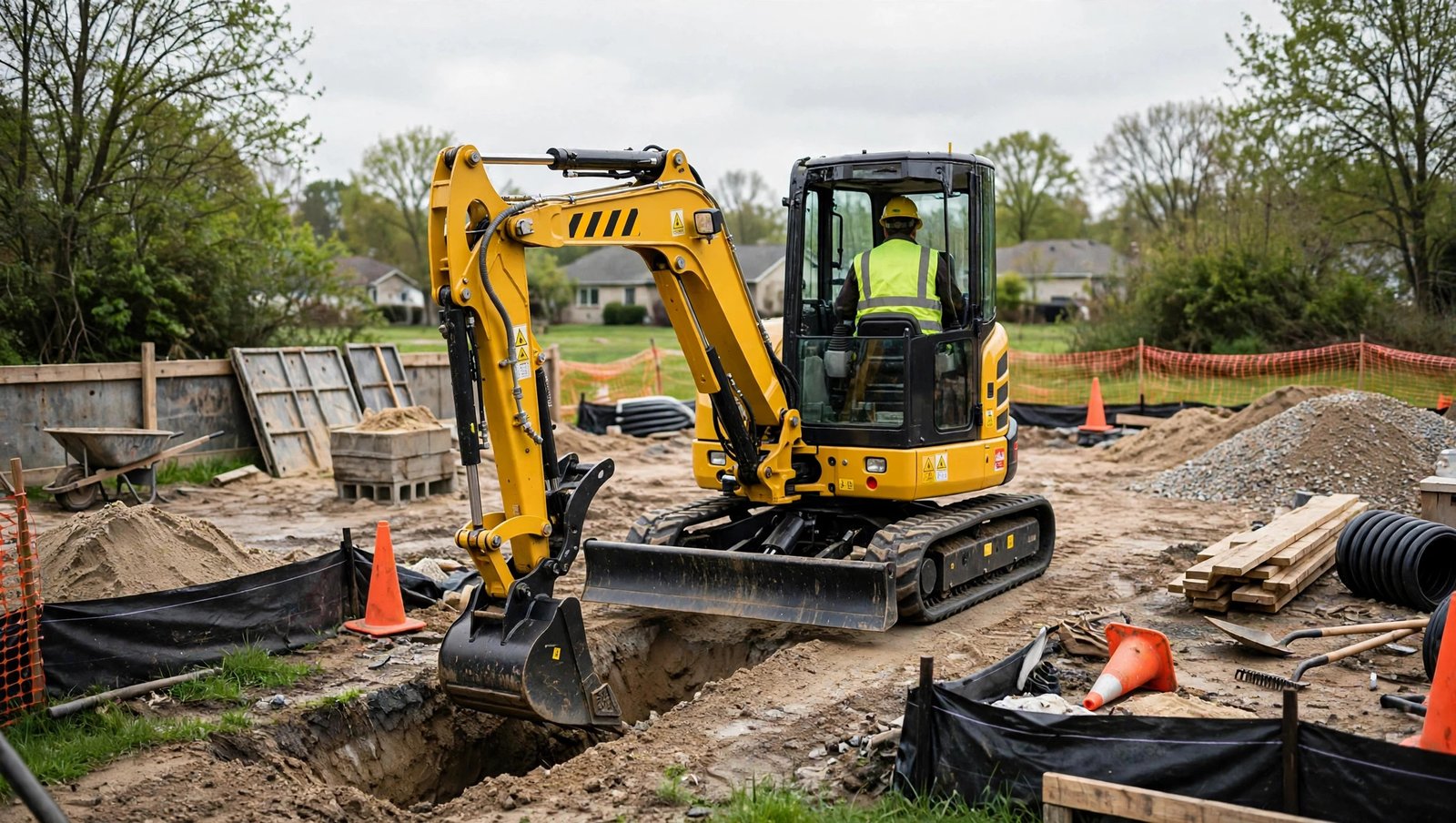
A mini excavator is easy to learn and hard to master. The controls are simple, and a first-time operator can dig a trench within an hour. That is also why beginners make the same mistakes again and again — not because the machine is difficult, but because the habits that keep it safe and productive are not obvious on day one. This guide covers the five mistakes new operators make most often, and the simple fix for each one.
Mistake 1: Rushing in without a plan
The most common beginner mistake happens before the engine starts: the operator climbs in, starts digging, and only then discovers the gate is too narrow, the spoil pile is in the way, or the trench is in the wrong place. A few minutes of planning saves hours of rework. Walk the site first. Mark the trench line with string or spray paint, decide where the spoil will go, and check the narrowest access point the machine must pass through. Think about where the machine will sit, which way it will swing, and where people will stand. The fix is simple: plan the job on foot first, then start the machine. Measure the gate, mark the line, and agree on the spoil area before the bucket touches the ground.
Mistake 2: Digging too deep in one pass
Beginners often try to dig to full depth in a single pass. It feels faster, but it is not. The bucket fills unevenly, the sides collapse, the floor comes out rough, and the machine strains against hard ground it cannot cut cleanly. Dig in layers instead — about 200 to 300 mm at a time. Lower the bucket, curl it into the soil, pull the arm towards the machine, and lift a full but manageable load. Check the depth often with a tape measure. Layers keep the sides straight, the floor flat, and the machine working within its strength, and they let the operator spot rocks and roots early.
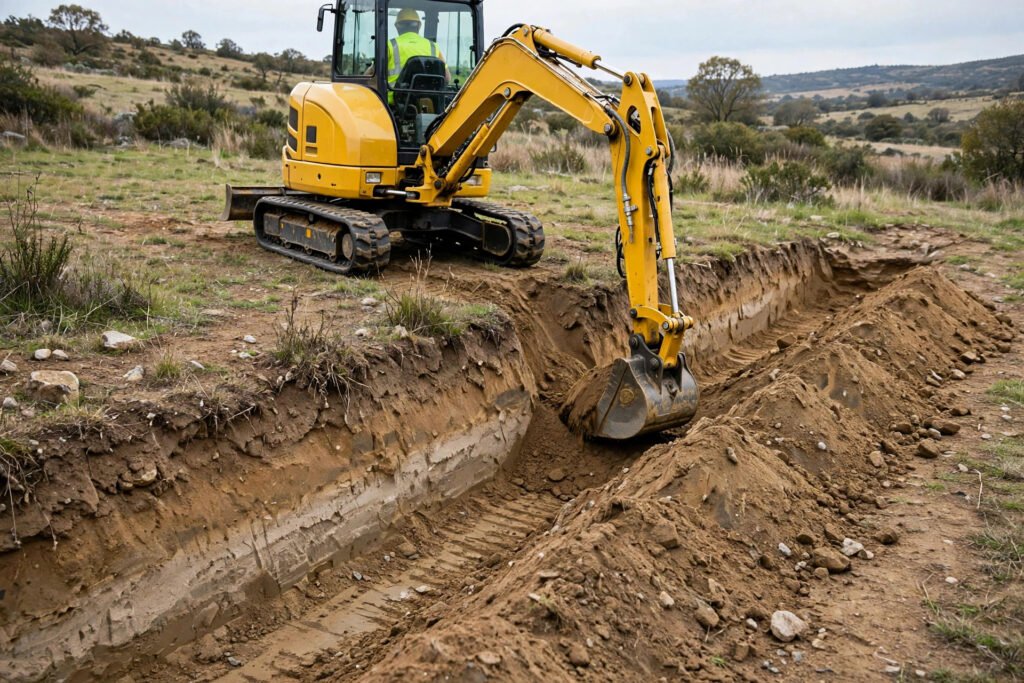
The fix is patience: shallow passes, a steady rhythm, and a depth check every few metres. Speed comes from a smooth routine, not from forcing the bucket deeper.
Mistake 3: Ignoring what is under the ground
The third mistake is invisible until it is too late. Water pipes, electric cables, gas lines, and telecom cables are often buried just below the surface, exactly where a beginner expects to dig. Hitting one can stop the job, damage property, and put people at risk. Before digging, find out where underground utilities run. In many countries there is a free “call before you dig” service that marks the lines. Use it and wait for the marks. If no such service exists in your area, ask the landowner, check old plans, and look for manhole covers and meter boxes. Never guess where a cable is, and never dig blind into ground you have not checked. The fix is a habit, not a tool: check for utilities every time, even on a site that looks empty. It takes minutes, and it is the cheapest insurance on the job.
Mistake 4: Skipping the daily check
A mini excavator will work for a long time with little attention — until the day it does not. Beginners often skip the daily check because the machine started fine yesterday. Then a loose track, a low oil level, or a leaking hose turns a small job into a breakdown. Spend five minutes before work. Walk around the machine and look at the tracks: check the tension, clear out mud and stones trapped between the track and the rollers, and look for cuts or missing parts. Check the engine oil, coolant, and hydraulic oil levels, look for leaks under the machine, and check the bucket teeth and pins.

The fix is a short routine done the same way every day. Machines that are checked daily last longer, and small problems — a loose bolt, a worn tooth, a slow leak — are cheap to fix when they are found early.
Mistake 5: Using the breaker and attachments the wrong way
Attachments make a mini excavator far more useful, but they also punish bad habits faster than a bucket does. The most common error with a hydraulic breaker is treating it like a bucket: pushing it sideways to pry material apart, hammering in one spot for a minute at a time, or running it when the tool is not pressed against the material. A breaker should strike straight down, at a right angle to the surface, in short bursts of 15 to 30 seconds, working from the edge of a slab rather than the middle. Never run it when the tool has lost contact with the material — that is blank firing, and the shock goes back into the breaker. Never push it sideways while it is in the material. To move a broken piece, stop the breaker, lift the tool clear, and use the bucket. The same care applies to other attachments. An auger should drill straight down, not at an angle. A grapple should grip the load firmly before lifting. And every attachment needs the right hydraulic lines and flow for the machine — check with the supplier before ordering. The fix is to learn one attachment at a time, follow the manual, and let the tool do the work. A breaker that is used correctly lasts far longer than one that is forced.
Slow down, check, and dig in layers
None of these mistakes is hard to fix. Plan the job on foot, dig in shallow layers, check for utilities, spend five minutes on the daily check, and use attachments the way they were designed to be used. Together, those five habits are the difference between an operator who fights the machine all day and one who finishes the job on time. If you are buying your first mini excavator, start with the size that fits your gates and your work — for most beginners, a 1 to 2 ton machine — and practise the basics on a short trench before taking on a full day’s digging. Good habits learned in the first week will stay with the operator for years. Tell Sparkle One about your most common jobs and your experience level, and we will help you choose the right size, attachments, and configuration for your work. Minimum order is 1 unit, and our team replies within 24 hours. Contact us on WhatsApp at +86 151 2992 2907 to discuss your requirements.