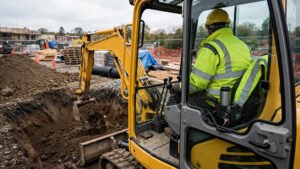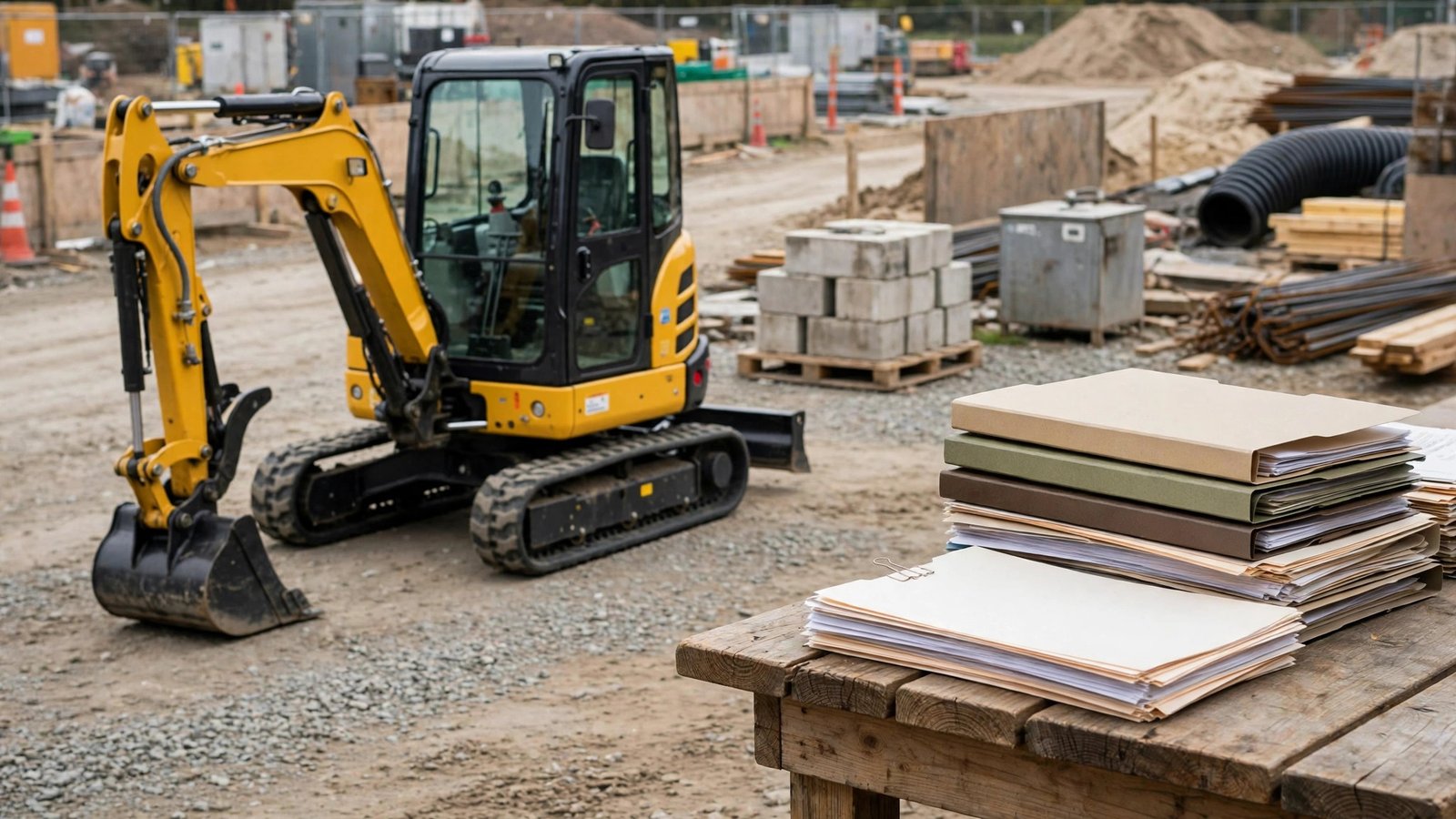
A mini excavator that digs well is only half the purchase. The other half is whether it is allowed into the country where it will work. Three names decide that for most buyers — CE, EPA, and Euro 5 — and they are easy to confuse, because they sound similar and all appear on the same certificate paperwork. This guide explains what each one means, which markets need which, and how to check a certificate before you pay. Regulations change, so confirm the rules for a destination country with the supplier and your freight forwarder before you order.
What CE means
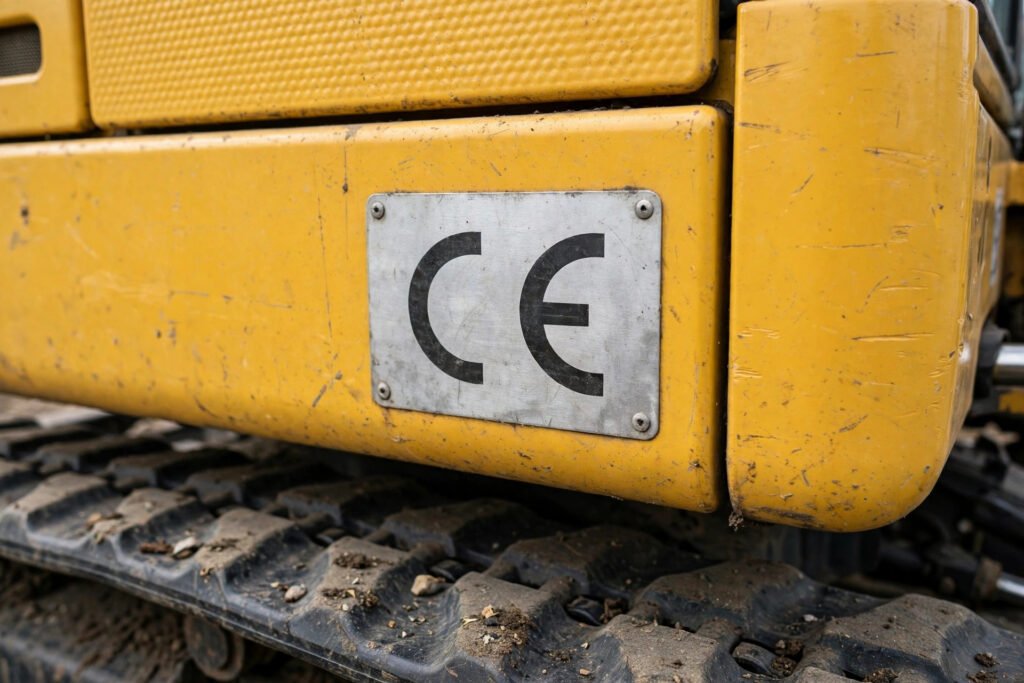
CE is the mark that shows a machine meets the European Union’s health, safety, and environmental requirements for products sold in the EU and the wider European Economic Area. For a mini excavator, CE covers the machine as a whole: its structure, its guards, its controls, its noise, and the safety of the person operating it.
A CE-marked machine comes with a Declaration of Conformity — a document from the manufacturer stating that the machine meets the relevant EU rules — and a user manual in a language of the country where the machine will be used. Without CE marking, a machine cannot legally be placed on the market in the EU, and it can be stopped at customs.
What EPA means
EPA is the United States Environmental Protection Agency, and in this context EPA means the emission rules for engines used in the United States. A mini excavator that will work in the US needs an engine that meets the EPA emission standard for its size class.
EPA rules are about exhaust emissions — what comes out of the engine — and they apply to the engine, not to the machine as a whole. A machine built for another market may have the same model name but a different engine, so the EPA question is always about the exact engine fitted to the machine you order. Ask the supplier to confirm in writing which engine is fitted and which EPA standard it meets, and ask for the engine certificate to prove it.
What Euro 5 means
Euro 5 is the European emission standard for non-road mobile machinery, which includes mini excavators. It sets the limits for exhaust emissions from the engine — the same kind of limits the EPA sets in the US, but under European rules.
Euro 5 applies to the engine, and it is the standard that matters when a machine is imported into Europe. A machine can be CE marked and still be held at the border if its engine does not meet the emission standard the destination country requires. The two are separate: CE is about the safety of the whole machine, Euro 5 is about the cleanliness of the engine.

Which markets need which
The short version is simple: Europe needs CE and Euro 5, the United States needs EPA.
For the European Union, a mini excavator needs CE marking for the whole machine and a Euro 5 engine. The United Kingdom has its own marking, UKCA, which follows similar rules to CE, and buyers importing into the UK should confirm the marking required with their supplier and forwarder. For Australia and New Zealand, there is no CE or EPA requirement in the same form, but importers should check the local rules for engines, safety, and noise before ordering.
For the United States, the engine must meet EPA rules, and the buyer should also check the state rules where the machine will work — California, for example, has its own emission rules that are stricter than the federal standard.
How to check a certificate
A certificate is only useful if it matches the machine you are buying. Before you pay, check four things.
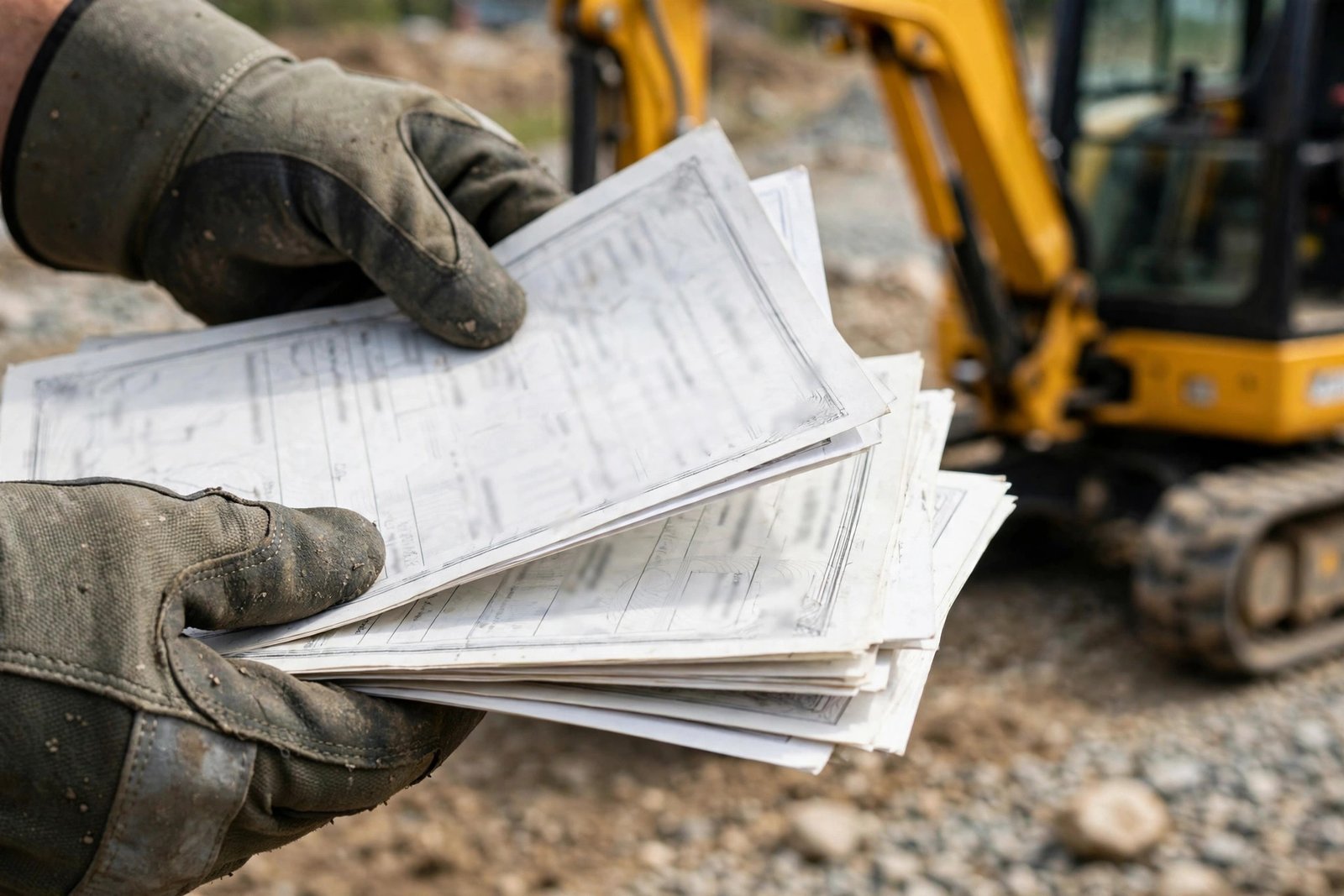
First, the certificate names the exact model and configuration — the model name, the engine, and the version — not just the brand or the range. Second, the certificate is still valid, with a date that has not expired. Third, it was issued by a real certification body, and the body and the certificate reference can be checked. Fourth, the certificate covers the market you are importing into — a certificate for one region does not automatically cover another.
Ask the supplier to send copies of the certificates before you pay, and keep them with the contract. When the machine arrives, check the plates and labels on the machine itself: the CE mark, the engine label showing the emission standard, and the serial number should match the paperwork.
What to ask the supplier for in writing
Before you order, ask the supplier for five things in writing. First, which certificates come with the machine — CE, EPA, Euro 5, or others — and copies of each. Second, confirmation that the certificates name the exact model and engine you are buying. Third, confirmation that the machine meets the requirements of your destination country. Fourth, the engine certificate and the engine label details for the exact engine fitted. Fifth, what happens if the machine is stopped at customs because of a certificate problem.
Get the answers in the contract, not just in a chat message. The rule that covers every market is this: confirm the requirement for the exact destination country with your supplier and your freight forwarder, in writing, before you pay. Do not rely on a general statement that a machine is “certified” — ask which certificates, for which country, for which exact model.
Certificates are not paperwork for its own sake
CE, EPA, and Euro 5 are not just stamps on a document. They are the proof that a machine is safe to operate and clean enough to run where you work. A machine without the right certificate can be stopped at the border, refused on a job site, or impossible to insure — and fixing that after the machine has shipped is far more expensive than checking before you order.
Ask the questions, get the certificates in writing, and check that they match the machine. That is the whole method, and it takes less time than one day of a machine standing idle at customs.
Tell Sparkle One about the country you import into and the work you will do, and we will confirm the certificates, the engine standard, and the exact configuration for your order in writing before you pay. Minimum order is 1 unit, and our team replies within 24 hours. Contact us on WhatsApp at +86 151 2992 2907 to discuss your requirements.