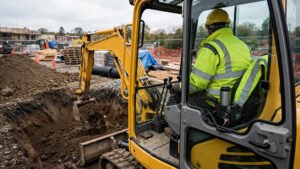
If you are choosing a mini excavator, the tracks are one of the first decisions you will make — and one of the easiest to get wrong. Rubber tracks and steel tracks both move the same machine, but they behave very differently on grass, concrete, rock, and mud. Neither type is better for everyone. Rubber tracks are better for finished surfaces and soft ground. Steel tracks are better for rock, demolition, and rough ground. The right choice depends on where you work, not on which track looks tougher in a photo.
What Rubber Tracks Do Well
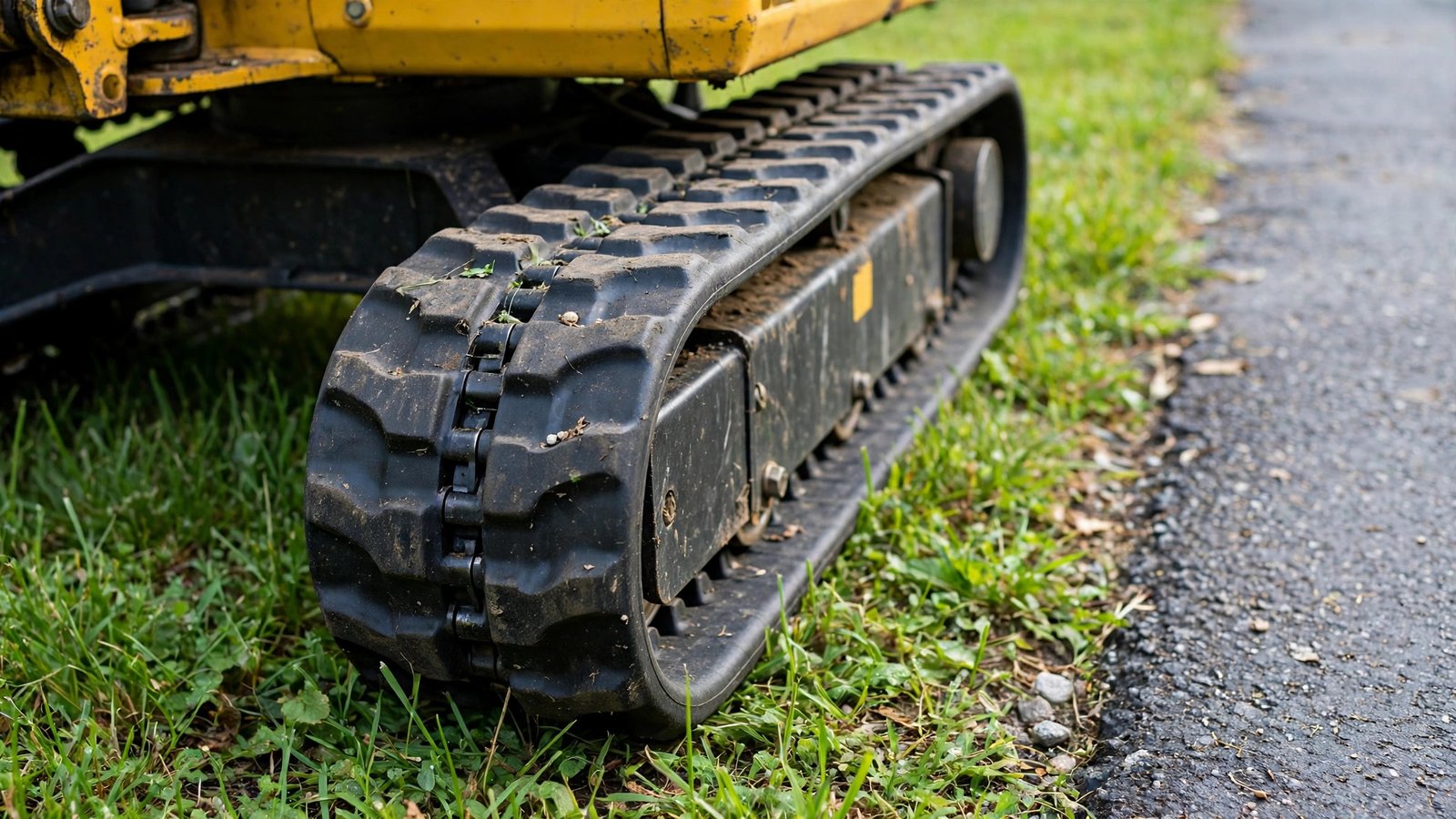
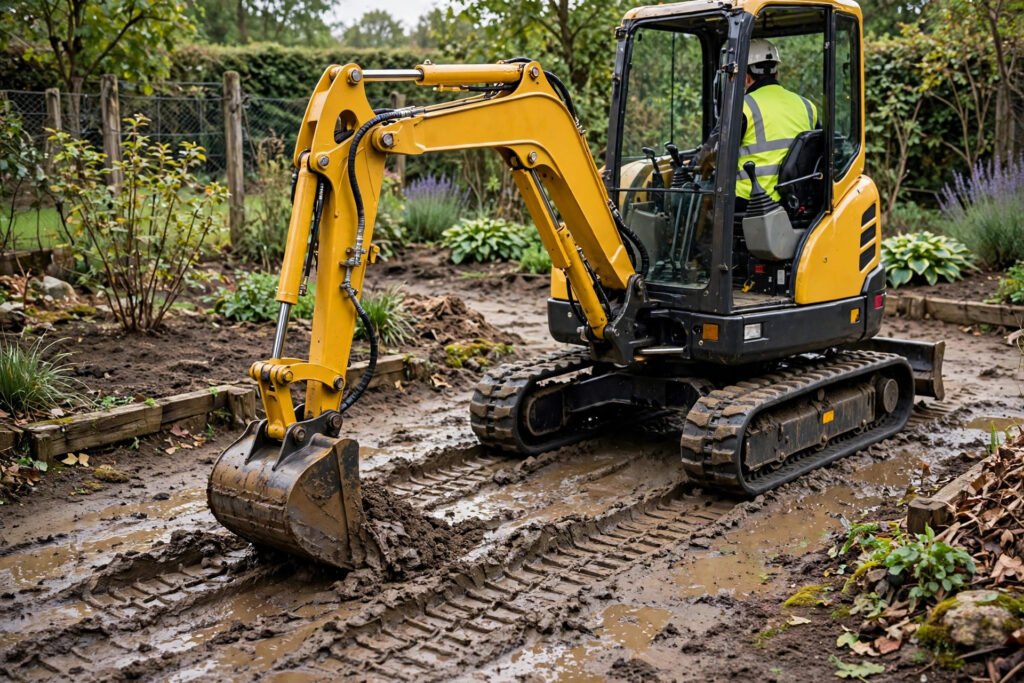
Rubber tracks are the standard choice on most mini excavators, and for good reason. Made of reinforced rubber with steel cords inside, they spread the machine’s weight over a wide area, so they are gentle on the ground underneath. On a lawn, a garden, or a paved driveway, rubber tracks leave far less damage than steel. They are the right choice for landscaping, residential work, farmyards, and any job where the customer will look at the ground after you leave. Rubber tracks are also quieter and smoother to drive, absorbing some vibration from uneven ground. On concrete and asphalt, they grip well and do not chip or scrape the surface the way steel can. On soft ground, their wide footprint helps the machine float over wet soil and mud instead of sinking in, and they are less likely to tear up turf when the machine turns. The main limit is sharp, hard material. Rock, broken concrete, scrap metal, and demolition rubble can cut or tear the rubber over time. Rubber tracks are not made for constant work on a quarry floor or a demolition site, and they need to be kept clean of stones and debris trapped between the track and the rollers.
What Steel Tracks Do Well
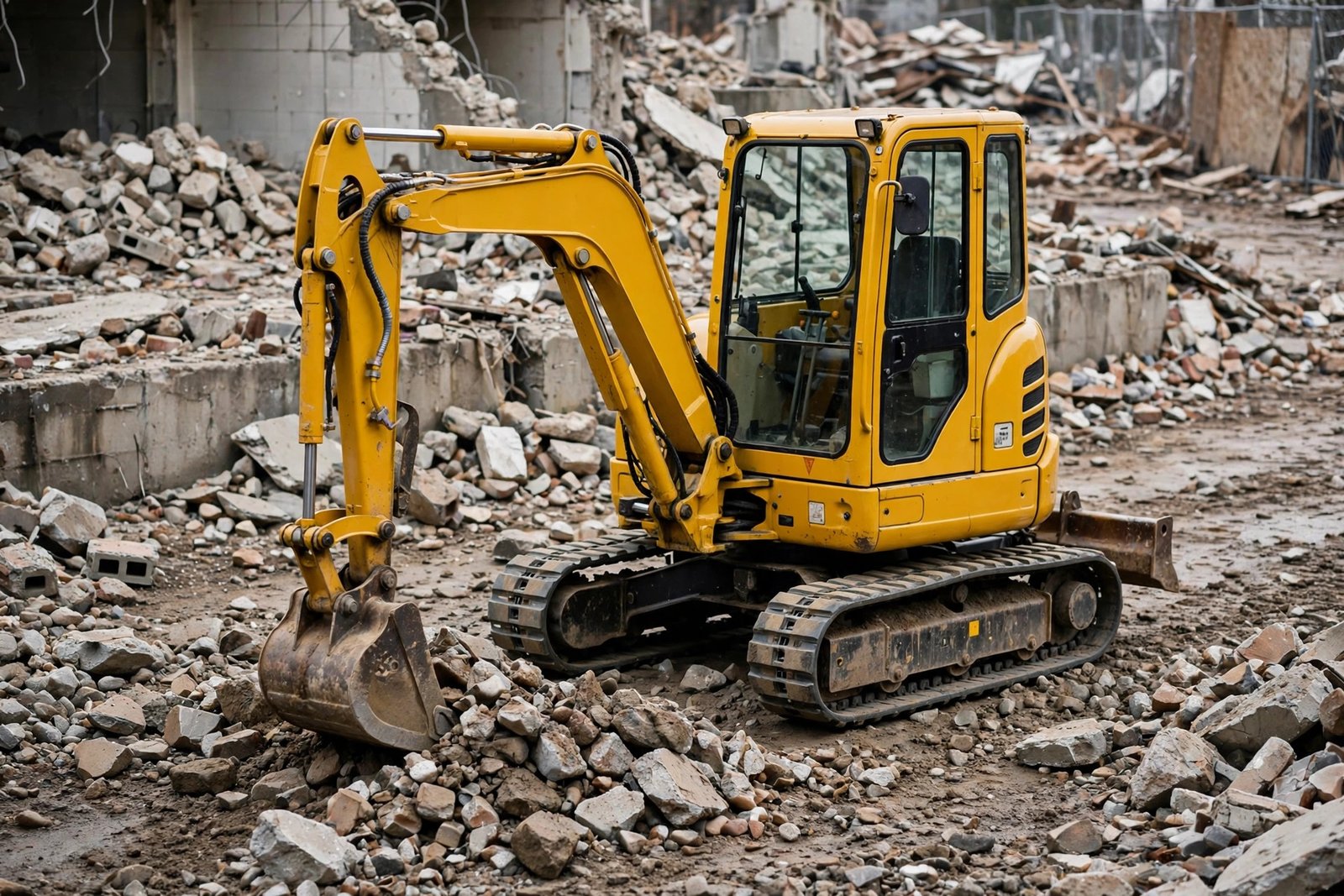
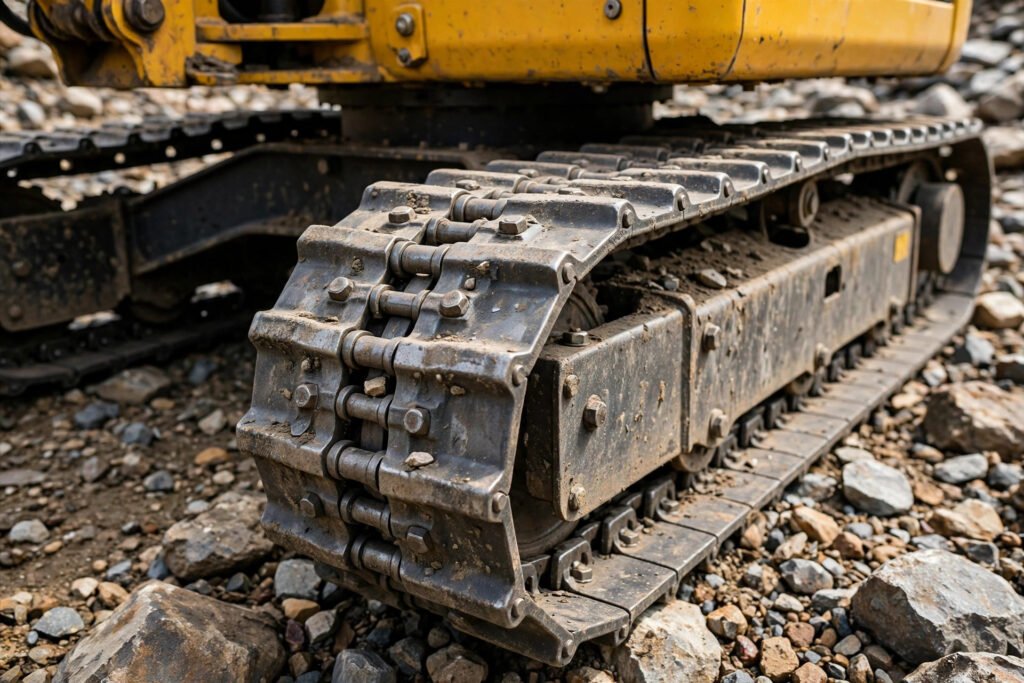
Steel tracks are built for the hardest ground. Made of linked steel plates, they are far more resistant to cuts, punctures, and abrasion than rubber. On rock, rubble, and demolition sites, steel tracks keep working where rubber tracks would wear out quickly. If your work is mainly demolition, quarry work, road building, or clearing rocky land, steel tracks are the safer choice. They handle sharp edges, hot debris, and uneven rock without the same risk of tearing, and they give strong grip on loose, rocky ground and steep, rough slopes. The trade-offs are clear. Steel tracks are heavier, noisier, and harder on finished surfaces. They can scratch concrete, damage asphalt, and tear up grass, especially when the machine turns. They also transmit more vibration to the operator, and they need regular greasing and checking of pins, bushings, and bolts. On a residential job, steel tracks can be the wrong tool even if they are the tougher one.
Wear, Lifespan, and Maintenance
Neither track type lasts forever, and how long it lasts depends far more on the ground and the operator than on the brand name on the track. Rubber tracks wear fastest on sharp rock, when the machine is turned sharply on hard ground, or when stones are left trapped in the undercarriage. They also wear faster if the track tension is wrong — too loose, and the track can slip and wear unevenly; too tight, and it puts extra load on the rollers and the rubber itself. Keeping the tension correct, cleaning out mud and stones after the job, and avoiding unnecessary sharp turns on concrete will extend their life noticeably. Steel tracks wear differently. The pins and bushings wear with use, and the track can stretch over time. Regular greasing, checking for loose bolts, and keeping the undercarriage clean are the basic habits that keep them working well.
Cost Factors — Without the Guesswork
Track choice affects cost, but not in a simple way. Steel tracks usually cost more to buy and more to maintain, with more parts to check and replace. Rubber tracks are usually simpler and cheaper to fit, but they may need replacing sooner if they are used on the wrong ground. The real cost is not the track itself. It is the cost of using the wrong track for the job: a rubber track torn on demolition rubble, or a steel track that damages a customer’s driveway. Choosing the right track for your most common job is usually the cheapest decision in the long run.
How to Decide by Ground and Job
Ask yourself three questions before you choose. First, what ground do you work on most days? If the answer is lawns, gardens, driveways, farms, and soft soil, choose rubber tracks. If the answer is rock, rubble, demolition, and quarry ground, choose steel tracks. Second, who sees the ground after you leave? If you work for homeowners, landscapers, or anyone who cares about a finished surface, rubber tracks protect your reputation. If you work on a construction site where the ground will be dug up anyway, steel tracks make more sense. Third, how often do you move between the two? Many buyers work mostly on soft, finished ground with occasional rough jobs. For them, rubber tracks are the practical everyday choice. If the rough jobs are the majority, steel tracks are the better everyday choice. There is no perfect track for every site. The best track is the one that matches the ground you work on most often, and that you are willing to maintain properly.
A Note from Sparkle One
Rubber tracks are standard on most Sparkle One mini excavators, because most of our buyers work on farms, gardens, landscaping, and small construction sites where protecting the ground matters. If your work is mainly demolition or rocky ground, tell us before you order. We can advise on the track option that fits your job.
The Right Track Is the One That Fits Your Ground
Rubber tracks win on lawns, driveways, and soft ground: quieter, smoother, and gentler on finished surfaces. Steel tracks win on rock and demolition: tougher, longer-lasting in harsh conditions, and built for ground that would cut rubber. Choose by the ground you work on most days, keep the tracks clean and correctly tensioned, and the machine will work longer with fewer surprises. Contact Sparkle One for advice on tracks, models, and configuration. Minimum order is 1 unit, and we aim to reply within 24 hours. You can reach us on WhatsApp at +86 151 2992 2907.