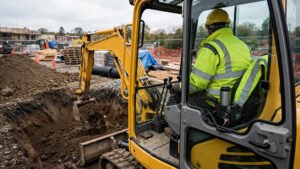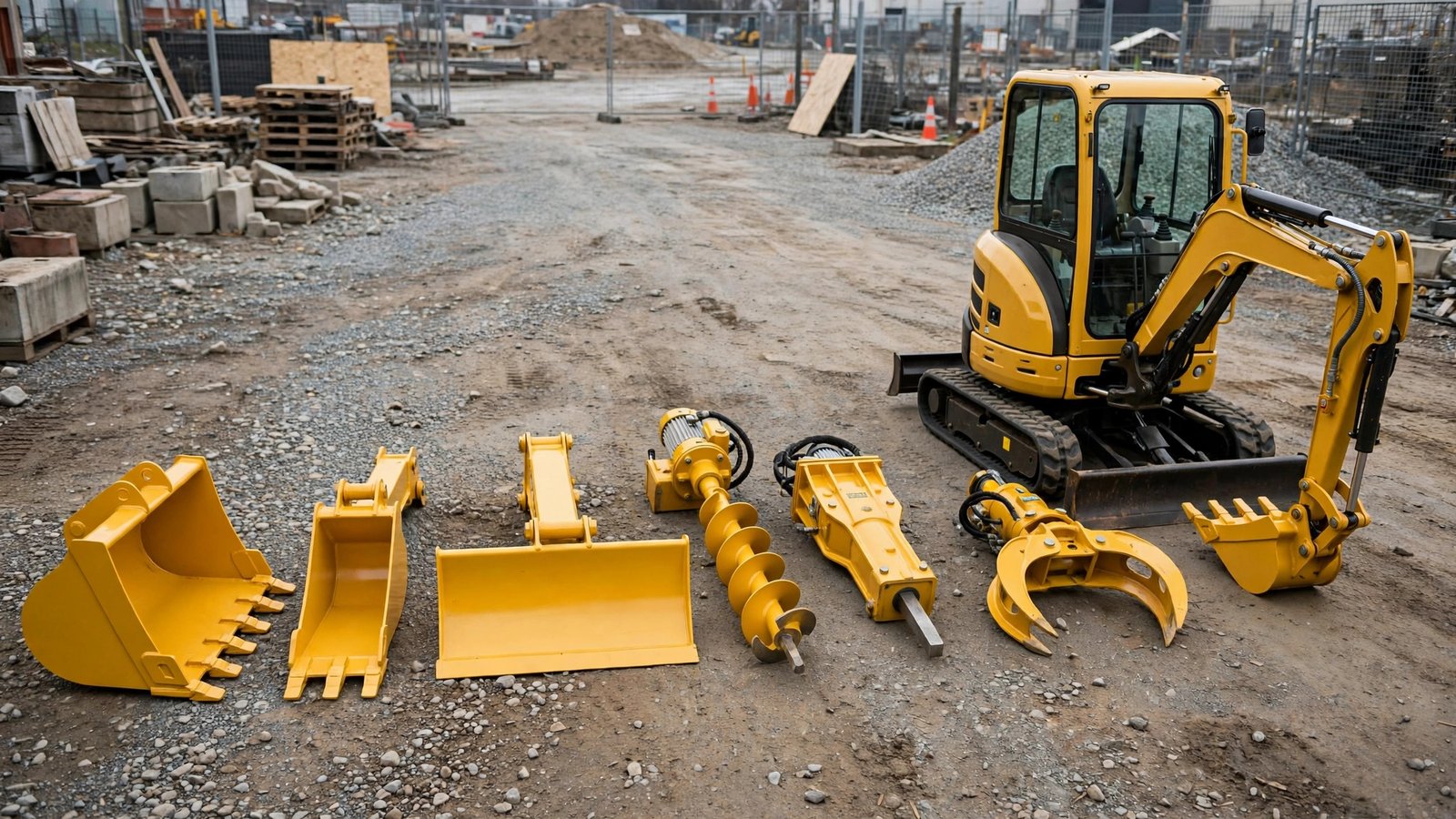
A mini excavator is useful on its own, but the attachments turn it into a machine you can use every day. With the right tools, you can dig a trench in the morning, drill fence holes after lunch, and break concrete before you go home — all with the same machine.
Buckets: the attachment you will use most
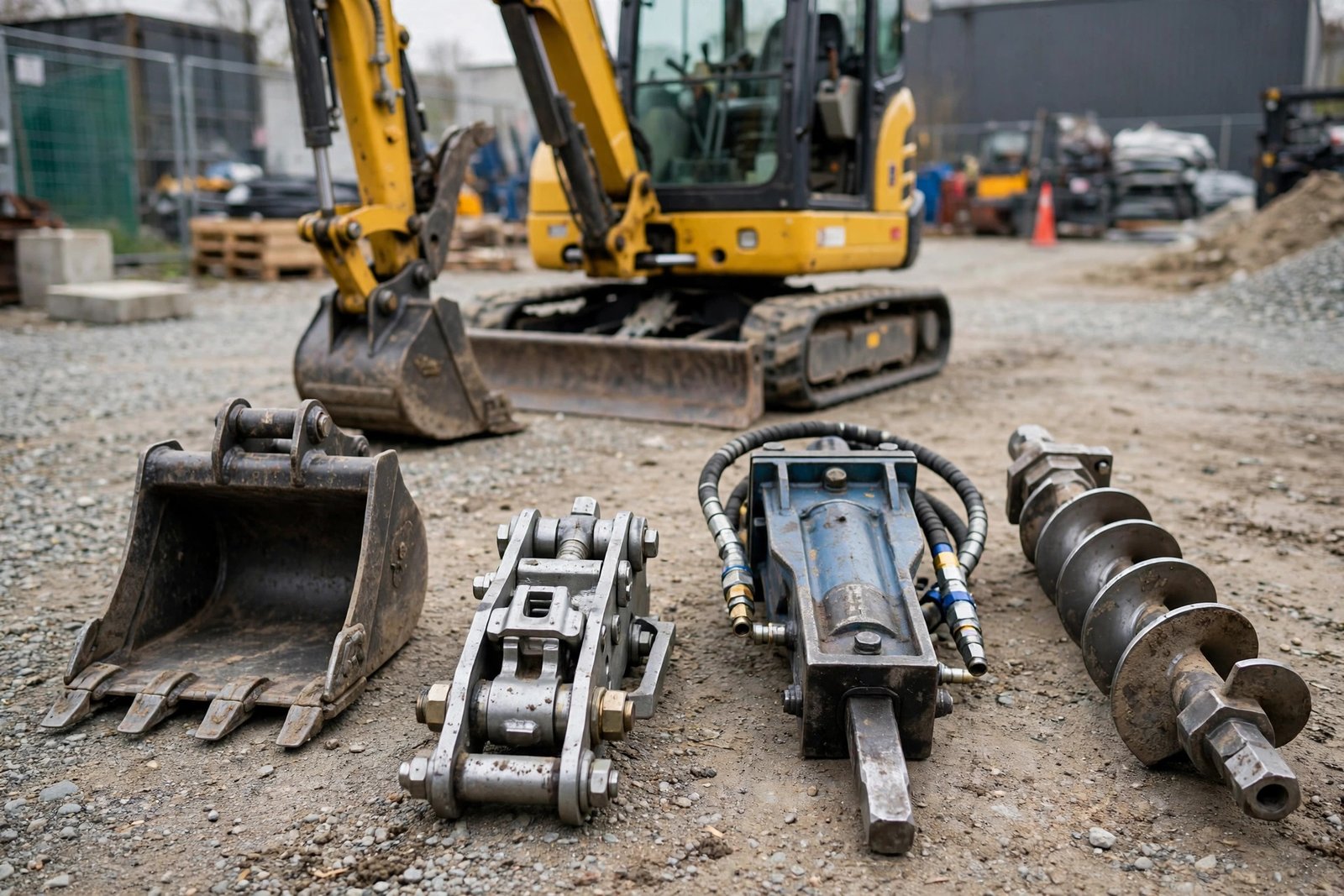
Every mini excavator comes with a bucket, and it is the one you will use most often. There are three common types. A standard digging bucket is the general-purpose choice. It scoops soil, gravel, and sand, digs trenches, loads a truck, and backfills a hole. If you buy only one bucket, this is usually the one to choose. A narrow bucket is made for straight, narrow trenches for water pipes, cables, and drainage. It cuts a neat trench with less soil to move, so there is less spoil to clear and less ground to repair. A grading bucket is wide and flat. It levels ground, shapes a garden, cleans a ditch, and spreads topsoil smoothly. It does not dig as deep as a standard bucket, but it finishes a surface much faster.
Auger: for holes, not trenches
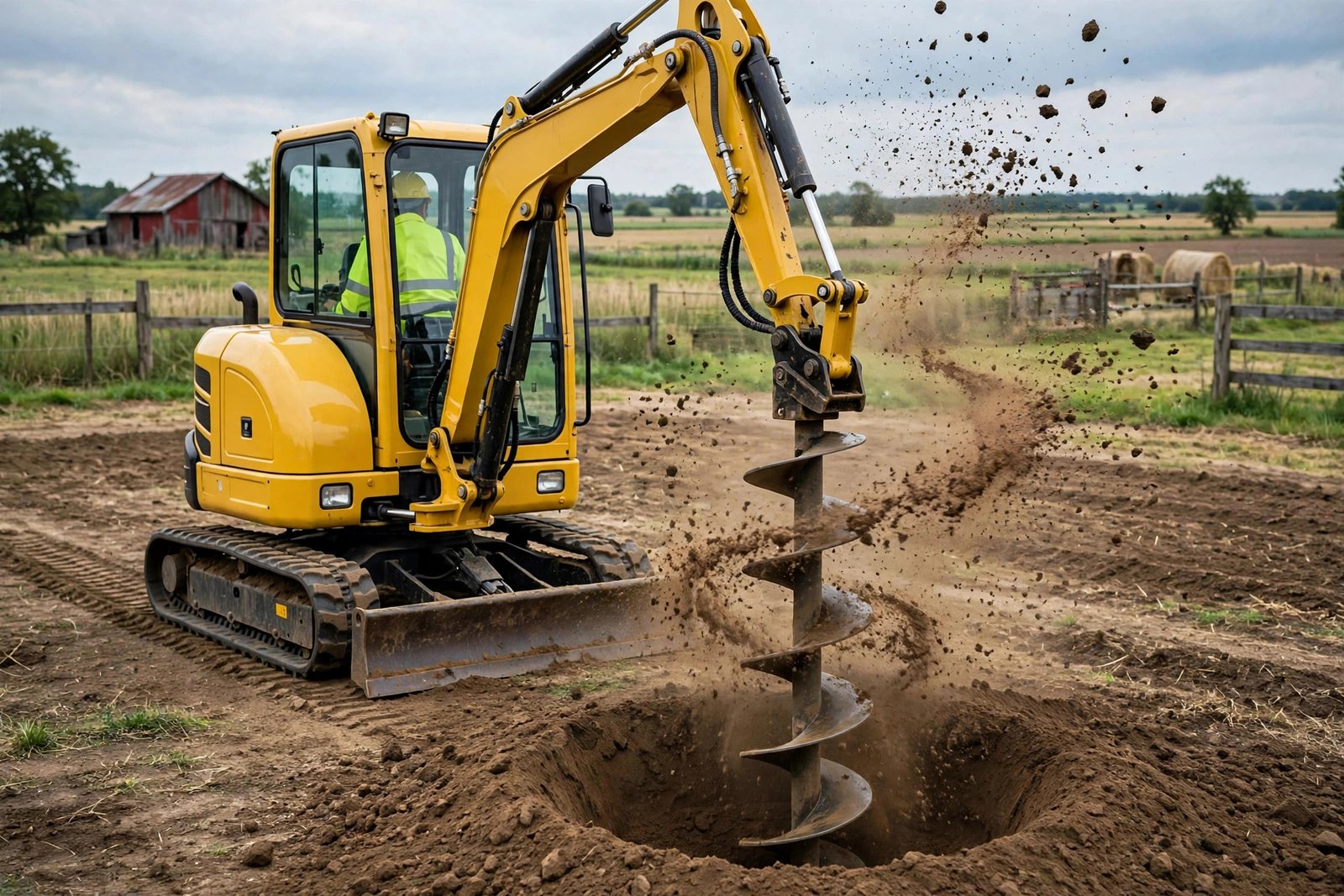
An auger drills round holes, and it does that job far better than a bucket ever could. It is a spiral bit that turns in the ground and lifts soil out as it goes down. It is for fence posts, deck footings, sign posts, and tree planting — any hole that needs to be round and straight. An auger is the wrong tool for a trench, and a bucket is the wrong tool for a round hole. The drill is fast in soft ground and slows down in hard clay and rock. Check the ground first, and clear stones from the line of holes before you start.
Hydraulic breaker: for concrete and rock
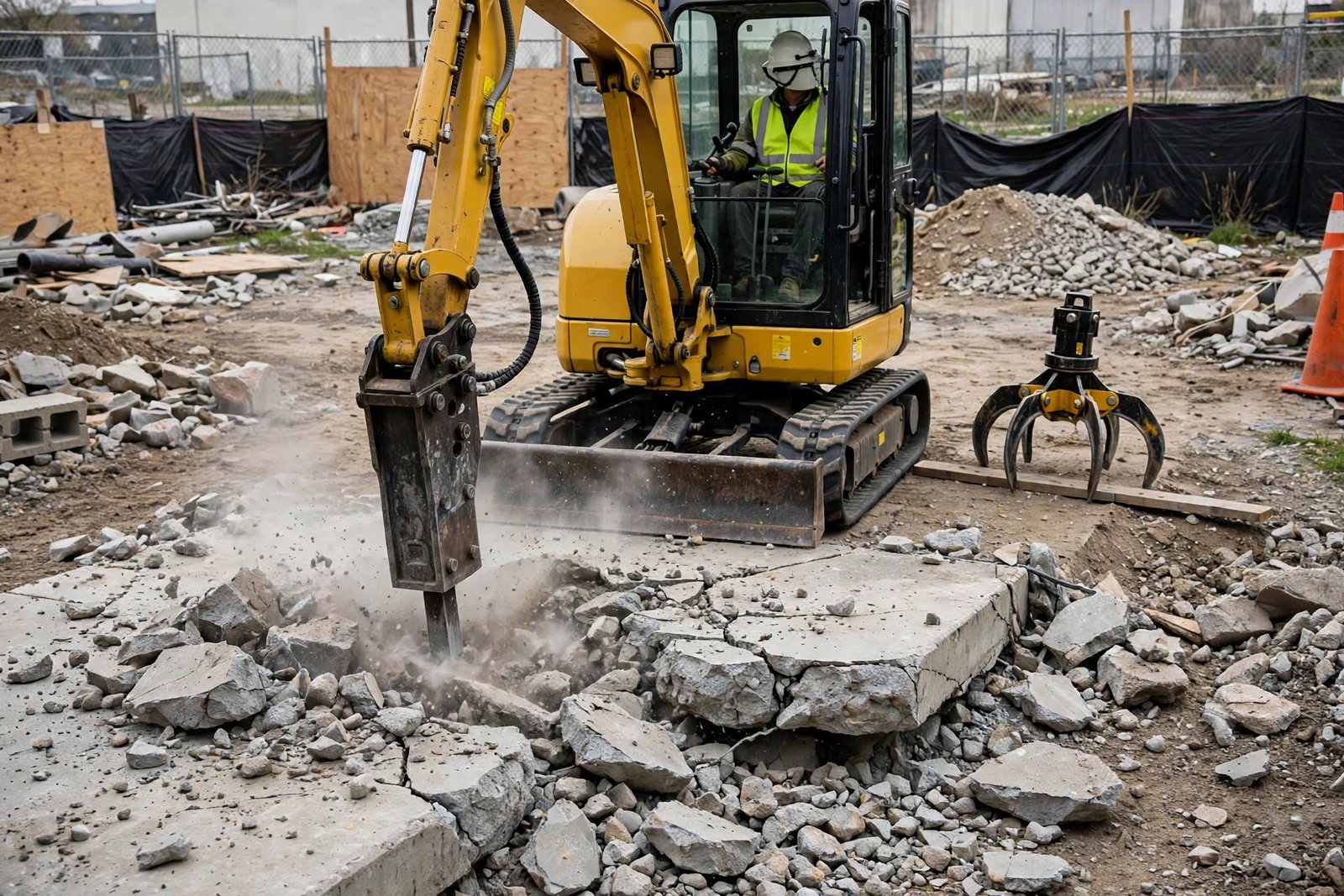
A hydraulic breaker, often called a hammer, breaks concrete, rock, and hard ground. It fits on the end of the arm in place of the bucket, and it uses hydraulic power from the machine to drive a chisel down into the material. It is the tool for breaking up a driveway, a patio slab, a rock, or a concrete footing. The breaker shakes the machine as it works, so check bolts and hoses often. Keep the breaker in line with the arm, and do not use it as a lever to pry material apart.
Grapple and thumb: for grabbing and carrying
A grapple grabs and holds material, and a thumb is a clamp that works with the bucket to hold a load. A grapple is for logs, branches, and demolition waste — the things that are hard to hold with a bucket on its own. Hold the load low and close to the machine while you move it, and do not swing a load over people. A thumb turns the bucket into a claw, and that makes it useful for placing rocks, posts, and pipes.
Quick coupler: change attachments in minutes
A quick coupler is a fitting on the end of the arm that lets you change attachments without tools. With the old pin system, you pulled two pins, swapped the tool, and drove pins back through new holes. With a coupler, it can take only a few minutes. That matters when you want to dig with a bucket and then break concrete with a breaker on the same job. Check the lock before each lift, and make sure the coupler pin is fully engaged before you lift.
How to choose your first attachments
Start with the jobs you do most often, not with the longest list of attachments. For most first-time owners, a digging bucket and a grading bucket come first. If you plan to do fence work, add an auger. If the work involves concrete, a breaker is a natural next step. A grapple is worth buying if you handle trees and waste each week. A thumb helps on most bucket work once you have it.
Check the hydraulic lines before you order
Most attachments need hydraulic power, and not every machine is set up the same way. Before you order, check if your machine has a two-way or one-way auxiliary line. The breaker and auger need two-way lines, and they need lines and fittings of the right size. The costs of hydraulic work can add up quickly, so the check pays for itself. The coupler itself also needs to match the pin size of your machine, so use the machine details as a guide.
One machine, many jobs
Attachments are what make a mini excavator flexible. A bucket digs and loads, an auger drills, a breaker breaks, and a grapple grabs — all on the same machine. Keep the cost down by starting small, and add the attachments that match the jobs you take on. Buying an attachment makes sense when it saves a day of hand work.