The United States is one of the largest markets for mini excavators in the world, and the reasons are easy to see. The country has large farms, fast-growing suburbs, and small construction sites in almost every state — and in all three, a compact machine that can dig, lift, and load without a big crew is worth more than a larger machine that cannot get through the gate. This guide covers the sizes, the import checks, and the parts and service questions that matter most for buyers and dealers in the US.
Why the US suits mini excavators
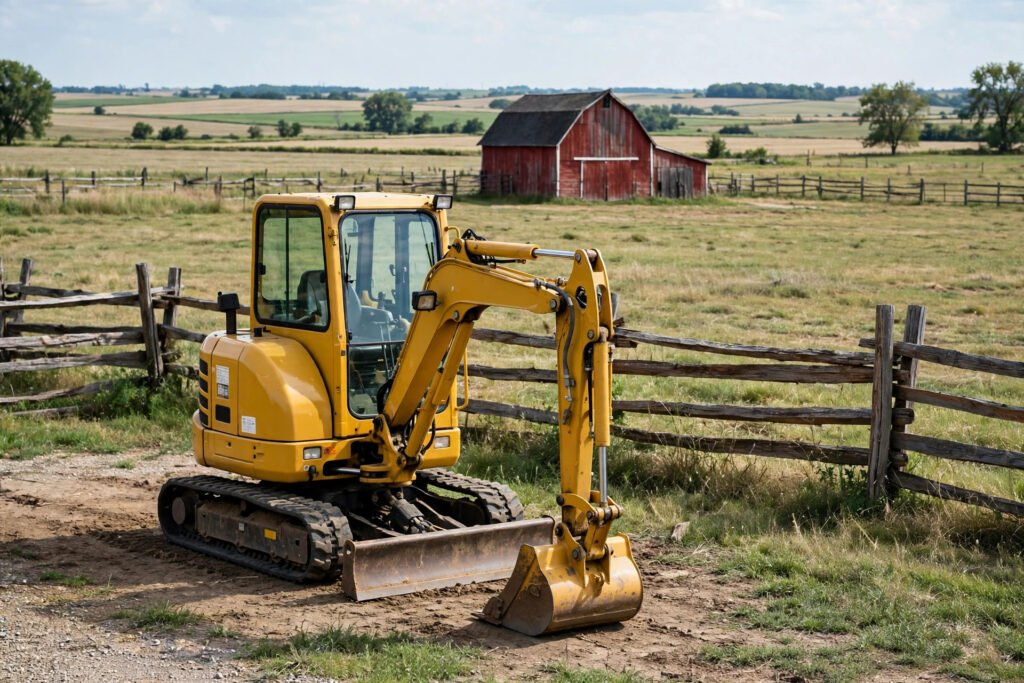
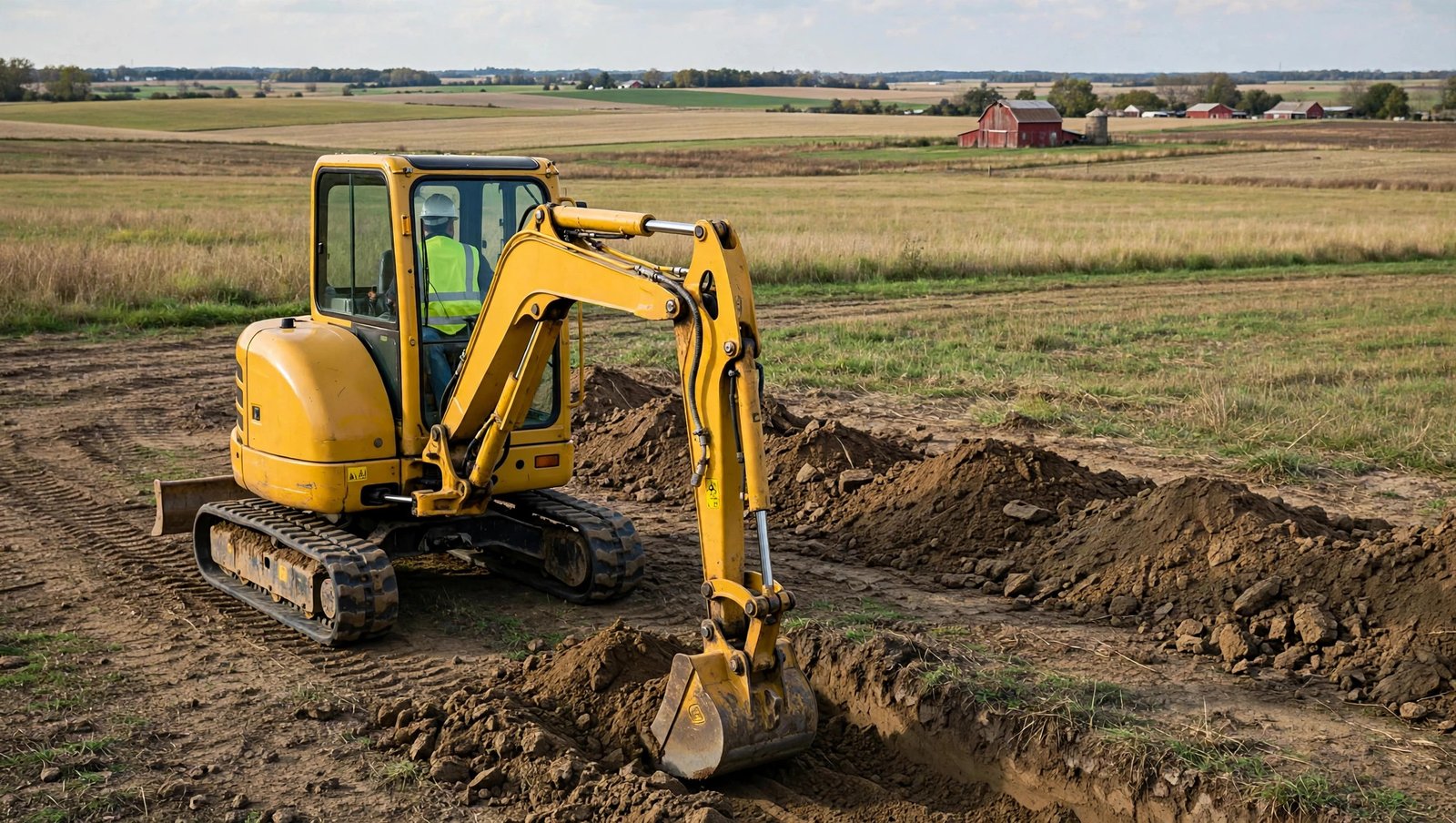
American farms are large, and the work is spread out: drainage, fence lines, clearing, moving soil and materials around the property, and digging for water lines and posts. A mini excavator that can be towed on a trailer behind a pickup truck and put to work the same morning is far more useful than a machine that needs a heavy truck and a low loader to move.
American suburbs keep growing outwards, and every new housing development means trenches for water, sewer, and power lines, footings for houses, driveways, and landscaping. A mini excavator fits on a residential lot, works between houses, and can be parked on a trailer at the end of the day.
Farms: the biggest single use
On a farm, a mini excavator is a general-purpose tool. One machine can dig a drainage ditch, clear a fence line, load a truck, and dig fence-post holes with an auger.
The sizes that suit farm work are the small to mid-range machines — in general terms, the 1 to 2.5 ton class. They are light enough to tow on a trailer, narrow enough for farm gates, and strong enough for drainage, footings, and groundwork. A larger machine needs a bigger trailer and a wider gate — so measure the narrowest gate, the deepest ditch, and the trailer you already own first.
Suburbs and small construction
Landscaping and suburban work is the second big market, and it rewards small machines. A landscaper works in gardens, driveways, and small yards, where access is tight and the ground is often finished — a lawn, a patio, or a paved area that must not be torn up.
In general terms, the smallest machines — around 1 ton — are the natural choice here. They fit through a standard garden gate, work on a lawn without leaving deep ruts if the ground is firm, and can be moved between jobs quickly. Rubber tracks help on finished surfaces, and a grading bucket leaves a smooth finish for a lawn or a driveway.
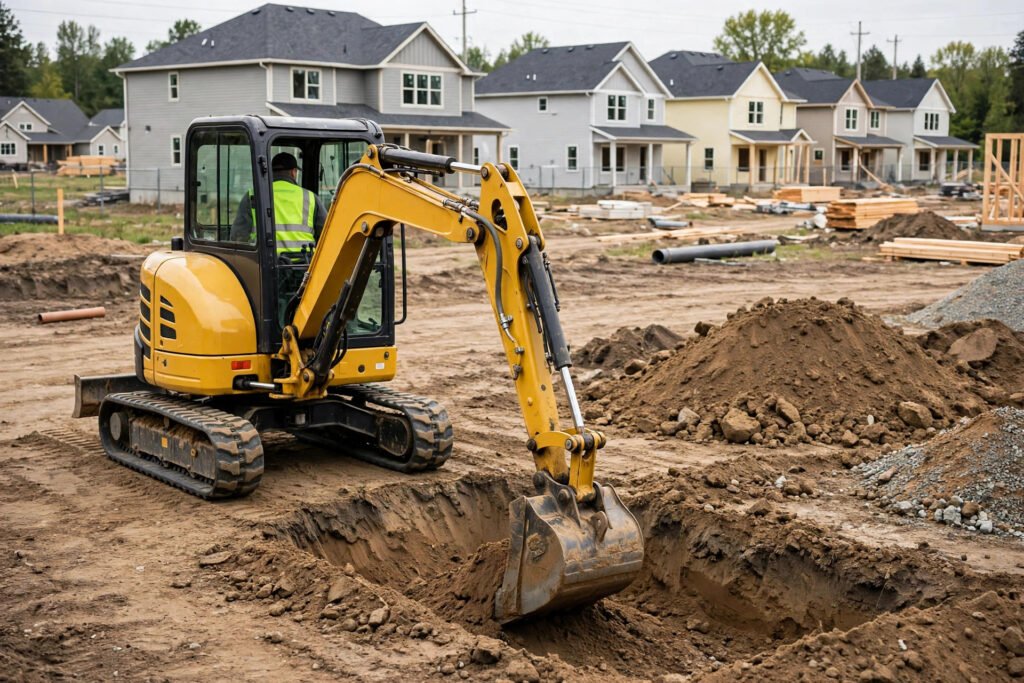
On small construction sites, the work is heavier: footings, service trenches, small foundations, and demolition of sheds and patios. Here the 1.5 to 2.5 ton class is the usual choice, with a hydraulic breaker for concrete and a narrow bucket for service trenches.
What to check before importing
Importing a mini excavator into the US is straightforward if the paperwork is done before the machine ships, and slow and expensive if it is not. Before you order, confirm the rules for your exact machine and destination with the supplier and your freight forwarder, in writing.
The engine is the part to check first. The US has emission rules for engines, administered by the EPA, and some states have their own rules that are stricter than the federal standard — California, for example. Ask the supplier to confirm in writing which engine is fitted, which emission standard it meets, and whether it meets the rules for the state where the machine will work. Ask for the engine certificate to prove it, and check that the certificate names the exact model and engine.
Import duties and tariffs are a separate question, and they can change. Do not plan a budget on a tariff figure from a website or a chat message. Ask your customs broker or freight forwarder for a written estimate based on the confirmed classification, the machine’s value, and the current rules for your destination.
Ask for the documents that will travel with the machine — the commercial invoice, the packing list, the bill of lading, the certificate of origin, and the machine certificates — and send copies to your customs broker before the ship arrives, so clearance is not held up at the port.
Parts and service: the question that decides everything
In the US, distances are long and workshops are far apart, so parts and service matter more than the machine’s name or size.
Before you order, ask four questions. First, which spare parts does the supplier stock, and how long do they take to reach you? Second, what should you keep on hand yourself — filters, bucket teeth, hoses, and a spare track are a sensible start. Third, who in your area can service the engine and the hydraulics, and does the supplier provide a service manual and a parts list? Fourth, what happens if something fails — who do you contact, and who pays for shipping a replacement part?
A well-known machine with no local parts supply is a worse choice than a less familiar machine with a supplier who stocks spares and answers the phone.
Dealers vs direct import
There are two ways to buy a mini excavator in the US: through a dealer, or direct from an overseas supplier.
A dealer buys machines, stocks them locally, and sells them with local support. You can see the machine, test it, and get parts and service from someone nearby, and the dealer handles the import, the paperwork, and the first service. Direct import means ordering the machine yourself from an overseas supplier and arranging the shipping, customs, and delivery. The advantage is choice: you can order the exact model, engine, colour, and attachments you want. The trade-off is that you carry the paperwork, the shipping, and the after-sales support yourself.
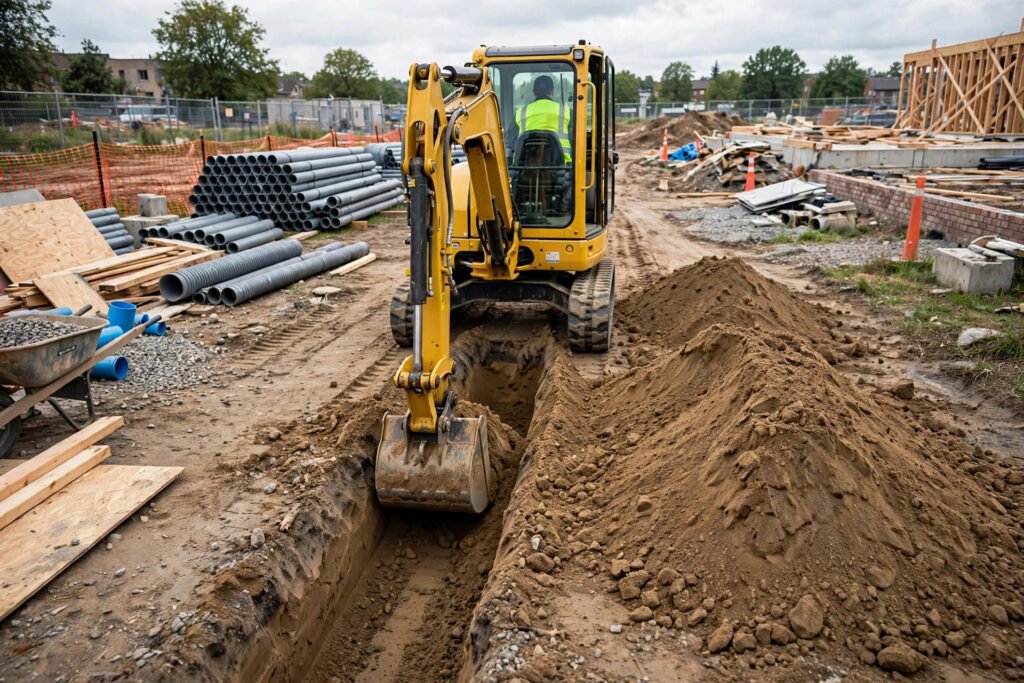
The US rewards the right size, not the biggest size
A mini excavator earns its keep in the US because it fits the work: large farms, growing suburbs, and small sites spread across long distances. The right machine is the one that fits your gates, your trailer, and your most common jobs — not the biggest machine you can buy.
Measure your narrowest gate, your deepest trench, and your heaviest lift. Confirm the rules, the certificates, and the parts supply for the exact machine you plan to order, in writing, before you pay.
Tell Sparkle One about your work in the US — the farm, the suburb, or the site, and the jobs you do most — and we will help you choose the right size, configuration, and attachments, and confirm the documents and parts for your order. Minimum order is 1 unit, and our team replies within 24 hours. Contact us on WhatsApp at +86 151 2992 2907 to discuss your requirements