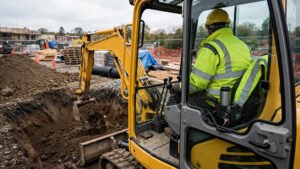
Ordering a mini excavator from China is only half the job. The other half is getting it to your yard in one piece, on time, and without surprise charges at the port. Shipping sounds simple — the machine goes in a container and a ship carries it — but the choices you make before it leaves the factory decide whether it arrives clean and working or damaged, delayed, and expensive to fix.
This guide explains the main shipping methods, how a machine is packed and secured, what affects the cost and the time, the documents you will need, and what to check when it arrives. It does not quote freight prices or transit days, because those change with the route, the season, and the size of the machine; ask your supplier and your freight forwarder to confirm them for your order.
Container shipping: the most common way
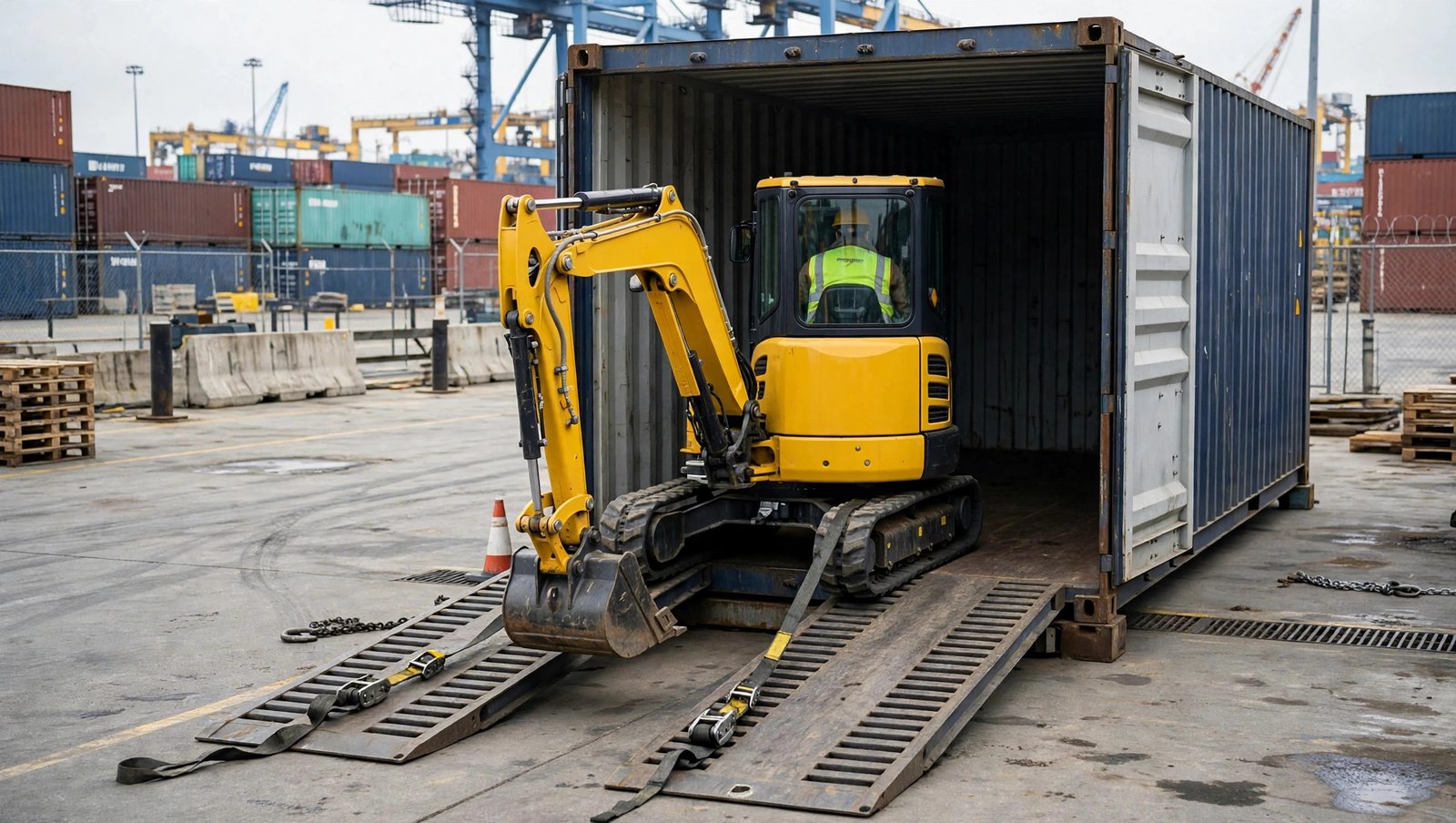
Most single mini excavators travel in a shipping container, usually a 20-foot or 40-foot box. The machine is driven or lifted in, the boom and arm are lowered and secured, and the tracks are chocked so it cannot roll. The container is then sealed, which protects the machine from rain, salt air, and theft on the voyage.
A container suits a single machine or a small order, and it is the method most first-time buyers use. The main limit is size: the machine, with its boom lowered and its attachments removed or packed separately, must fit through the container door and inside the box.
Flat rack: when the machine is too big for a box
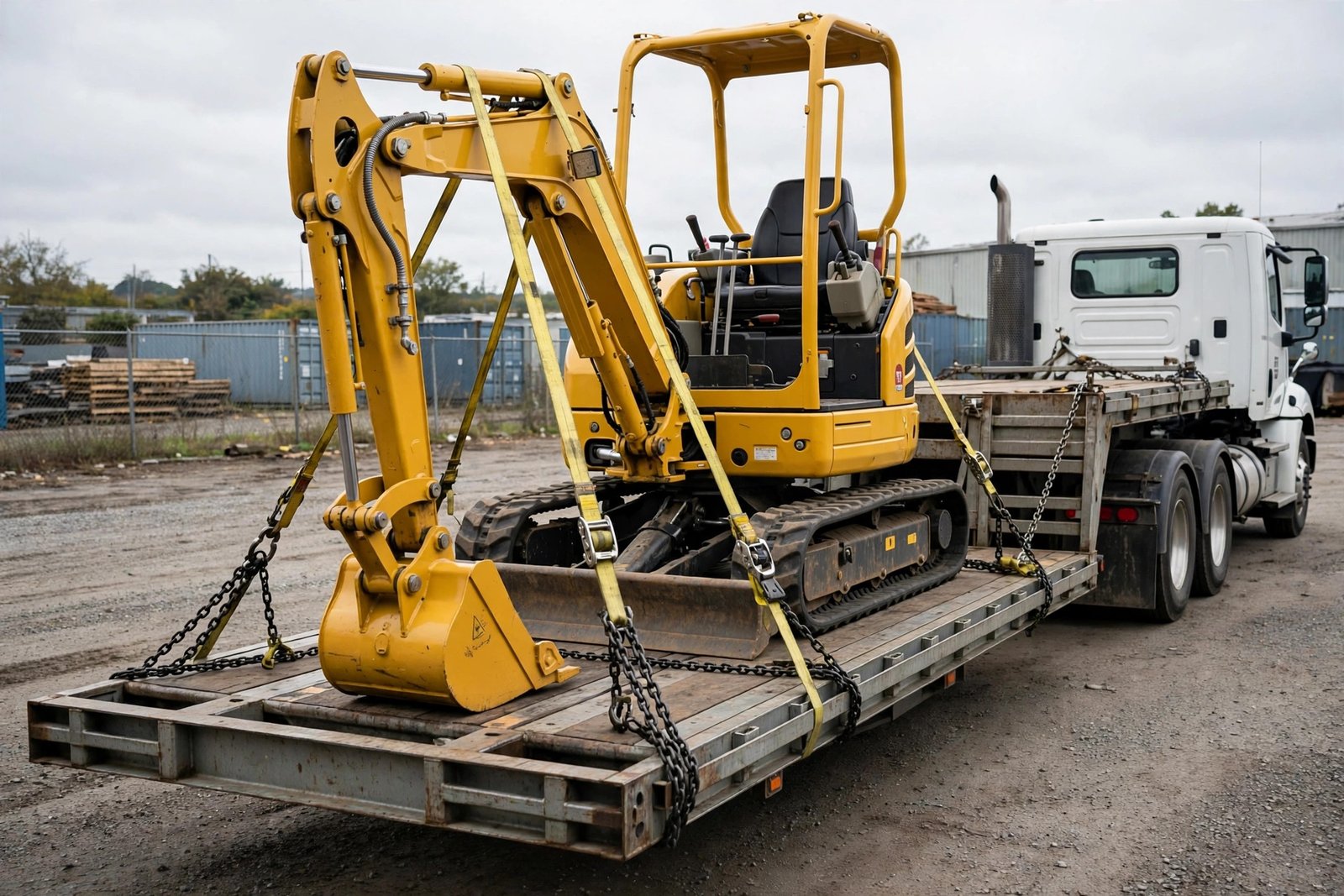
A flat rack is a container base with open sides and no roof. The machine sits on the platform and is lashed down with chains and straps. Flat racks suit larger machines that do not fit inside a standard container, or machines shipped with attachments that cannot be packed inside the box.
The trade-off is exposure. A flat rack load is covered with a tarpaulin, but it is still more exposed to weather than a sealed container. Make sure the cover is fitted properly and every attachment is secured so nothing can move or fall during the voyage.
RoRo: roll on, roll off
RoRo ships are built for vehicles and machines that drive on and off under their own power. The excavator is driven onto the ship, parked, and lashed down, and driven off at the destination port.
The trade-off is that the machine is exposed on the vehicle deck and depends on the sailing schedule of that route. RoRo is not available on every route, so check whether your port is served before you plan around it.
How the machine is packed and secured
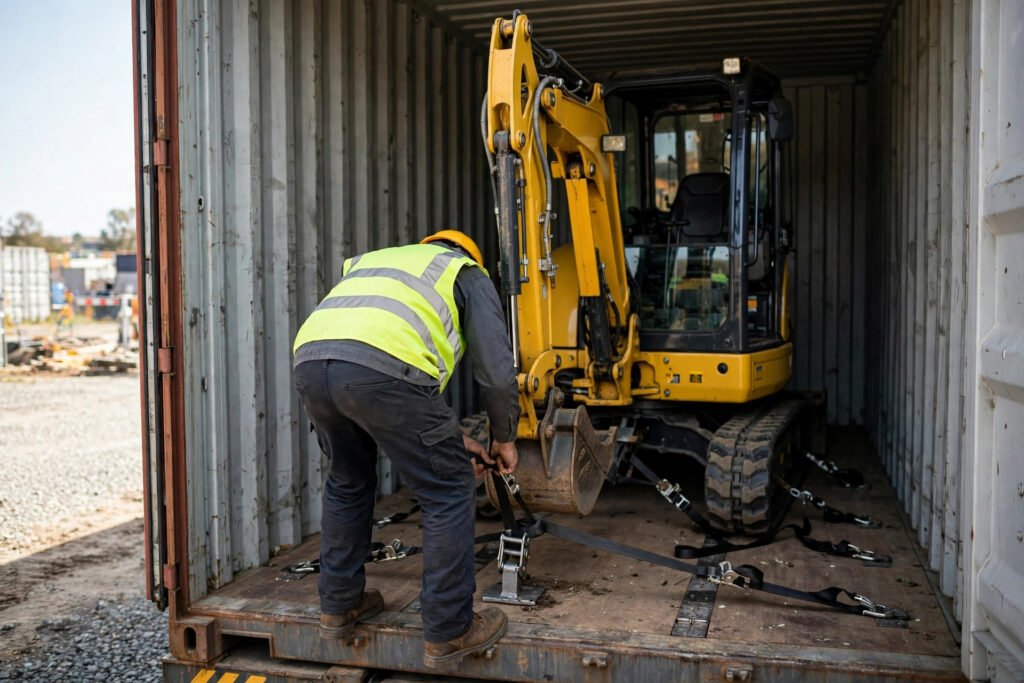
However the machine travels, the packing matters more than the method. Before loading, the supplier should secure the boom, arm, and bucket so they cannot move. Tracks should be chocked and strapped, and any loose attachment — a bucket, an auger, a breaker — should be fixed in place or packed in a crate inside the same container.
Ask the supplier for loading photos before the container is sealed or the flat rack is covered. Photos are the simplest proof that the machine was loaded correctly, and they are the first thing you will need if anything arrives damaged.

What affects the cost
Shipping cost is not one number. It is the freight for the sea voyage, plus the charges at each end: loading, port handling, documentation, and delivery from the port to your yard. The size and weight of the machine decide which method is possible, and the route and the season decide the freight rate.
What affects the time
Shipping time depends on the route, the sailing schedule, and how busy the ports are. A direct sailing is faster than one with transhipment, where the container changes ships at an intermediate port.
Do not plan your work around a shipping time that was only mentioned in a chat message. Ask the supplier and the freight forwarder to confirm the expected schedule in writing, and ask to be told promptly if it changes.
Documents you will need
A shipment needs paperwork, and missing paperwork is the most common cause of a machine sitting at the port. The usual documents are the commercial invoice, the packing list, the bill of lading, the certificate of origin, and the certificates for the machine — CE, EPA, or Euro 5, depending on your country. Your customs broker or freight forwarder will tell you exactly what your country requires, including the HS code for the machine.
Ask the supplier to send copies of the documents before the ship sails, so you can check them while there is still time to fix an error.
What to check when it arrives
When the machine arrives, check it before you sign for it. Walk around it and look for damage to the body, the tracks, the glass, and the attachments. Check that every attachment on the packing list is there, and that the boom and arm move freely. Take photos of anything that looks wrong, and note it on the delivery paperwork before you sign.
Start the machine and run it through its basic movements — boom, arm, bucket, swing, and tracks — before you put it to work. If something is wrong, tell the supplier and the forwarder the same day, with photos and the delivery paperwork.
Ship it like you bought it
Shipping is part of buying, not an afterthought. Choose the method that fits the size of the machine, confirm the trade terms and the documents in writing, ask for loading photos, and check the machine properly when it arrives. A machine that is packed well, documented well, and checked on arrival is a machine that starts work the day it reaches your yard.
Tell Sparkle One where the machine is going — the country, the port, and the yard — and we will help you confirm the shipping method, the packing, the documents, and the delivery for your order. Minimum order is 1 unit, and our team replies within 24 hours. Contact us on WhatsApp at +86 151 2992 2907 to discuss your requirements.