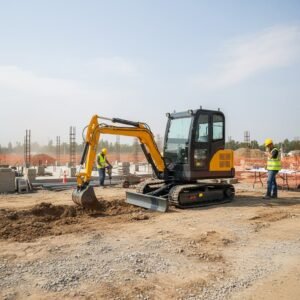
Choosing the right ton excavator is not just about “bigger is better”. The ideal machine should match your job type, site conditions, transport limits and budget, while still leaving some room for future projects. In this guide, we’ll walk through the key points you should consider before placing an order or sending an inquiry to your supplier.
1. Understand Your Job Requirements
Before you look at tonnage, you need a clear picture of what the excavator will actually do.
Ask yourself:
-
What type of projects are you working on?
(house foundation, landscaping, city road repair, farm work, demolition, mining, etc.) -
What will be the main tasks?
(trenching, digging foundations, loading trucks, breaking concrete, cleaning ditches, etc.) -
How many working hours per day and per year?
For example, a contractor who mainly digs small trenches for water pipes in residential areas may only need a 1–3 ton mini excavator. But a company doing road and bridge projects with heavy earthmoving will usually require 15–25 ton machines.
2. Mini, Small, Medium or Large: Match Tonnage to Application
In general, excavators can be roughly divided into four groups:
-
Mini Excavators (1–3 ton)
Ideal for tight spaces, gardens, small property projects, light trenching and farm use. -
Small Excavators (3–8 ton)
Good balance of power and flexibility for landscaping, municipal projects and light construction. -
Medium Excavators (8–20 ton)
Common choice for general construction, road works, building foundations and small mining jobs. -
Large Excavators (20+ ton)
Used in heavy earthmoving, quarrying, mining and large infrastructure projects.
The key is to match the machine size to your typical work. Oversized equipment increases fuel consumption, transport cost and purchase price, while undersized equipment reduces productivity and may wear out faster.

3. Consider Site Conditions and Working Space
Your job site can greatly limit the size of excavator you can use.
Key questions:
-
Is the working area narrow or restricted by walls, trees or buildings?
-
Are there width or height limits for access (gates, doors, tunnels, bridges)?
-
What is the ground condition? Soft soil, hard soil, rocky ground, muddy area or slope?
For urban projects and backyards, compact or mini excavators with zero-tail swing and rubber tracks are often the best choice.
For mountainous or rocky areas, a heavier excavator with stronger undercarriage and higher stability may be necessary.
4. Digging Depth, Reach and Lifting Capacity
Tonnage is only part of the story. You also need to check:
-
Maximum digging depth – Can the excavator reach the required pipe or foundation depth?
-
Maximum reach – Is the boom and arm long enough to load trucks or reach across ditches?
-
Lifting capacity – Can the machine safely lift pipes, concrete blocks or other heavy loads?
For example, if you are installing deep sewer lines, you may need a machine with greater digging depth, even if the tonnage is similar to other models. If you will use the excavator as a small crane on site, lifting charts become very important.
5. Attachment Compatibility and Hydraulic Performance
Modern excavators are not just for digging. With the right attachments, one machine can handle many tasks:
-
Hydraulic breaker for demolition and rock breaking
-
Auger for drilling holes
-
Grapple for wood, scrap or waste handling
-
Tilt bucket for shaping slopes and landscaping
When choosing the tonnage and model, check:
-
Is the excavator pre-configured with auxiliary hydraulic lines for attachments?
-
Is the hydraulic flow and pressure enough to drive the attachments you plan to use?
-
Are quick couplers available to change tools faster?
Sometimes a slightly bigger ton excavator is a better choice simply because it can support more powerful attachments and higher hydraulic flow.
6. Transport and Access Limitations
Even if a large excavator would work well on site, transport laws and access limits might stop you from using it.
Points to consider:
-
Local regulations about maximum vehicle weight and size on public roads
-
Whether you need special permits or escort vehicles for transporting heavy machines
-
The capacity of trailers, trucks and loading equipment you already have
-
Width and bearing capacity of local bridges and village roads
For contractors who move machines frequently between small jobs, mini and small excavators are often more economical, because they are easier and cheaper to transport.
7. Fuel Efficiency and Operating Costs
Two excavators with similar tonnage can have very different fuel consumption and maintenance costs.
When comparing models, look at:
-
Average fuel consumption per hour under normal working conditions
-
Recommended service intervals (how often to change oil and filters)
-
Price and availability of filters, seals, undercarriage parts and other consumables
-
Overall Total Cost of Ownership (TCO) over 3–5 years, not just the initial purchase price
For long-term projects or rental fleets, a slightly higher purchase price may be acceptable if the machine offers significantly lower operating costs and better reliability.
Summary
If most answers point to small jobs in tight spaces with frequent transport, a mini or small excavator is probably right for you. If you’re doing large-scale earthmoving or infrastructure work, a medium or large excavator will be more efficient in the long run.